
Watching a harvest ruined by chemical drift is a nightmare no farm manager wants to experience DJI 1. In our testing fields near Chengdu, we frequently demonstrate to clients how a simple component change can alter the fate of an entire season. The difference between a successful weed kill and a lawsuit often comes down to the smallest part of the aircraft setup.
For high-precision herbicide spraying, air-induction flat-fan nozzles are the optimal choice. They produce coarse, air-filled droplets (350–550 µm) that significantly reduce drift reduce drift 2 while ensuring consistent coverage. Unlike fine-mist cone nozzles, these designs maintain efficacy even in drone downwash, ensuring chemicals land exactly where needed.
Let’s examine the specific engineering choices that define success in aerial application.
Should I choose centrifugal or pressure nozzles for precise herbicide application?
Clients often ask our engineering team if rotary atomizers are worth the extra investment for every type of job. When we run comparison flights for our distributors, the data quickly reveals that versatility does not always equal precision, especially with volatile chemicals.
Pressure nozzles, specifically air-induction flat-fans, are superior for herbicides due to their ability to create heavier, drift-resistant droplets. While centrifugal nozzles prevent clogging, they often produce fine mists that drift easily, making them risky for volatile chemicals like dicamba dicamba 3 or glyphosate near sensitive crops.

When equipping a drone for herbicide missions, you are fundamentally choosing between two technologies: hydraulic pressure nozzles and centrifugal (rotary) atomizers. While rotary atomizers look modern and high-tech, they are not always the right tool for weed control.
The Problem with Centrifugal Atomizers for Herbicides
Centrifugal nozzles use a spinning disc to fling liquid outward, creating a mist. We use these on some of our models because they are excellent at handling thick mixtures without clogging. You can also change the droplet size by adjusting the rotation speed via the flight controller. However, for herbicides, this is a double-edged sword.
The physics of a spinning disc tends to create a very narrow droplet spectrum that is often too fine (under 200 µm). In our wind tunnel tests, these fine droplets are easily caught by crosswinds or the drone's own rotor turbulence. If you are spraying a systemic herbicide like glyphosate glyphosate 4, a fine mist that drifts off-target does two bad things systemic herbicide like glyphosate 5: it fails to kill the weed you targeted, and it might kill the neighbor's crop.
Why Pressure Nozzles Are the Standard
Pressure nozzles, particularly "Air Induction" (AI) types, are passive devices. They use a Venturi hole to suck air into the liquid stream. This creates large, bubble-filled droplets. When these droplets hit the leaf, they shatter and cover the surface.
For high-precision work, we recommend Air Induction Flat-Fan nozzles. They create a consistent sheet of spray that overlaps perfectly as the drone moves forward. This predictability is vital. With a flat-fan nozzle, if you set the pressure correctly, you know exactly where the chemical will land. This mechanical consistency is harder to achieve with rotary atomizers in variable wind conditions.
Comparison of Nozzle Technologies
| Feature | Air Induction (Pressure) | Centrifugal (Rotary) |
|---|---|---|
| Primary Mechanism | Hydraulic pressure forces liquid through a shaped orifice. | Spinning disc breaks liquid into droplets. |
| Drift Risk | Low. Creates heavy, air-filled droplets. | High. Tendency to produce fine, driftable mist. |
| Clog Resistance | Moderate. Requires clean water and filters. | High. Can handle thicker slurries. |
| Best Use Case | Herbicides and sensitive boundary spraying. | Fungicides, insecticides, and foliar fertilizers. |
| Cost | Low ($5 – $15 per tip). | High ($200+ per unit). |
If your primary goal is weed control with strict boundary adherence, the simple, low-cost pressure nozzle wins on performance and safety.
How do I determine the optimal droplet size to minimize drift on my crops?
During our field trials in windy conditions, we see immediate visual differences in spray patterns based on droplet diameter. Selecting the wrong size classification is the most common reason our buyers face efficiency issues or regulatory fines.
To minimize drift, select nozzles that produce Coarse (C) to Very Coarse (VC) droplets, typically in the 350–550 µm range. This size creates a balance where droplets are heavy enough to resist wind and rotor turbulence but numerous enough to provide adequate leaf coverage.

Understanding droplet size is the single most critical factor in aerial application. In the drone industry, we follow the ASABE S572.1 standard ASABE S572.1 standard 6, which classifies droplet sizes ASABE S572.1 standard 7 from "Extremely Fine" to "Ultra Coarse."
The "Driftable Fines" Danger Zone
Any droplet smaller than 150 microns (µm) is considered a "driftable fine." These particles act more like smoke than liquid. They can hang in the air for minutes and travel miles away from your field. When we calibrate flight parameters for clients, we aim to eliminate these fines entirely.
If you use a standard nozzle that produces "Medium" droplets (250–350 µm), a significant percentage of the spray volume will actually be under 150 µm. This is acceptable for ground tractors, but drones fly higher (2–4 meters) and create massive air turbulence. That turbulence can lift fine droplets up and away.
The Sweet Spot: Coarse to Very Coarse
For herbicides, you need a droplet that falls like a stone but covers like a blanket. We have found that the "Coarse" (350–450 µm) and "Very Coarse" (450–550 µm) categories are ideal.
- Weight: These droplets are heavy enough to punch through the drone's "downwash" (the air pushed down by propellers) and reach the crop canopy.
- Survival: Larger droplets take longer to evaporate. In hot, dry climates, a fine droplet might dry out before it even hits the weed. A coarse droplet survives the fall.
Balancing Coverage and Drift
There is a trade-off. If droplets are too big (Ultra Coarse), you might not get enough distinct spots on the leaf to kill a small weed. However, most modern systemic herbicides (like 2,4-D or Glyphosate) 2,4-D 8 translocate within the plant. You do not need to paint the entire leaf surface green; you just need enough hits to deliver the lethal dose.
Droplet Size Classification Guide
| Category | Symbol | Size Range (µm) | Drift Risk | Recommended For |
|---|---|---|---|---|
| Fine | F | 100 – 250 | Extreme | Contact fungicides only (Avoid on drones). |
| Medium | M | 250 – 350 | High | Insecticides requiring penetration. |
| Coarse | C | 350 – 450 | Low | General Herbicides (Glyphosate). |
| Very Coarse | VC | 450 – 550 | Very Low | Systemic Herbicides, Drift-prone chemicals. |
| Extra Coarse | XC | > 550 | Minimal | Liquid Fertilizer, Soil application. |
Always check the herbicide label. If the label says "Do not use droplets smaller than Coarse," following that rule is mandatory for both efficacy and legal compliance.
What nozzle materials are best suited for resisting corrosion from harsh herbicides?
We have processed numerous support tickets where a user’s spray pattern degraded mid-season, only for us to discover the orifice had eroded. Our production team now strictly advises against softer metals for any application involving frequent chemical use.
Ceramic is the best material for herbicide nozzles due to its exceptional resistance ceramic 9 to abrasion and chemical corrosion. While polyacetal (plastic) is a cost-effective alternative for lower pressures, ceramic orifices maintain precision up to 50 times longer than stainless steel or brass when spraying abrasive suspension concentrates.
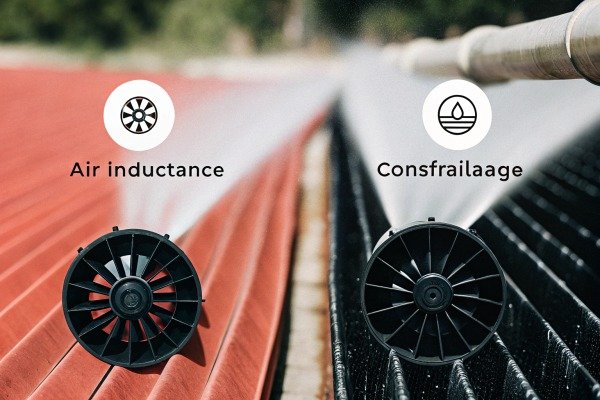
When you buy a drone, the nozzles that come in the box might not be the best ones for your specific chemical program. The material of the nozzle tip determines how long it will stay accurate. As liquid rushes through the tiny hole (orifice) at high pressure, it slowly eats away the edges. This enlarges the hole, causing the flow rate to increase and the spray pattern to distort.
Why You Should Avoid Brass
Brass is soft. It is cheap and easy to machine, which is why it was popular historically. However, on a modern drone spraying abrasive herbicide mixes (like wettable powders or suspension concentrates), a brass nozzle can wear out in as little as 10 to 15 hours of spraying. Once it wears, you are over-applying chemicals, wasting money, and potentially damaging the crop.
The Durability of Ceramic
We equip our high-end agricultural models with ceramic-core nozzles. Ceramic is incredibly hard. It resists the "sandpaper effect" of flowable herbicides.
- Longevity: A ceramic nozzle can last 400 to 500 hours of spray time.
- Precision: Because it keeps its shape, the droplet size spectrum remains constant throughout the season.
Polyacetal: The Good Compromise
Polyacetal (often called polymer or plastic) is standard on many drones today, including popular DJI and XAG models. It is chemically inert, meaning it won't rust or react with acids. It wears better than brass but not as well as ceramic. It is a great choice if you are on a budget or if you change nozzle types frequently for different crops.
Stainless Steel
Stainless steel is durable against external physical damage (like bumping into the truck bed), but surprisingly, it wears out faster internally than ceramic or high-grade plastic. It is generally acceptable but not the top tier for abrasive chemicals.
Material Lifespan Estimates
| Material | Relative Wear Life | Corrosion Resistance | Cost Level | Recommendation |
|---|---|---|---|---|
| Brass | 1x (Baseline) | Poor | Low | Avoid for drones. |
| Stainless Steel | 4x – 6x | Good | Medium | Acceptable. |
| Polyacetal (Plastic) | 10x – 15x | Excellent | Low-Medium | Good value choice. |
| Ceramic | 50x – 100x | Excellent | High | Best for professionals. |
Investing in ceramic tips is a small upfront cost that saves significant money on wasted chemicals over the life of the drone.
How can I maintain my drone nozzles to ensure consistent spraying performance?
Even the most advanced SkyRover drones will fail if the spray system is neglected. We teach our distributors a rigorous cleaning protocol because we know that a clogged nozzle at 30 feet in the air turns a productive day into a repair session.
Regular maintenance involves inspecting orifices for wear, cleaning filters daily, and using a soft brush with warm water to remove residue. Never use metal objects to unclog nozzles, as this damages the precise geometry. Calibrate flow rates every 50 flight hours to ensure output accuracy.

Maintenance is boring, but it is the only way to get a return on investment from a $20,000 drone. The most common issue we see isn't motor failure; it's bad spray distribution caused by dirty or damaged nozzles.
The "Soft Brush" Rule
The most important rule we tell every operator is: Never put a wire, needle, or knife into the nozzle tip.
The orifice is engineered to a precision of microns. Scratching it with metal ruins the spray pattern instantly. If a nozzle is clogged:
- Soak it in warm water with a specialized tank cleaner or mild detergent.
- Use an old toothbrush or a specialized soft-bristle nozzle brush to scrub it.
- Use compressed air to blow debris out backwards (from the front of the nozzle out the back).
Filter Management
Every drone spray system has filters (screens). There is usually a main tank filter and tiny filters inside each nozzle body. These are the last line of defense.
- Daily Check: Pull the nozzle filters out every morning.
- Mesh Size: Ensure the mesh size matches your chemical. Thick herbicides might need a 50-mesh screen. Thinner liquids might use a 100-mesh screen. If the screen is too fine for a thick liquid, the pump will struggle and pressure will drop.
Calibration is Not Optional
As nozzles wear, they flow more liquid. If your flight controller thinks it is spraying 1 gallon per acre, but your worn nozzles are actually releasing 1.2 gallons, you will run out of tank mid-flight and overdose the crop.
- The 10% Rule: Measure the flow output of used nozzles using a graduated cylinder and a stopwatch (run the pump for 1 minute). Compare this to the manufacturer's chart for a new nozzle. If the used nozzle flows more than 10% over the chart value, throw it away and replace it. flows more than 10% over 10
Winterizing the System
If you import drones in cold climates like the US Midwest or Northern Europe, winter storage is critical. Herbicides left in the lines will settle into a hard sludge that ruins the pump and nozzles.
- Flush the system with clean water.
- Flush again with a system cleaner/neutralizer.
- Run RV antifreeze (propylene glycol) through the pump and nozzles if storing in freezing temperatures. This keeps seals lubricated and prevents cracking.
Conclusion
Choosing the right nozzle is not just an accessory decision; it is the heart of the application process. For high-precision herbicide work, we strongly advise moving away from standard fine-mist options and investing in Ceramic Air-Induction Flat-Fan nozzles. These provide the necessary drift reduction (Coarse droplets), durability against corrosion, and pattern consistency required for modern agriculture. By matching the right nozzle to your drone and maintaining it with discipline, you ensure that every drop of chemical pays for itself in higher yields.
Footnotes
1. Official product documentation for DJI agricultural drones mentioned as industry standard equipment. ↩︎
2. Official EPA guidance on strategies and regulations for reducing pesticide drift in agriculture. ↩︎
3. Government regulatory information regarding the use and volatility of dicamba herbicides. ↩︎
4. General background on glyphosate, the systemic herbicide mentioned as a primary use case. ↩︎
5. Authoritative fact sheet explaining the properties and movement of systemic herbicides like glyphosate. ↩︎
6. The official standards body responsible for the droplet size classification system used in the article. ↩︎
7. Official website of the standards body that defines the S572.1 droplet size classification system. ↩︎
8. Background information on 2,4-D, a common systemic herbicide discussed in the text. ↩︎
9. ISO standard information regarding fine ceramics used in industrial and agricultural components. ↩︎
10. University extension guideline confirming the 10% flow rate increase threshold for nozzle replacement. ↩︎

 English
  Español de México
  Deutsch
  Français
  Русский
  العربية
