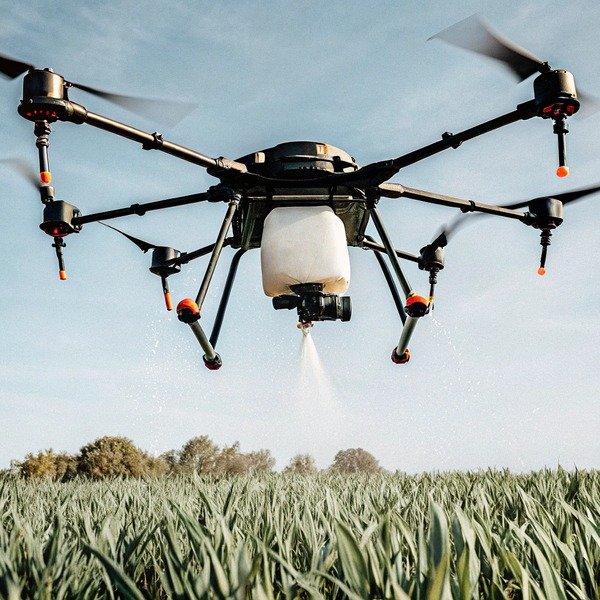
Investing in a spray drone fleet only to face grounding glitches is a nightmare for any operations manager. When we design flight controllers at our Xi’an facility, we know that software stability determines whether you hit your spraying window or lose a day of work to technical errors.
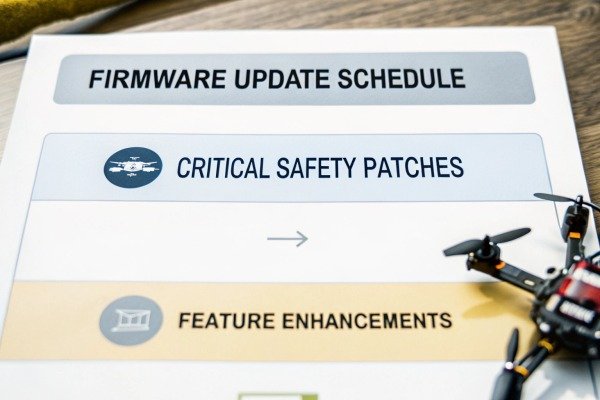
You should ask about the specific release schedule for critical safety patches versus feature enhancements and request a history of the last year’s updates. It is crucial to confirm if updates are mandatory for flight and whether the manufacturer guarantees support support lifecycle 1 for at least three to five years post-purchase.
Here is exactly how to vet a supplier’s software commitment before you sign the contract.
How long will the manufacturer provide firmware support for my agricultural drone?
A drone without software support becomes obsolete faster than you expect, potentially turning a major investment into scrap. becomes obsolete 2 Our engineering team often warns clients that while the carbon fiber frame lasts for years, unsupported code can kill your return on investment instantly.
Most reputable agricultural drone manufacturers provide firmware support for three to five years after a model’s release. You must explicitly ask for a written policy defining the End-of-Life (EOL) timeline for software updates to ensure your fleet remains compliant with evolving regulations and operational safety standards.

When you purchase industrial equipment, you expect a long service life. However, in the drone industry, hardware longevity is entirely dependent on software continuity. If a manufacturer stops releasing firmware updates, your drone might eventually become incompatible with the latest tablet operating systems or mapping software. Worse, it may become illegal to fly if it cannot be updated to meet new Remote ID or airspace regulations Remote ID 3. airspace regulations 4
Understanding the Support Lifecycle
You need to ask the supplier to define their "support lifecycle" stages. A healthy lifecycle ensures that even if a new model comes out next year, your current fleet is not abandoned. We typically categorize support into three phases. Understanding these helps you negotiate better terms.
| Lifecycle Stage | Duration | What You Should Expect |
|---|---|---|
| Active Development | Years 1-3 | Frequent updates (monthly/quarterly), new features added, rapid bug fixes. |
| Maintenance Mode | Years 3-5 | Critical security patches and major bug fixes only. No new features. |
| End of Life (EOL) | Year 5+ | No updates. Use at your own risk. Technical support may cease. |
The Hidden Risks of Early Discontinuation
If you buy a drone that is already two years into its lifecycle, you might only get one year of active updates. Always ask the manufacturer when the specific model was first released. If they are selling you "last year's model" at a discount, ensure they have not shortened the firmware support period.
We have seen cases where farmers bought discounted units from other brands, only to find out six months later that the manufacturer stopped fixing critical GPS bugs. This leads to drift issues that ruin crop precision. You must verify that the "clock" for support starts from your purchase date, or at least that the EOL date is far enough in the future to justify the capital expenditure.
Are future firmware upgrades and bug fixes included in the initial purchase price?
Hidden subscription fees can destroy your operating budget mid-season, especially when you are managing tight margins. When we structure our export pricing for US distributors, we prioritize transparency so you never face a “pay-to-fly” ransom screen export pricing 5 in the field.
Standard bug fixes and critical safety updates are typically included in the initial hardware purchase price to ensure safe operation. However, advanced feature upgrades, such as new autonomous flight modes or 4G RTK integration, may require a paid software subscription or a separate license key depending on the vendor.
The business model for agricultural drones is shifting. In the past, you bought the hardware and owned the software. Today, some companies are moving toward a "Software as a Service" (SaaS) model Software as a Service 6. It is vital to clarify what is free and what is behind a paywall before you commit to a purchase.
Distinguishing Between Fixes and Features
You need to draw a hard line during negotiations. Bug fixes—updates that repair broken functions or safety hazards—must always be free. If a drone has a glitch that causes it to lose connection, you should never have to pay to fix the manufacturer's mistake.
However, "upgrades" are different. Manufacturers invest heavily in R&D to develop new capabilities, like AI-based weed recognition or swarming technology (one pilot controlling multiple drones). It is reasonable for these to be paid add-ons. The problem arises when vendors blur the lines.
Key Questions for Price Transparency
When talking to a sales representative, use this checklist to uncover hidden costs:
- Is the flight control app free forever? Some brands charge an annual fee just to use the app that controls the drone.
- Are map updates included? If the firmware relies on internal maps for obstacle avoidance, are those map data updates free?
- Does the RTK service require a separate firmware license? High-precision positioning often involves a subscription, but the firmware to enable it on the drone side should be standard.
The "Freemium" Trap
Be wary of the "freemium" hardware trap. This happens when a manufacturer sells the drone cheaply but locks essential performance modes behind firmware paywalls. For example, the drone might be capable of spraying 10 acres per hour, but the "Basic" firmware limits it to 5 acres per hour unless you buy the "Pro" unlock code. Always ask if the drone ships with its maximum performance capabilities fully unlocked.
What is the specific process for installing firmware updates on my drone fleet?
Downtime during the spraying season costs thousands of dollars per hour, and you cannot afford to be stuck on the ground. Our service technicians emphasize that a complex update process can ground your entire operation when you need it most, especially in rural areas.
The update process usually involves connecting the drone to a mobile app via Wi-Fi or using a desktop assistant tool. You should ask if offline updates via SD card are supported for remote fields and whether the system requires mandatory sensor recalibration immediately after every firmware installation.

The method of updating is just as important as the update itself. In a pristine laboratory with fiber-optic internet, updating is easy. In a cornfield with zero cell service, a mandatory update can be a disaster. You need to know the mechanics of the update process to plan your logistics.
Online vs. Offline Update Capabilities
Many consumer drones require a live internet connection to update. For agriculture, this is a flaw. You should prioritize systems that support offline updating. This means you can download the firmware file to your phone or laptop while at the office/home, drive to the remote field, and transfer the file to the drone without needing internet access on-site.
Ask if the drone supports "SD Card Side-loading." This is the most reliable method for remote areas. You simply put the file on a memory card, insert it into the drone, and power it on.
The Sensor Recalibration Headache
One detail often overlooked is what happens after the update. Some firmware updates wipe the drone's calibration data. This means after a 10-minute update, you might have to spend another 30 minutes recalibrating the IMU (Inertial Inertial Measurement Unit 7 Measurement Unit) Inertial Measurement Unit 8, compass, and spray flow meters. If you have a fleet of 10 drones, that is 5 hours of lost labor.
| Update Feature | Why It Matters for Agriculture |
|---|---|
| Offline/Local Update | Allows updating in fields with no 4G/5G/Wi-Fi signal. |
| Batch Updating | Ability to update multiple drones simultaneously or one after another quickly. |
| No Forced Recalibration | Saves time by retaining old sensor data (unless the update specifically changes sensor logic). |
| Rollback Capability | Allows you to revert to the old version if the new one has a bug. |
Forced Updates vs. Optional Updates
Ask about the manufacturer's policy on "Forced Updates." Forced Updates 9 Some systems will lock the motors and refuse to take off if the firmware is outdated. While this is done for safety, it can be catastrophic if it happens 5 minutes before a scheduled spray job. You want a system that gives you a warning but allows you to defer the update until you are back at the base.
Will firmware updates add new features or just fix existing bugs?
Stagnant software means your competitor’s drone will eventually outperform yours, even if you bought them at the same time. We constantly test new algorithms in our Chengdu factory to ensure our hardware can handle smarter future capabilities that improve efficiency.
Firmware updates should ideally balance critical bug fixes with performance enhancements like improved battery efficiency or spray precision. Ask the manufacturer for a roadmap of upcoming features to verify if they actively innovate or simply patch errors to keep the system barely functional.

A proactive manufacturer uses firmware to unlock potential that was not ready at launch. Hardware is static, but software is dynamic. A good firmware update can actually make your batteries last longer by optimizing the motor power curve, or it can make your spray more uniform by adjusting pump algorithms.
Analyzing the Changelog History
The best way to predict the future is to look at the past. Ask the sales representative to show you the "Changelog" or "Release Notes" for the past 12 months. You don't need to be a coder to understand them. You are looking for a mix of keywords.
If every entry says "Fixed minor bugs," that is a red flag. It means the product is in maintenance mode or the engineering team is struggling. You want to see entries like "Added Terrain Follow Mode," "Optimized Terrain Follow Mode 10 Battery Usage," or "Increased Max Flow Rate." This shows the manufacturer is actively trying to give you more value for your money.
Features That Can Be Added via Software
Here is a breakdown of what physical improvements can actually be delivered just through code:
| Feature Category | Examples of Software Improvements |
|---|---|
| Flight Performance | Better wind resistance, smoother braking, longer flight time (via ESC efficiency). |
| Spraying System | Variable rate application, individual nozzle control, clogging detection. |
| Safety | improved obstacle avoidance sensitivity, smarter Return-to-Home routes. |
| Connectivity | Support for new 4G dongles, faster image transmission rates. |
The Value of Beta Testing
Finally, ask if they have a "Beta Program" for key customers. Participating in beta testing allows you to access new features early. While not for everyone, it indicates the manufacturer values user feedback. It also suggests they are testing in the real world, not just in a lab. If a manufacturer is secretive about their roadmap, they might not have one. A confident supplier will happily tell you, "We are working on a new orchard mode that will be released in Q3."
Conclusion
Asking about firmware frequency is not just technical nitpicking; it is about securing the future reliability of your agricultural business. By verifying the support lifecycle, cost structures, update processes, and innovation roadmap, you ensure that your drone fleet remains a productive asset rather than a liability.
Footnotes
1. ISO standard for unmanned aircraft systems operational procedures and safety requirements. ↩︎
2. Wikipedia entry explaining the concept of product obsolescence in the technology sector. ↩︎
3. Official government regulation regarding drone identification compliance. ↩︎
4. Official FAA guidance on Remote ID and airspace regulations for unmanned aircraft. ↩︎
5. Official manufacturer site detailing service and support policies for industrial drone products. ↩︎
6. Authoritative definition of the cloud business model mentioned. ↩︎
7. Technical definition from a leading sensor manufacturer. ↩︎
8. Background information on Inertial Measurement Units used in drone flight control systems. ↩︎
9. UK Civil Aviation Authority guidance on drone safety and mandatory software updates. ↩︎
10. Technical documentation explaining this autonomous flight feature. ↩︎

 English
  Español de México
  Deutsch
  Français
  Русский
  العربية
