
Walking through our assembly workshop in Chengdu, I often wonder if buyers realize how quickly drone technology ages. You invest heavily in a fleet today, but without a supplier committed to innovation, your equipment could be obsolete within two seasons, leaving your operations less efficient than your competitors.
To assess continuous development capacity, evaluate the supplier’s R&D expenditure ratio and the frequency of historical product launches over the last five years. Review their patent portfolio for recent innovations in flight control and examine the modularity of their hardware designs, which indicates a readiness for future component upgrades.
Let’s break down the specific indicators that separate static assembly factories from true innovation partners.
How can I verify the technical expertise of the drone manufacturer's engineering team?
When we interview engineers for our Xi’an headquarters, we look for problem-solvers who understand field conditions, not just coding. If you partner with a factory that lacks this depth of talent, you will likely face unresolved technical glitches that cause costly downtime during the peak farming season.
You can verify technical expertise by requesting a breakdown of the R&D team’s structure versus sales staff and checking for proprietary flight control system development. Ask about their involvement in government-funded research projects or collaborations with agricultural universities, which demonstrates recognition of their engineering capabilities by external industry experts.
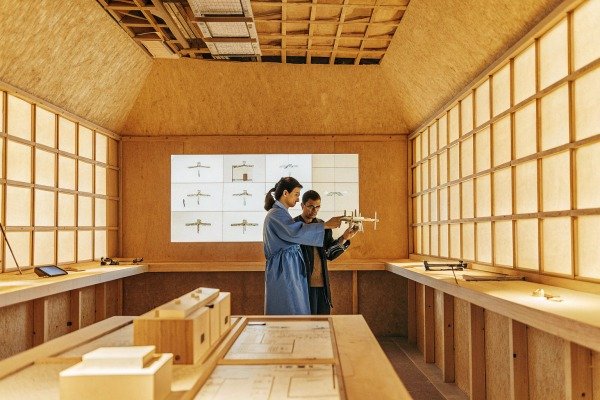
To truly understand if a supplier can support you long-term, you must look past the shiny plastic exterior of the drone. Many suppliers in the market are simply "integrators." They buy motors from one company, flight controllers from another, and frames from a third, then screw them together. While these drones might fly, these suppliers cannot innovate because they do not own the core technology.
The Ratio of Engineers to Sales Staff
A healthy manufacturer focused on mid-to-high-end products should have a significant portion of their staff dedicated to Research and Development (R&D). In our industry Research and Development (R&D) 1, if a company has 50 sales people but only 3 engineers, they are a trading company disguised as a factory. You should ask for an organizational chart. A strong supplier will have specialized teams for:
- Structure: Designing the frame and waterproofing.
- Avionics: Managing power distribution and wiring.
- Software: Writing the flight control algorithms and ground station apps.
Proprietary Technology vs. Off-the-Shelf Components
The biggest indicator of technical depth is the flight controller. flight controller 2 flight controller 3 If a supplier uses a generic, off-the-shelf flight controller without any custom tuning, they are limited by what that external vendor provides. However, a supplier that develops its own algorithms or modifies open-source code to fit specific agricultural heavy-lift scenarios shows true expertise. This capability allows them to fix stability issues quickly without waiting for a third party.
Verification Checklist
You can use the following table to score a potential supplier during your audit.
| Indicator | Low Expertise (Risk of Obsolescence) | High Expertise (Innovation Partner) |
|---|---|---|
| Flight Controller | Uses standard settings from a hobbyist brand. | Uses custom-tuned PID loops or proprietary hardware. |
| R&D Team Size | Less than 10% of total staff. | More than 30% of total staff. |
| Problem Solving | "We need to ask the component vendor." | "Our engineers can patch this firmware in 48 hours." |
| Patents | No patents or only design (appearance) patents. | Utility patents on stability, spraying mechanisms, or AI. |
| University Ties | None. | Joint labs or testing grounds with agricultural colleges. |
By asking these difficult questions, you filter out the assemblers and find the creators who can actually keep your product line competitive.
What evidence shows that the supplier can handle custom design and OEM development projects?
We frequently receive requests from our US clients to modify payload attachments for specific regional crops or local regulations. local regulations 4 If a supplier hesitates or refuses these minor requests, it suggests a rigid assembly process that will fail to adapt to your unique market needs as they evolve.
Evidence of OEM capability includes a portfolio of past modification cases, such as custom payload integration or rebranded ground control software. Request a specific design modification during the negotiation phase to test the engineering team’s responsiveness and ability to produce rapid prototypes or CAD drawings within a short timeframe.

Customization is the lifeblood of a distributor's brand. You do not want to sell the exact same white drone that five other competitors are selling. You need a supplier who can act as your private engineering wing. This goes beyond just printing your logo on the shell; it involves structural and functional changes.
The "CAD Test"
A practical way to test a supplier is to give them a small challenge before you sign a contract. Ask them to modify a bracket to fit a specific nozzle type or to change the landing gear height.
- The Assembler's Reaction: They will say it is impossible, or that they need to order a new mold from a different factory, which will take months.
- The Developer's Reaction: They will say, "Let us check with our structural engineers." Within 2-3 days, they should be able to send you a 3D CAD drawing or a photo 3D CAD drawing 5 of a 3D-printed prototype.
This speed proves they have internal design capabilities.
Software Customization (OEM App)
Hardware is visible, but software branding is what your customers interact with daily. A capable factory should be able to offer a version of the Ground Control Station (GCS) app Ground Control Station (GCS) 6 that features your branding, splash screen, and language settings. If they rely entirely on a third-party generic app, you lose control over the user experience.
Levels of Customization
Understanding what you can ask for helps you gauge their flexibility.
| Customization Level | Description | What Required from Supplier |
|---|---|---|
| Level 1: Visual | Logo printing, custom color schemes, sticker placement. | Basic printing equipment, flexible assembly line. |
| Level 2: Interface | Custom startup screens on remote controllers, rebranded App UI. | Software engineers capable of modifying source code. |
| Level 3: Functional | Changing arm length, battery compartment size, or payload mount. | Mechanical engineers, CNC machines, mold design capability. |
| Level 4: System | Integrating a new camera or sensor into the flight logic. | High-level coding access, SDK integration skills. |
If a supplier cannot move past Level 1, they are not a true OEM partner. They are just a reseller. In our experience, the ability to handle Level 3 and 4 requests is what builds a long-term competitive advantage for our partners in the US and Europe.
How do I check if the factory supports continuous software development and system optimization?
Our flight test grounds in Chengdu are busy daily because we know that hardware is only half the battle in modern agriculture. Without regular firmware updates to fix bugs and improve flight stability, even the most expensive drone becomes a liability that frustrates your end-users.
Check the version history of the supplier’s firmware to ensure updates occur at least quarterly to address bugs and improve stability. Verify the availability of a public SDK or API, which proves the system is open for third-party integration and that the manufacturer actively maintains the software ecosystem.

In the agricultural drone sector, software defines performance. A drone might have powerful motors, but if the software cannot handle liquid sloshing in the tank, the drone will fly erratically. Therefore, assessing the "soft power" of a factory is just as critical as checking their manufacturing equipment.
The Firmware Log Audit
Do not just ask if they update software; ask to see the history. Request the "Release Notes" for their current flagship model for the past 12 months.
- Red Flag: No updates in the last year, or updates only for "minor text fixes."
- Green Flag: Regular updates that list specific improvements, such as "Optimized cornering speed," "Fixed GPS drift in high winds," or "Added support for new sprayer types."
This history proves they are actively monitoring field data and solving problems.
The Importance of SDKs and APIs
For professional buyers, the ability to integrate with other systems is crucial. Does the drone support an SDK (Software Development Kit)? SDK (Software Development Kit) 7 Software Development Kit 8
If we provide an SDK, it means your local developers can write code to make the drone talk to farm management software or automate specific tasks. If the system is closed, you are stuck with whatever features the factory decided to include. An open system indicates confidence and a forward-thinking development strategy.
Remote Diagnostics Capability
When your customer is in a field in Iowa and the drone won't take off, can the factory help? A supplier with continuous development will have a system for remote log analysis. They should be able to look at the "black box" data to determine if a crash was pilot error or a system fault.
Software Maturity Assessment
| Feature | innovative Supplier | Stagnant Supplier |
|---|---|---|
| Update Frequency | Quarterly or Monthly. | Once a year or never. |
| Bug Reporting | Has a formal ticket system for reporting bugs. | "Just tell us on WhatsApp." |
| New Features | Adds new flight modes to old hardware via updates. | Only adds features to new hardware models to force sales. |
| Data Security | Encrypted logs, servers compliant with local laws (e.g., GDPR). | Unsecured data transmission, no privacy policy. |
By ensuring the factory treats software as a living product, you protect yourself from selling "dumb" machines that cannot improve over time.
What should I look for in a supplier's product roadmap to ensure long-term competitiveness?
We often share our three-year technical plan with our key distributors because alignment is the key to mutual growth. If a supplier cannot clearly articulate what technologies they plan to launch next year, they are likely reacting to market trends rather than leading them.
A strong product roadmap features a clear timeline for integrating emerging technologies like AI-powered obstacle avoidance and battery density improvements. Look for a commitment to backward compatibility, ensuring that new payloads or software features will function with the drone platforms you purchase today.

Buying into a drone ecosystem is a marriage, not a one-night stand. You need to know where the relationship is going. A roadmap is a declaration of intent. It tells you if the supplier is planning to be a market leader or just a follower.
Predicting the Next Generation
In our internal meetings, we look at trends like AI (Artificial Intelligence) and IoT (Internet of Things). A good supplier should be talking to you about:
- AI Integration: How will the drone recognize weeds versus crops?
- Swarm Technology: Can one pilot control five drones?
- Energy Efficiency: Are they testing solid-state batteries or hydrogen cells? solid-state batteries 9 solid-state batteries 10
If their roadmap is just "We will make a bigger drone next year," that is not innovation; that is just scaling up. True innovation solves new problems, like spot spraying to save chemicals.
Backward Compatibility
This is a huge pain point for buyers. If a new camera comes out next year, do you have to throw away the $15,000 drone you bought today?
A responsible supplier designs with modularity in mind. They should promise that future payloads will be compatible with current flight platforms where possible. This protects your inventory value. When we design a new spreader system, we try to ensure it fits the mount points of the previous model.
Assessing the Roadmap Reality
It is easy to draw a roadmap; it is hard to execute it. Compare their past roadmap with reality. Did they launch the model they promised two years ago?
- Consistency: Did they hit their launch windows?
- Focus: Are they staying in their niche (agriculture/industrial), or are they distracted by making toy drones or consumer cameras?
Roadmap Evaluation Matrix
| Roadmap Element | What to Look For | Why It Matters |
|---|---|---|
| Sensor Tech | Integration of LiDAR and Multispectral cameras. | Precision farming requires better data, not just flying. |
| Automation | Fully autonomous path planning without internet. | Farms often have poor signal; the drone must think for itself. |
| Eco-System | Charging stations, automated refilling tanks. | Labor is the biggest cost; automation reduces crew size. |
| Regulation | Compliance with future Remote ID laws (US/EU). | Ensures your products remain legal to sell and fly. |
By analyzing these elements, you ensure that the partner you choose today will still be relevant—and profitable—in 2030.
Conclusion
Selecting a drone supplier is not just about comparing price tags or tank capacities; it is about assessing the "brain" of the factory. By scrutinizing their engineering ratio, testing their OEM flexibility, auditing their firmware history, and validating their future roadmap, you ensure that your business is built on a foundation of continuous innovation. In this fast-moving industry, the only safety lies in moving forward.
Footnotes
1. General background definition of R&D in a business context. ↩︎
2. General background on the function and importance of flight controllers in unmanned aerial vehicles. ↩︎
3. Authoritative technical overview of flight control systems. ↩︎
4. Official FAA guidance on how local regulations and Remote ID affect drone operations in the US. ↩︎
5. Industry leader (Autodesk) defining Computer-Aided Design. ↩︎
6. Official documentation for standard drone control software. ↩︎
7. Authoritative definition of SDK by a major tech company. ↩︎
8. IEEE technical publication discussing the architecture and benefits of drone software development kits. ↩︎
9. Official government resource on solid-state battery technology. ↩︎
10. Scientific research exploring the potential of solid-state batteries for increasing drone flight endurance. ↩︎

 English
  Español de México
  Deutsch
  Français
  Русский
  العربية
Comments
No comments yet. Be the first to share your thoughts!
Leave a Comment