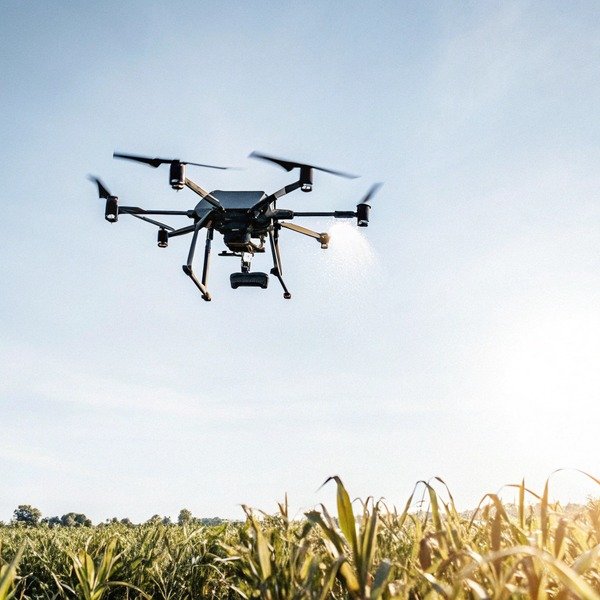
The fear of a stockout during peak spraying season keeps many buyers awake at night. We see this anxiety often when new clients approach our Xi’an headquarters looking for reliable partners.
You can verify stability by auditing the supplier’s component diversification and requesting specific inventory data. Ask for evidence of dual-sourcing for critical parts like chips and motors, and review their safety stock levels. A reliable partner will transparently share their “Just-in-Case” protocols rather than relying solely on fragile “Just-in-Time” models.
Let’s break down the exact steps to ensure your fleet arrives on time, every time.
How do I assess if a manufacturer has the production capacity to handle my bulk agricultural drone orders?
Nothing is worse than signing a contract and then hearing excuses about production backlogs. We designed our Chengdu factory lines specifically to prevent these embarrassing delays for our global partners.
Assess capacity by analyzing the manufacturer’s daily output rates against their maximum theoretical yield. Request a virtual or physical tour to verify the number of active assembly lines and testing stations. Reliable suppliers should demonstrate scalable labor forces and modular production workflows that can handle surge orders without compromising quality.
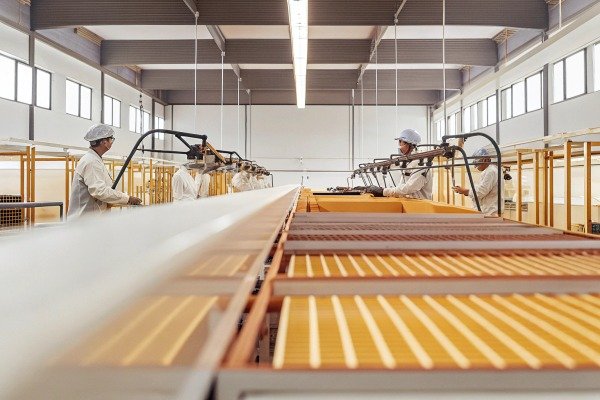
Understanding Theoretical vs. Effective Capacity
When we discuss production capacity with our clients, we always distinguish between two numbers: theoretical capacity and effective capacity. theoretical capacity 1 Theoretical capacity is what a factory could produce if machines never broke down, workers never took breaks, and supply chains were perfect. Effective capacity is the reality.
To verify a supplier's stability, do not just accept the "big number" they put in a brochure. Ask for their effective daily output rate. A stable supplier will have an effective capacity that is significantly higher than your order volume. This "buffer" ensures that if a machine goes down or a batch of screws is defective, your order does not get pushed back by weeks.
The Role of Testing in Production Speed
In our experience, the biggest bottleneck in drone manufacturing is not assembly; it is testing. An agricultural drone is a complex machine. It needs calibration of the compass, IMU (Inertial Measurement Unit), and spray systems IMU (Inertial Measurement Unit) 2. Inertial Measurement Unit 3 This takes time.
If a supplier claims they can produce 500 units a day but only has two flight testing cages, they are lying about their capacity. You should ask specific questions about their testing infrastructure:
- How many test stations do you have?
- How long does the "burn-in" test (running the electronics to check for early failures) take?
- Do you perform wet tests (spraying water) on every unit or just a random sample?
If the testing capacity does not match the assembly capacity, you will face delays.
Scalable Labor and Shifts
Another key factor is labor flexibility. Agricultural demand is seasonal. Orders spike before the planting season. You need a supplier who can add shifts quickly.
During our factory audits, we often look for "modular" production lines. This means the assembly process is broken down into simple steps that new workers can learn quickly. If the manufacturing process is too complex and relies on a few "genius" technicians, the supply chain is unstable. If those technicians get sick, production stops.
Production Capacity Audit Checklist
Use this table to score potential suppliers during your vetting process.
| Capacity Indicator | What to Look For | Warning Sign |
|---|---|---|
| Daily Output | Documented records of past shipments matching claimed output. | Claims based only on "future" factory expansions. |
| Testing Ratio | 1 testing station for every 10-15 units of daily capacity. | High assembly speed but minimal testing space. |
| Component Buffer | Warehouse full of frames and motors ready for assembly. | Empty shelves waiting for "just-in-time" delivery. |
| Surge Capability | Ability to run 2 or 3 shifts per day. | Factory already running 24/7 with no room to grow. |
What inventory management strategies should I look for to ensure they have enough spare parts and components?
A grounded drone during harvest means lost revenue, and we know our clients cannot wait weeks for a propeller. Missing parts destroy trust faster than any technical glitch.
Look for suppliers who utilize a “safety stock” strategy rather than zero-inventory models. They should maintain a local buffer of critical wear-and-tear components like propellers, motors, and ESCs equal to at least 10–15% of your total fleet size. Verify that their ERP system tracks real-time availability to prevent allocation conflicts.

The Fallacy of Just-in-Time (JIT) in Agriculture
For years, the manufacturing world worshipped "Just-in-Time" (JIT) inventory. This means parts arrive exactly when they are needed. While this saves money, it is a disaster for agricultural drones. Farming seasons do not wait. If a supplier uses JIT for critical parts like motors or chips, a single shipping delay from a sub-supplier can halt your entire order.
We moved away from strict JIT years ago. When vetting a supplier, ask them about their "Just-in-Case" (JIC) protocols. A stable supplier will hold stock of critical components. For example, we keep a stockpile of flight controllers and high-value chips because these have the longest lead times. You want to see that your supplier is willing to tie up cash in inventory to protect your timeline.
Categorizing Spare Parts: The ABC Method
Not all parts are equal. To verify if a supplier manages inventory well, ask how they categorize their spare parts. A common professional standard is the ABC analysis ABC analysis 4:
- Category A (High Value, Critical): Flight controllers, radar modules, remote controllers. These are expensive but fail less often. The supplier should have a modest, secure stock.
- Category B (Medium Value, Moderate Wear): Motors, ESCs (Electronic Speed Controllers), pumps. These need a steady, reliable flow.
- Category C (Low Value, High Wear): Propellers, nozzles, landing gear skids, screws. The supplier should have mountains of these.
If a supplier tells you they order propellers "on demand," run away. Category C items should always be in stock for immediate shipment.
Validating the "Safety Stock" Ratio
You need to know if the supplier's inventory matches your fleet size. If you are buying 100 drones, the supplier needs to prove they have the spare parts to support those 100 drones, plus their existing customers.
We recommend asking for a snapshot of their ERP (Enterprise Resource Planning) system. Enterprise Resource Planning 5 You do not need to see their financial secrets, but you need to see a "Available to Promise" report for key parts. This prevents the scenario where they sell the same batch of spare motors to three different customers.
Recommended Spare Parts Inventory Ratios
Here is a guide on what you should expect a stable supplier to have on hand relative to your fleet size.
| Component Type | Why it Matters | Recommended Safety Stock Ratio |
|---|---|---|
| Propellers | High breakage rate; drones cannot fly without them. | 20% (20 sets for every 100 drones) |
| Spray Nozzles | Clog frequently; affects application quality. | 30% |
| Batteries | Consumable item; degrades over time. | 10-15% (Fresh stock is key here) |
| Motors/ESCs | Critical failure points; hard to source locally. | 5-8% |
| Arms/Frames | Structural damage from crashes. | 3-5% |
A Note on Battery Inventory
Batteries are tricky. They cannot sit on a shelf for two years like a propeller. They degrade. A stable supplier manages battery inventory using a "First-In, First-Out" (FIFO) method. Ask your supplier how they rotate their battery stock. If they send you batteries manufactured two years ago, they have poor inventory management.
How can I confirm the supplier has reliable logistics partners for timely door-to-door delivery?
Shipping delays can turn a profitable season into a disaster, especially with customs hurdles. Our logistics team spends hours daily optimizing routes to the US and Europe to ensure smooth arrivals.
Confirm reliability by reviewing the supplier’s incoterms and their history with specialized freight forwarders familiar with dangerous goods like lithium batteries. Ask for tracking examples from previous shipments to your region. A stable partner handles DDP (Delivered Duty Paid) services, managing all customs clearance risks so the goods arrive directly at your warehouse.
The Complexity of Shipping "Dangerous Goods"
Shipping agricultural drones is not like shipping T-shirts. The biggest challenge is the batteries. High-capacity lithium batteries used in agriculture (often 16,000mAh to 30,000mAh) are classified as Class 9 Dangerous Goods Class 9 Dangerous Goods 6 (DG) under UN3480 or UN3481 regulations.
Many generic logistics companies refuse to touch them. A stable supplier must have contracts with specialized freight forwarders who have the certifications to handle DG cargo. To verify this, ask the supplier for their MSDS (Material Safety Data Sheet) and UN38.3 test reports for the batteries. If they hesitate or do not have these ready, they will likely face massive delays at customs.
Door-to-Door vs. Port-to-Port
In international trade, the Incoterms Incoterms 7 (International Commercial Terms) you choose determine who takes the risk. International Commercial Terms 8
- EXW (Ex Works): You pick it up from their factory. High risk for you.
- FOB (Free on Board): They get it to the ship/plane. You handle the rest.
- DDP (Delivered Duty Paid): They handle everything, including taxes and customs, until it reaches your door.
For maximum stability, we usually recommend DDP for our mid-sized clients. This forces the supplier to take responsibility for the supply chain until the very end. If a supplier refuses DDP and insists on EXW, it often means they lack confidence in their logistics partners.
Customs Clearance Expertise
Customs agents can hold a shipment for weeks if a single document is wrong. This is common in the US and Europe with drone technology due to dual-use regulations (civilian vs. military).
You must verify that the supplier has experience exporting to your specific country. Ask them:
- "Have you shipped to the US/Europe before?"
- "What HS Code (Harmonized System Code) do you use for the drone and the batteries?"
If they use the wrong HS Code, you could be hit with unexpected tariffs or have the goods seized. wrong HS Code 9 A stable supplier knows the correct codes and prepares the commercial invoice perfectly.
Logistics Partner Evaluation Matrix
Use this matrix to grade the logistics capability of your supplier.
| Criteria | Good Sign (Stable) | Bad Sign (Unstable) |
|---|---|---|
| DG Certification | Provides UN38.3 & MSDS immediately. | Says "we will figure it out later." |
| Freight Partner | Uses Tier 1 couriers (DHL, FedEx, UPS) or specialized air freight. | Uses unknown budget shipping agents. |
| Tracking | Provides real-time tracking numbers and updates. | "The goods are on the way, trust us." |
| Insurance | Offers cargo insurance for the full value. | No insurance offered. |
What are the key warning signs of an unstable supply chain I should spot during the vetting process?
Spotting a risky supplier early saves you from headaches later, as red flags are often visible before the first order. We often see competitors fail because they ignore these signs during the negotiation phase.
Key warning signs include vague answers regarding component origin and a refusal to disclose sub-tier suppliers. Be wary of price quotes that fluctuate weekly or lead times that change without explanation. A lack of documented contingency plans for chip shortages or geopolitical disruptions often indicates a fragile, reactive supply chain.

The "Black Box" Manufacturing Warning
One of the biggest red flags is secrecy. If you ask, "Where do you source your motors?" and the supplier says, "That is a trade secret," be careful. While they do not need to give you the phone number of their vendor, they should be transparent about the region and the brand.
If a supplier relies on a single, obscure factory for a critical component, that is a "single point of failure." single point of failure 10 Stable suppliers usually have a primary and a secondary source for critical parts. If they cannot name their secondary source, they probably do not have one.
Inconsistent Communication and Pricing
Stability in the supply chain reflects stability in management. During your negotiation, pay attention to consistency.
- Price fluctuation: If the price changes three times in one week due to "material costs," it suggests they are buying materials on the spot market rather than having long-term contracts. This makes them vulnerable to market spikes.
- Lead time shifts: If they promise 10 days, then change it to 25 days, then back to 15 days, they do not have control over their production schedule.
Absence of After-Sales Infrastructure
A supply chain does not end when the drone is delivered. It ends when the drone is retired. A major warning sign is the lack of a clear after-sales process.
- Do they have a repair manual?
- Do they have a catalogue of part numbers?
If a supplier tries to sell you a drone but cannot provide a simple list of part numbers for replacements, they are not ready for industrial clients. They are operating like a toy seller. Industrial drones require maintenance. A lack of documentation means they have not thought about the long-term supply of parts.
The "Yes to Everything" Syndrome
Be suspicious of a supplier who says "Yes" to every request without hesitation.
- "Can you change the motor type?" "Yes."
- "Can you deliver in 5 days?" "Yes."
- "Can you customize the software?" "Yes."
Real manufacturing has limits. A stable supplier will push back. They might say, "We can customize the motor, but it will add 20 days to the lead time." This honesty shows they understand their own supply chain constraints. The "Yes to Everything" supplier is usually desperate for the order and will figure out the mess later—usually at your expense.
Financial Health Indicators
Finally, supply chains break when suppliers run out of money. You are making a significant investment. It is fair to check their financial stability.
- Payment Terms: If they demand 100% upfront payment for a large order, they might have cash flow issues. Standard industrial terms usually involve a deposit and a balance payment upon shipment.
- Business Age: While startups can be innovative, a company that has existed for less than a year has not yet weathered a supply chain crisis. They are untested.
Conclusion
Verifying supply chain stability requires asking tough questions about capacity, inventory, and logistics. Partnering with a transparent manufacturer ensures your agricultural operations remain efficient and profitable.
Footnotes
1. Provides a general background concept for manufacturing capacity and utilization metrics. ↩︎
2. Authoritative technical definition of the sensor component. ↩︎
3. Technical standards and research regarding IMU calibration for drone stability and navigation. ↩︎
4. Standard definition from the Chartered Institute of Procurement & Supply. ↩︎
5. Official documentation from a major provider explaining how ERP systems track inventory and production. ↩︎
6. Industry organization standards for the international transport of lithium batteries as dangerous goods. ↩︎
7. Official rules from the International Chamber of Commerce. ↩︎
8. Official standards body source for Incoterms rules governing international shipping and risk. ↩︎
9. Official government resource for determining correct HS and Schedule B codes for international exports. ↩︎
10. Research publication defining single points of failure within complex systems and supply chains. ↩︎


 English
  Español de México
  Deutsch
  Français
  Русский
  العربية
Comments
No comments yet. Be the first to share your thoughts!
Leave a Comment