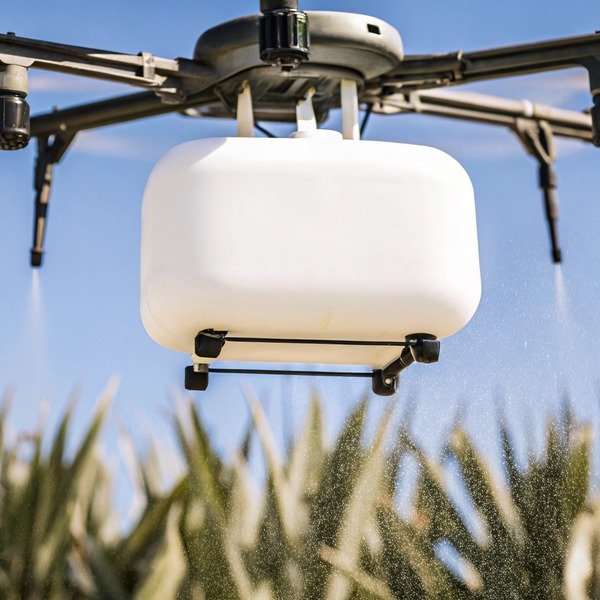
When we analyze flight data from our test fields in Chengdu, we often see a stark contrast between expected battery performance and reality. Farmers frequently tell us that their operations stall not because of the drone itself, but because their power systems fail to last through a full spraying season. This downtime directly impacts your crop yield and your bottom line.
To accurately evaluate battery lifespan and efficiency, you must track the total cycle count against capacity fade, ensuring the pack retains 80% capacity after 300 cycles. Measure charging efficiency by calculating the acres sprayed per kilowatt-hour and monitoring internal resistance to detect aging before flight failure occurs.
Here is a straightforward guide to understanding the true health of your power sources.
How many charge cycles should I expect from professional agricultural drone batteries?
Our engineering team often has to manage expectations when we ship units to the United States or Europe. While we use high-grade cells in our SkyRover models, the environment in which you fly plays a massive role in longevity. We know that believing laboratory statistics without accounting for field conditions leads to disappointment.
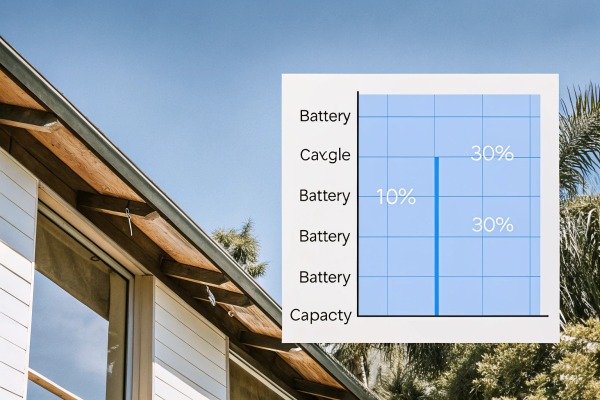
Professional agricultural LiPo batteries typically deliver 300 to 500 cycles in real-world conditions, though lab ratings may promise up to 1,000. Lifespan depends heavily on depth of discharge; regularly draining below 20% or operating in high heat will significantly reduce the usable cycle count to under 200 flights.
Understanding the Gap Between Lab and Field
It is vital to understand why the numbers on a spec sheet differ from what you see on the farm. In a controlled laboratory, batteries are discharged at a steady, low rate and kept at a perfect 25°C (77°F). However, agricultural work is violent and demanding. Your drone carries heavy liquid payloads, fights wind resistance, and often flies in temperatures exceeding 35°C (95°F).
When we monitor our drones in real-world scenarios, we see that "cycle life" is not just a simple count of plug-ins. It is a measure of chemical degradation. chemical degradation 1 A battery is generally considered "dead" for aviation purposes when it can only hold 80% of its original capacity. aviation purposes 2 For a 20,000 mAh battery, this means once it can only charge to 16,000 mAh, it is time to retire it. Continuing to use it risks a mid-flight voltage collapse.
Factors That Kill Cycle Life
The biggest enemy of your battery cycle count is the Depth of Discharge (DoD). Depth of Discharge (DoD) 3 Depth of Discharge 4 If you push your drone to fly until the battery is nearly empty (0-10% remaining), you are causing irreversible chemical damage to the cells.
We recommend landing when the battery is at 20-25%. This "buffer" drastically extends the total number of cycles you can get. If you consistently drain the battery to the limit, you might only get 150 cycles before the battery puffs up or fails.
Comparison of Cycle Expectations
To help you plan your budget, we have compiled data comparing ideal conditions versus typical agricultural use.
| Scenario | Discharge Depth (DoD) | Temperature | Estimated Cycles |
|---|---|---|---|
| Laboratory Ideal | 80% (Land at 20%) | 25°C / 77°F | 800 – 1,000 |
| Careful Field Use | 70% (Land at 30%) | 30°C / 86°F | 400 – 600 |
| Heavy Field Use | 85% (Land at 15%) | 35°C / 95°F | 200 – 300 |
| Extreme Abuse | 95% (Land at 5%) | >40°C / 104°F | < 100 |
By staying in the "Careful Field Use" range, you essentially double the value of your investment.
How does fast charging technology affect the long-term durability of my battery packs?
We constantly debate charge rates with our Battery Management System (BMS) suppliers to find the right balance for our clients. While we know you need to get back in the air quickly to finish a spray job, we also know that rushing the charging process causes invisible damage. Speed is convenient, but it comes with a hidden cost.
Fast charging at rates above 3C significantly increases internal heat, which degrades the electrolyte and shortens overall battery longevity. While it reduces field downtime, frequent high-speed charging accelerates capacity loss, so we recommend balancing fast charges with standard 1C cycles to preserve the pack’s chemical integrity.

The Heat Problem
The primary issue with fast charging is heat. When you force energy into a battery at a high rate (known as a high C-rating), the internal resistance of the cells generates thermal energy. In agricultural settings, you are often charging batteries outdoors. If the ambient temperature is already high, fast charging pushes the internal cell temperature into a danger zone.
Our tests show that once a battery's internal temperature exceeds 50°C (122°F) during charging, the electrolyte begins to decompose. electrolyte begins to decompose 5 This decomposition increases the internal resistance permanently. The next time you fly, the battery will heat up even faster, creating a vicious cycle that leads to battery failure.
Balancing Speed and Durability
We understand that time is money. You cannot wait three hours for a battery to charge when you have 50 acres left to spray. The key is to manage when you use fast charging.
We suggest a "hybrid" approach. Use fast charging (2C to 3C) during the peak of the day when operational tempo is critical. However, for the final charge of the day, or when you have a longer break, switch to a slow charge (0.5C to 1C). This slow charge allows the BMS to balance the cells more accurately and reduces thermal stress.
Charging Speed Impact Table
Here is how different charging speeds impact the lifespan of a standard agricultural LiPo battery.
| Charge Rate | Time to Full Charge | Heat Generation | Impact on Lifespan | Recommended Use |
|---|---|---|---|---|
| Slow (0.5C – 1C) | 60 – 90 mins | Low | Minimal | Overnight / Storage |
| Standard (1C – 1.5C) | 40 – 60 mins | Moderate | Moderate | Routine Operations |
| Fast (2C – 3C) | 20 – 30 mins | High | High | Peak Rush Hours Only |
| Ultra-Fast (>4C) | < 15 mins | Very High | Severe | Emergency Only |
Monitoring Cell Balance
Fast charging often skips the delicate "balancing" phase at the end of the charge cycle. charge cycle 6 Over time, this leads to cell imbalance, where one cell is at 4.20V and another is at 4.10V. If you launch with unbalanced cells, the weak cell will hit the voltage cutoff early, causing the drone to force a landing even if the total pack voltage looks fine. Slow charging corrects this drift.
What are the best practices for maintaining my batteries to ensure maximum lifespan?
Our after-sales support team receives many returned batteries that look swollen or “puffed.” In almost every case, this damage was avoidable. We want to help you avoid the frustration of premature failure by sharing the protocols we use in our own facility.
The best maintenance practices include storing batteries at 3.85V per cell when not in use and never charging a battery immediately after flight. Always allow the pack to cool to ambient temperature before charging, and strictly avoid discharging below 3.6V per cell to prevent permanent chemical damage.
The Cooling Rule
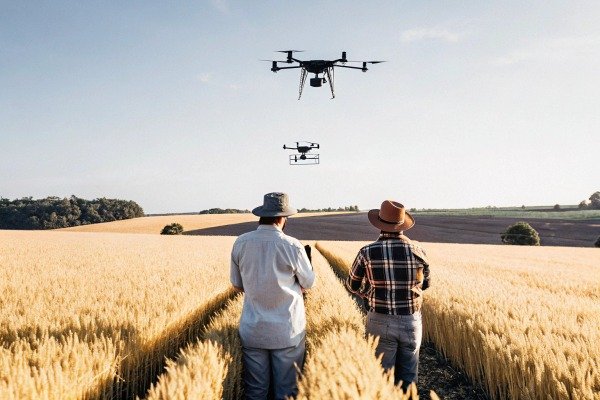
The single most effective habit you can adopt is the "Cool Down" rule. After a flight, your battery is hot. The chemical reaction inside is highly active. If you immediately plug it into a charger, you are adding heat to heat.
We instruct our clients to have enough spare batteries to allow for a rotation. A battery should rest for at least 15 to 20 minutes after landing before it goes on the charger. goes on the charger 7 It should feel cool to the touch. This simple pause can extend the battery's life by 30% or more.
Storage Voltage is Critical
Agricultural drones are seasonal tools. You might fly intensely for three months and then store the drone for winter. If you leave your Lithium Polymer (LiPo) batteries fully charged (4.2V per cell) during the off-season, they will swell and degrade. Lithium Polymer 8 If you leave them empty, the voltage will drop below the critical threshold, killing the cells.
You must put the batteries into "Storage Mode." most smart chargers have this function. It brings the voltage to roughly 3.80V to 3.85V per cell. This is the chemically stable state for Lithium batteries. chemically stable state 9 We check our inventory every 4-6 weeks during storage to ensure they haven't dropped too low.
Physical Inspection Protocols
Before every flight, you should look at your battery. It is not enough to just check the voltage app. Look for physical signs of stress.
- Puffing: Does the battery look swollen? This is gas buildup from electrolyte decomposition. A puffed battery is a fire hazard and should be retired immediately.
- Connectors: Are the metal connectors clean? In agriculture, dust and pesticide residue can coat the connectors. This increases resistance and heat. Clean them with contact cleaner regularly.
- Cable Integrity: Ensure the main power cables are not frayed. High current flows through these; any damage can cause a short circuit.
Maintenance Schedule Summary
| Task | Frequency | Purpose |
|---|---|---|
| Visual Check | Pre-flight (Every time) | Detect swelling or damage |
| Cool Down | Post-flight (Every time) | Prevent thermal runaway |
| Deep Balance Charge | Every 20 cycles | Re-align all cell voltages |
| Storage Voltage Set | If unused > 3 days | Prevent chemical degradation |
| Connector Cleaning | Weekly | Maintain efficient power flow |
How can I accurately test the charging efficiency of my current drone battery inventory?
We use advanced laboratory equipment in Xi’an to test cell quality, but you do not need expensive machines to get reliable data. By observing specific metrics during your daily operations, you can assess the health of your inventory just as effectively as we do.
Test charging efficiency by recording the Internal Resistance (IR) of each cell; a steady increase indicates aging. Additionally, monitor voltage sag during heavy payload maneuvers. If voltage drops significantly under load despite a full charge, the battery lacks the efficiency required for safe agricultural operations.
Tracking Internal Resistance (IR)
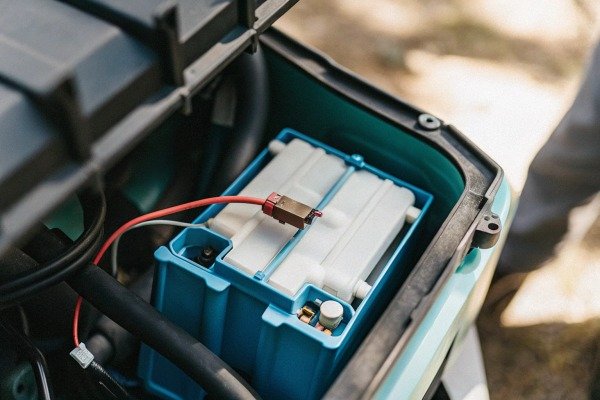
The most scientific way to test a battery's health is to look at its Internal Resistance (IR). Internal Resistance (IR) 10 Most modern smart chargers for agricultural drones will display this number, usually in milliohms (mΩ).
When a battery is new, the IR is very low (often below 5 mΩ per cell). As the battery ages, this number rises. High resistance blocks the flow of energy.
- 0-5 mΩ: Healthy, new condition.
- 5-10 mΩ: Normal aging, still fully flyable.
- 10-20 mΩ: Performance decline. You will notice shorter flight times.
- >20 mΩ: unsafe for heavy payloads. Relegate to training or light duties.
You should log these numbers once a month. If you see one cell suddenly jump in resistance compared to the others, that pack is failing.
The Voltage Sag Test
Efficiency is not just about how much energy the battery holds, but how well it delivers that energy under stress. We call this "Voltage Sag."
A weak battery might show 100% charge (25.2V for a 6S pack) on the ground. However, the moment you lift off with a full tank of pesticide, the voltage might instantly drop to 21V or lower. This is voltage sag. It means the battery cannot deliver the current fast enough.
To test this, hover your drone with a full payload at a safe height (2-3 meters). Watch your telemetry screen.
- Note the voltage before takeoff.
- Note the voltage the instant you stabilize in a hover.
- If the drop is excessive (more than 1.5V to 2.0V total drop), your battery efficiency is poor. The drone thinks it is empty even though it has charge left.
Calculating Acreage per kWh
Finally, look at the economic efficiency. Instead of counting minutes, count the work done. Calculate how many acres you spray per battery charge.
- New Battery: Sprays 15 acres per charge.
- Old Battery: Sprays 10 acres per charge.
If your "acres per charge" metric drops by 20-30%, the battery is costing you money in lost productivity. You are spending more time landing and swapping batteries than actually spraying. This is the practical signal that it is time to order replacements.
Conclusion
Evaluating your agricultural drone batteries requires a mix of disciplined data tracking and practical observation. By monitoring cycle counts, managing heat during charging, and respecting storage protocols, you can significantly extend the life of your equipment. Ultimately, treating your batteries as precision instruments rather than simple fuel tanks will improve your operational efficiency and safety.
Footnotes
1. Technical explanation of chemical degradation in lithium-based batteries. ↩︎
2. Official FAA regulations and safety guidelines for Unmanned Aircraft Systems. ↩︎
3. Authoritative technical definition and analysis of discharge depth effects. ↩︎
4. Manufacturer guidance on managing depth of discharge for drone batteries. ↩︎
5. Scientific explanation of chemical breakdown in batteries due to heat. ↩︎
6. International standards for secondary lithium cells and batteries. ↩︎
7. Government guidance on handling and recycling lithium batteries to prevent fire hazards. ↩︎
8. Background information on Lithium Polymer battery technology. ↩︎
9. Government guidelines on maintaining battery chemical stability during storage. ↩︎
10. Industry leader in test equipment explaining resistance measurement methodology. ↩︎


 English
  Español de México
  Deutsch
  Français
  Русский
  العربية
Comments
No comments yet. Be the first to share your thoughts!
Leave a Comment