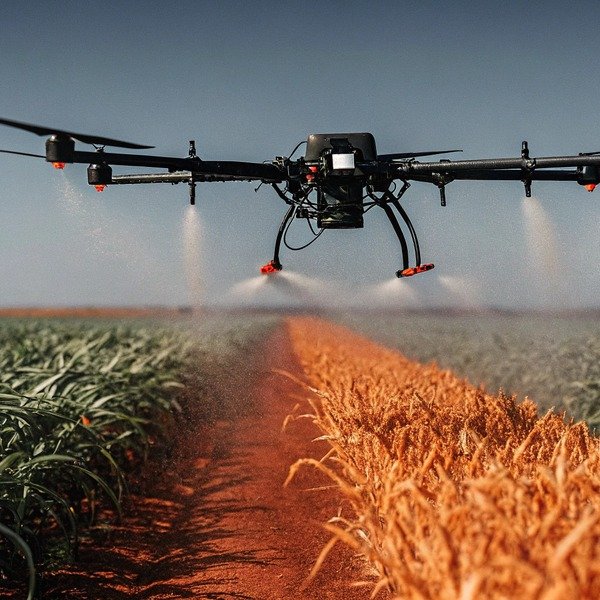
In our Xi’an testing facility, we often see clients lose thousands of dollars in potential crop yield simply potential crop yield 1 because their power supply chain cannot keep up with the drone’s flight pace.
To ensure operational efficiency gas engines lose efficiency 2, configure a minimum of three batteries per drone alongside a high-wattage smart charger capable of 9 to 12-minute cycles. Pair this with an inverter generator offering at least 20% more continuous power than the charger’s peak draw to prevent overloads and ensure uninterrupted flights.
Achieving a seamless workflow requires precise calculation of power input and output; let’s examine the specific numbers you need to prevent downtime in the field.
How many batteries and chargers do I need to achieve continuous flight cycles?
When we map out large-scale spraying operations for our partners in the US Midwest, we find that the biggest bottleneck is almost always the waiting time between battery swaps pure sine wave 3.
You need exactly three batteries per drone to achieve continuous cycles: one in the air, one cooling down, and one charging. Use a dual-channel smart charger that supports rapid 4C or 5C charging rates to complete a full charge before the active drone lands.
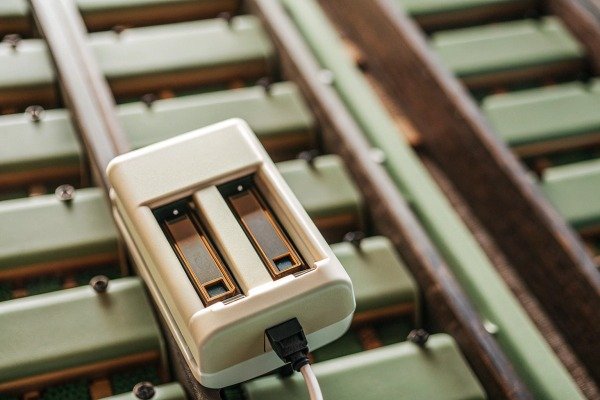
To understand why three batteries are the absolute minimum for efficiency, you must look at the physics of the operation. At our factory, we simulate rigorous "non-stop" flight days. A typical agricultural drone flight with a full payload lasts between 10 to 12 minutes. However, high-current discharge heats the battery significantly. You cannot immediately plug a hot battery into a charger; doing so triggers the Battery Management System (BMS) thermal protection Battery Management System 4 Battery Management System (BMS) 5, which prevents charging until the temperature drops.
This creates a three-stage gap. The first battery is flying. The second battery, which just landed, is in the "cooling phase," which can take 5 to 10 minutes depending on ambient temperature. The third battery is on the charger. If you only have two batteries, your pilot will sit idle for 10 minutes every cycle while the hot battery cools down. This idle time accumulates. Over an 8-hour shift, a two-battery setup can result in 2 to 3 hours of lost productivity.
We recommend a "1+1+1" configuration for one drone. If you are operating a fleet, this ratio scales linearly. Furthermore, the charger must be a dual-channel or four-channel model capable of outputting at least 3000W to 5000W per channel. This ensures that while one port is charging, the other is ready to accept the next cooled battery immediately. If your charger lacks independent channel power, it will split the wattage, doubling the charge time and breaking the continuous cycle.
Battery Rotation Workflow Efficiency
| Operational Stage | Battery A Status | Battery B Status | Battery C Status | Pilot Activity |
|---|---|---|---|---|
| 00:00 – 00:12 | Flying (Discharging) | Ready / Standby | Charging | Spraying |
| 00:12 – 00:24 | Cooling Down | Flying (Discharging) | Ready / Standby | Spraying |
| 00:24 – 00:36 | Charging | Cooling Down | Flying (Discharging) | Spraying |
| Result | Zero Downtime | Zero Downtime | Zero Downtime | Continuous |
What generator capacity is required to charge multiple high-capacity drone batteries simultaneously?
We have received frantic calls from dealers whose generic construction generators damaged the sensitive electronics of our SkyRover units due to unstable voltage output.
Select a generator where the continuous running watts exceed your charger’s maximum input by 20% to 30%. For a 3000W charger, use a 4500W inverter generator to handle start-up surges and maintain a stable pure sine wave that protects the drone’s battery management system.
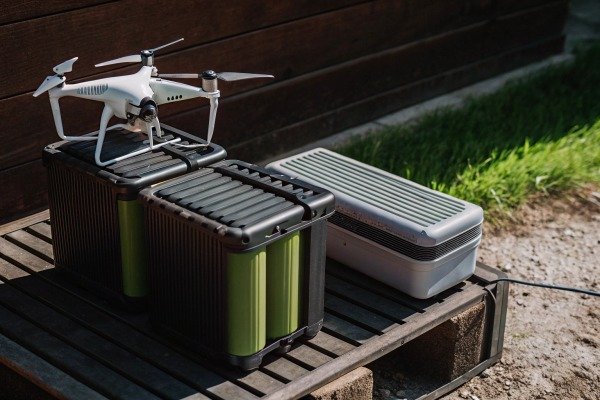
The relationship between your generator and your charger is critical. Many users look at a charger rated for 3000W and buy a 3000W generator. This is a mistake. Chargers often have a "power factor" inefficiency and an initial current inrush that can trip the breaker of a generator running at max capacity. Furthermore, running a generator at 100% load continuously causes voltage sags and spikes—"dirty power"—which can fry the delicate BMS boards inside modern smart batteries.
In our engineering tests, we found that inverter generators are non-negotiable. Unlike standard open-frame construction generators, inverters produce a pure sine wave with a Total Harmonic Distortion (THD) of Total Harmonic Distortion (THD) 6 less than 3%. Total Harmonic Distortion 7 Agricultural drone batteries, especially the 14S and 18S high-voltage smart batteries we use, communicate with the charger via data pins. If the AC input power is erratic, the charger will often cut off for safety, halting your operation.
You must also account for altitude. If your farm is located in high-elevation areas like parts of Colorado parts of Colorado 8 or mountain regions in Europe, gas engines lose efficiency—roughly 3.5% for every 1,000 feet of elevation. A 5000W generator at sea level might only deliver 4000W at 6,000 feet. We always advise our clients to over-spec their power source. If you plan to charge two 30Ah batteries simultaneously at high speed, you might be drawing 7000W or more. In this case, a single portable generator won't suffice; you may need a parallel kit to link two 5000W units or invest in a heavy-duty 9000W+ station.
Generator Sizing Matrix for Common Chargers
| Charger Power Rating | Max Current Draw (est.) | Recommended Generator (Sea Level) | Recommended Generator (High Altitude >3000ft) | Generator Type |
|---|---|---|---|---|
| 3000W (Single Channel) | ~28A @ 110V | 4500W Continuous | 5500W Continuous | Inverter (Pure Sine) |
| 5000W (Dual Channel) | ~23A @ 220V | 7000W Continuous | 8500W Continuous | Inverter / Diesel |
| 9000W (Quad Channel) | ~41A @ 220V | 12,000W Continuous | 15,000W Continuous | Heavy Duty Diesel |
How do I calculate the optimal charging turnaround time based on my drone's flight duration?
During the development of our latest heavy-lift models, we realized that theoretical charging speeds on paper rarely match the reality of a hot summer day in the field.
Calculate turnaround time by dividing battery capacity in Amp-hours by the charger’s current output, then adding 5 to 10 minutes for cooling. To match a 10-minute flight duration, your charging system must deliver at least 50 Amps to fully replenish a 30Ah battery within that tight window.
To synchronize your ground support with your air operations, you need to master the math of "C-ratings." The C-rating represents the speed at which a battery can be charged or discharged relative to its capacity. For agricultural operations, we aim for a charging speed of 3C to 5C charging speed of 3C to 5C 9. A 1C charge takes one hour. A 3C charge takes 20 minutes. A 5C charge takes roughly 12 minutes.
Let's break down the calculation for a standard 30Ah (30,000mAh) battery used in many 40-liter payload drones.
- Target Charge Time: 10 Minutes (0.166 hours)
- Required Current (Amps): Capacity (Ah) / Time (Hours) = 30Ah / 0.166h ≈ 180 Amps.
This calculation shows that to charge a massive 30Ah battery in 10 minutes, you need a charger capable of pushing incredibly high amperage. Most standard wall outlets only provide 15-20 Amps. This is why specialized agricultural chargers operate at much higher voltages and currents. If your charger maxes out at 50 Amps, that 30Ah battery will take roughly 36 minutes to charge (30Ah / 50A = 0.6h), which completely breaks your flight cycle.
Furthermore, we must address the "cooling bottleneck." Even if you have a charger that outputs 10,000W, it is useless if the battery is too hot to accept the charge. To solve this, advanced setups use water-cooled charging tanks. These tanks submerge the battery (which is sealed) in circulating cool water, effectively removing the cooling delay. Without active cooling, you must factor in that 10-minute "dead time" into your calculation, or your drone will be grounded.
Charge Time vs. Flight Time Scenarios
| Drone Payload | Battery Capacity | Flight Duration | Required Charge Rate | Est. Charge Time (No Cooling) | Est. Charge Time (Water Cooling) |
|---|---|---|---|---|---|
| 10L – 16L | 16Ah (16000mAh) | 12-15 min | 3C | 25 min (includes cooling) | 18 min |
| 30L | 30Ah (30000mAh) | 10-12 min | 4C | 22 min (includes cooling) | 12 min |
| 50L | 40Ah (40000mAh) | 8-10 min | 5C | 20 min (includes cooling) | 9 min |
Should I prioritize ultra-fast charging speeds or battery longevity for my agricultural fleet?
We advise our long-term distribution partners that while speed generates revenue today, abusing batteries will destroy their profitability next season.
Prioritize ultra-fast charging during peak spraying seasons when downtime costs exceed the price of battery degradation. However, switch to slower, 1C charging rates and utilize storage modes during off-peak times to extend battery cycle life and reduce long-term replacement costs for your fleet.
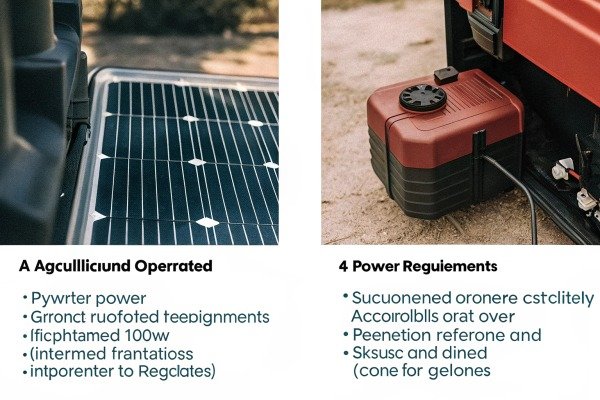
This is the classic "CapEx vs. OpEx" debate. Lithium-polymer (LiPo) and Lithium-High Voltage (LiHV) batteries used in agriculture degrade Lithium-polymer (LiPo) 10 based on heat and voltage stress. Charging at 5C (9 minutes) generates immense internal heat and pushes the chemical ions to their limit. Our lab data indicates that consistently charging at maximum speed can reduce a battery's total lifespan from 1,000 cycles down to 400 or 500 cycles.
However, in agriculture, timing is everything. If you are fighting a pest outbreak or a fungal infection that must be sprayed within a 48-hour window, the value of the crop far outweighs the cost of the battery. In these high-pressure moments, we tell our clients: "Burn the candle at both ends." Use the fast-charge mode. The extra $1,000 in battery wear is negligible compared to saving a $50,000 crop harvest.
The mistake happens when operators use ultra-fast charging when it isn't necessary. If you are doing routine maintenance spraying or mapping where time is less critical, dial the charger down to "Slow" or "Normal" mode (usually around 1C to 2C). Additionally, never leave these high-energy batteries fully charged for long periods. If rain cancels your operation, discharge them to storage voltage (roughly 3.85V per cell) immediately. Leaving a battery at 100% charge for even a week causes irreversible internal resistance buildup, making the battery "soft" and unable to hold voltage under load later.
Operational Strategy: Speed vs. Longevity
- Emergency Mode (Pest Outbreak): Use 9-12 min Fast Charge. Accept 0.1% cycle life loss per charge. Goal: Max daily acreage.
- Routine Mode (Fertilizer/Seeding): Use 20-30 min Standard Charge. Preserves cycle life. Requires 4 batteries in rotation instead of 3.
- Storage Mode (Off-Season): Charge/Discharge to 50-60%. Store in fire-safe cool room. Check voltage monthly.
Conclusion
Configuring the right power ecosystem is just as important as choosing the drone itself. By securing a 3-battery rotation, matching a generator with 20% overhead, and actively managing charging speeds based on urgency, you can eliminate downtime and maximize the ROI of your agricultural operations.
Footnotes
1. Official government data on agricultural productivity. ↩︎
2. Government reference on engine performance at altitude. ↩︎
3. Background information on the characteristics of sine waves in alternating current power. ↩︎
4. Technical documentation from a leading manufacturer regarding intelligent battery management and safety. ↩︎
5. Technical overview of battery management technology. ↩︎
6. Industry standard definition for power quality metrics. ↩︎
7. Industry standard for power quality and harmonic limits in electrical systems. ↩︎
8. Official state guidance on pesticide application requirements for agricultural operations in high-altitude regions. ↩︎
9. Educational resource explaining battery C-ratings. ↩︎
10. General overview of the chemistry and applications of Lithium-polymer battery technology. ↩︎

 English
  Español de México
  Deutsch
  Français
  Русский
  العربية
Comments
No comments yet. Be the first to share your thoughts!
Leave a Comment