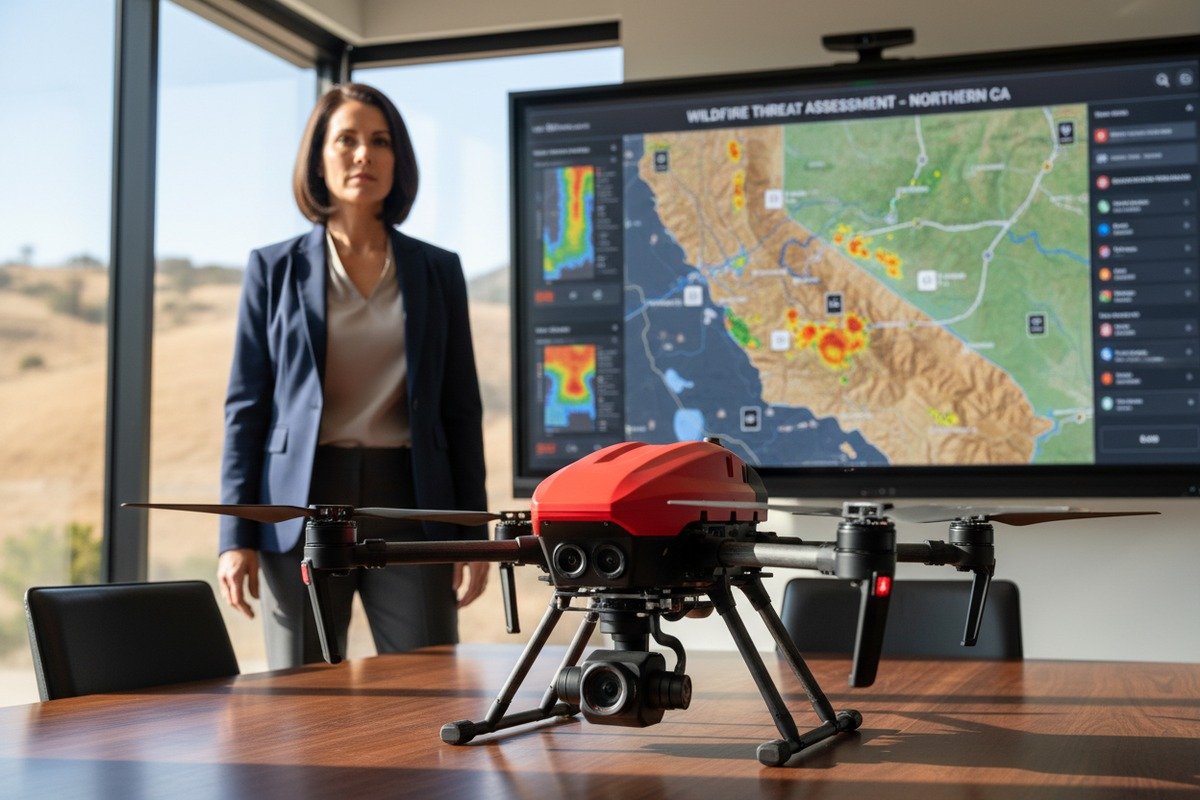
Cada año, nuestra línea de producción envía drones de extinción de incendios a empresas de protección de activos que, semanas antes, no tenían idea de por dónde empezar auditoría de riesgo de incendios forestales 1. La amenaza de incendios forestales está creciendo. Las propiedades en California, Colorado y en todo el oeste de EE. UU. se enfrentan a un riesgo sin precedentes. Sin embargo, la mayoría de las empresas se paralizan en la línea de salida, abrumadas por las especificaciones, las regulaciones, las opciones de proveedores y la logística de importación cumplimiento normativo de la FAA 2. El coste de la inacción es claro: un incendio cercano puede destruir millones en activos protegidos de la noche a la mañana.
Las empresas de protección de activos comienzan a comprar drones de extinción de incendios realizando primero una auditoría de riesgo de incendios forestales de sus propiedades protegidas, luego evaluando las especificaciones técnicas de los drones y las certificaciones del proveedor, navegando por el cumplimiento normativo de la FAA y, finalmente, gestionando el proceso de envío y aduanas de importación para garantizar una entrega y despliegue fluidos.
Esta guía le guiará a través de todo el proceso de adquisición, paso a paso resolución de imagen térmica 3. Ya sea que proteja fincas remotas, campus industriales o propiedades corporativas, encontrará consejos prácticos a continuación. Lo escribimos basándonos en nuestra experiencia en la fabricación y exportación de drones industriales de extinción de incendios a EE. UU. y Europa marco con clasificación IP 4. Empecemos.
¿Cómo elijo las especificaciones técnicas adecuadas para el primer dron de extinción de incendios de mi empresa?
Cuando calibran nuestros controladores de vuelo y prueban los sistemas de carga útil en nuestras instalaciones de Xi'an, vemos de primera mano cómo una especificación incorrecta puede hacer que un dron sea inútil en condiciones reales de incendio Gestión de calidad ISO 9001 5. Muchos compradores primerizos se centran únicamente en el precio. Pasan por alto payload capacity 6, la autonomía de vuelo, el tipo de sensor y las clasificaciones ambientales. Esto lleva al arrepentimiento y a presupuestos desperdiciados.
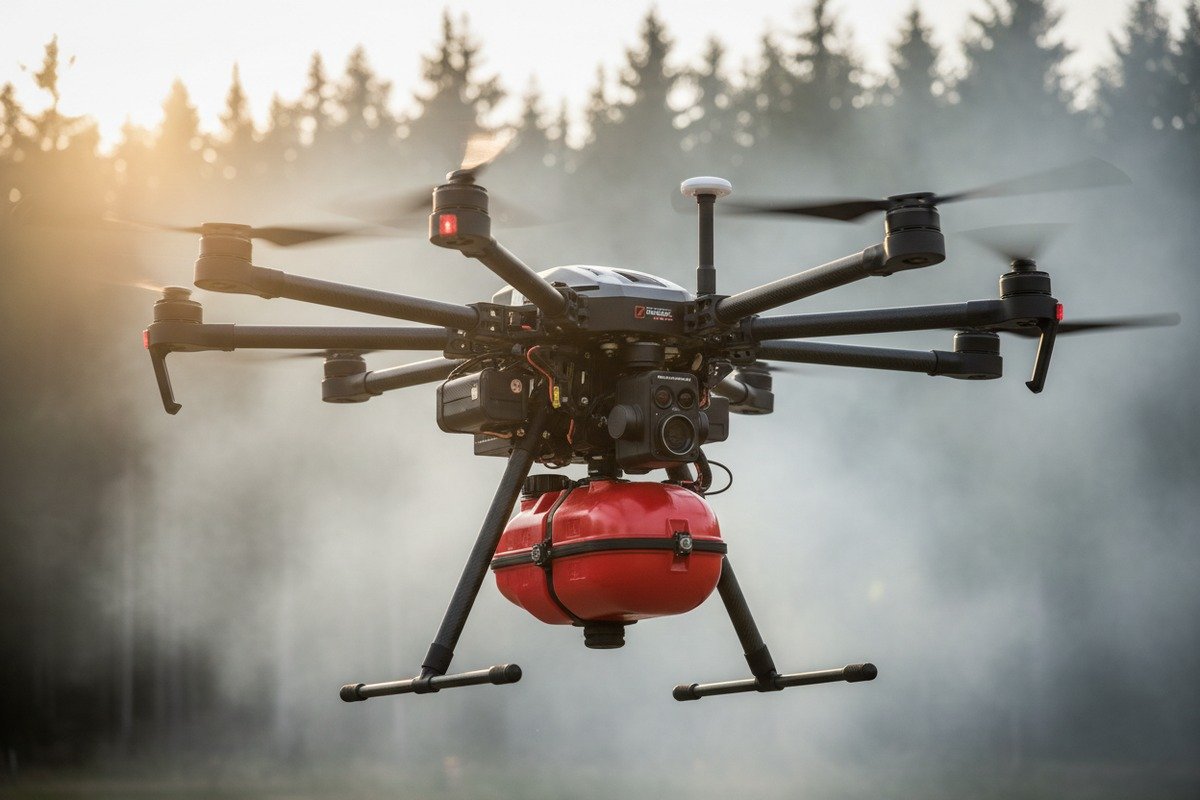
Elija las especificaciones haciendo coincidir su tipo de activo y perfil de riesgo de incendio con las capacidades del dron: priorice la capacidad de carga útil para agentes supresores, la resolución de imágenes térmicas para la detección temprana, una autonomía de vuelo de al menos 30 minutos y un marco con clasificación IP que resista el calor, el humo y el viento en condiciones reales de incendio forestal.
Empiece por su perfil de riesgo
Antes de abrir una sola hoja de especificaciones, responda a estas preguntas código arancelario HS 7. ¿Qué tipo de activos protegen? ¿Qué tan remotos son? ¿Cuál es el historial local de incendios forestales? Una empresa que protege una finca en una ladera en Malibú tiene necesidades diferentes a las de una que protege una instalación de almacenamiento de petróleo en Texas.
Para propiedades remotas con alto riesgo de incendio forestal, necesita una larga autonomía de vuelo, idealmente de 30 a 55 minutos, y sólidas funciones de GPS y navegación autónoma. Para sitios industriales urbanos o suburbanos, puede priorizar la calidad de la imagen térmica y un marco compacto que pueda operar en espacios más reducidos.
Especificaciones Clave a Evaluar
Aquí hay un desglose de las especificaciones principales que debe comparar al evaluar su primer dron contra incendios.
| Especificaciones | Por qué es importante | Rango Recomendado |
|---|---|---|
| Capacidad de carga útil | Determina cuánta agua o retardante puede transportar el dron por vuelo | 10–50 kg para supresión inicial |
| Autonomía de vuelo | Vuelos más largos significan más cobertura por ciclo de batería | 30–55 minutos |
| Resolución de la cámara térmica | Mayor resolución detecta puntos calientes más pequeños antes | 640×512 píxeles o superior |
| Resistencia máxima al viento | Los incendios crean fuertes corrientes ascendentes; el dron debe mantenerse estable | Nivel 6 de viento (hasta 13,8 m/s) |
| Clasificación IP | Protección contra la exposición al polvo, al agua y al calor | IP54 o superior |
| Rango de comunicación | Garantiza el control y la alimentación de video a distancia del incendio | 10–15 km |
| Modos de vuelo autónomo | Permite rutas de patrulla preprogramadas y regreso al punto de origen | Waypoint, órbita y RTH |
Carga útil y supresión: la especificación más incomprendida
Muchos compradores asumen que una mayor carga útil siempre es mejor. No es tan simple. Un dron con carga útil de 50 kg es pesado, caro de operar y más difícil de transportar. Para la mayoría de las empresas de protección de activos que recién comienzan, una capacidad de carga útil de 15 a 30 kg maneja la supresión en etapas tempranas y la entrega de retardante de manera efectiva. Nuestros ingenieros han descubierto que igualar la carga útil a su escenario de incendio más probable —pequeños incendios de maleza cerca de un perímetro, por ejemplo— le brinda el mejor retorno de la inversión.
Sensores más allá de lo térmico
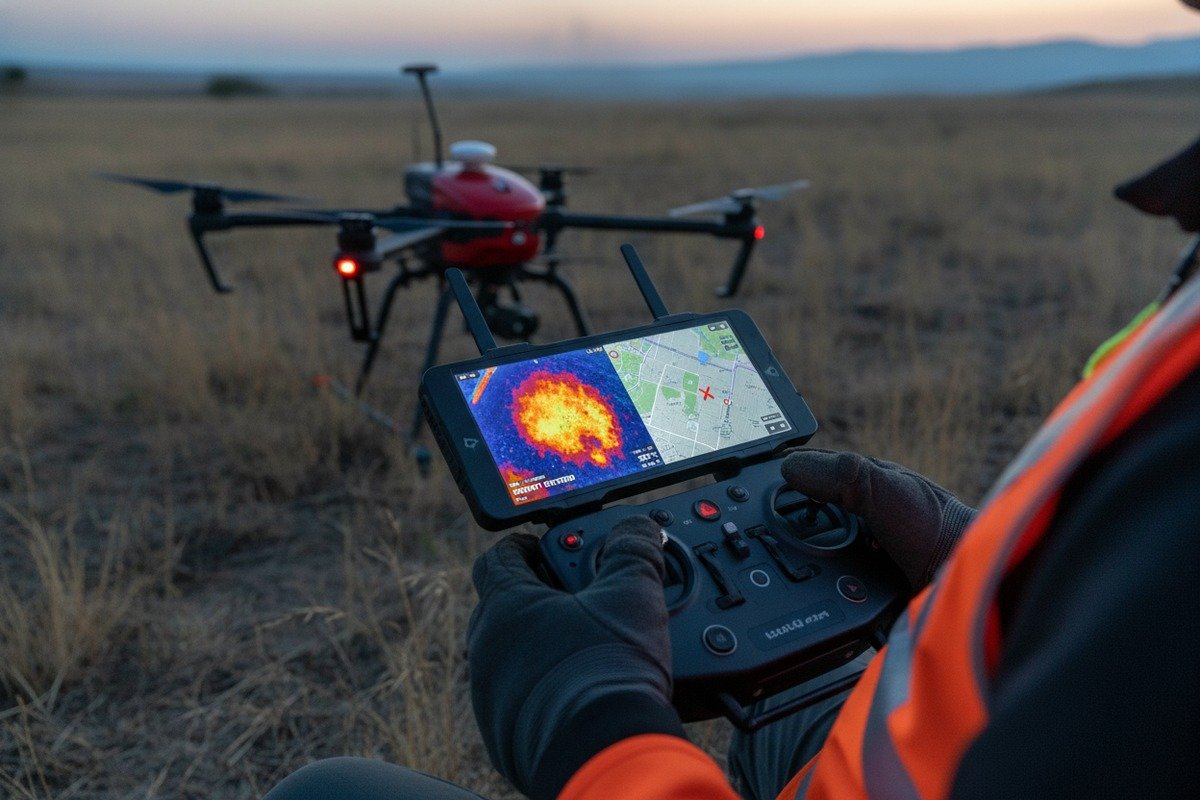
La imagen térmica es esencial, pero considere sensores multiespectrales 8 también. Estos detectan gases como CO y HCN que indican combustión oculta. Algunos de nuestros clientes también solicitan integración LiDAR para mapeo de terreno 3D, lo que ayuda en la planificación previa al incidente. Si sus activos protegidos incluyen almacenamiento de productos químicos o materiales peligrosos, los sensores de detección de gas no son opcionales, son críticos.
No olvide la compatibilidad del software
El mejor hardware es inútil sin un software que se ajuste a su flujo de trabajo. Pregunte si el software de control de vuelo del dron se integra con sus plataformas de seguridad y centro de comando existentes. La detección de incendios impulsada por IA, la planificación predictiva de rutas y la transmisión de video en tiempo real son características que separan un dron de topografía básico de una verdadera herramienta de extinción de incendios.
¿Cómo puedo verificar si un fabricante proporciona el soporte de ingeniería y las certificaciones que necesito?
Una de las quejas más comunes que escuchamos de los nuevos importadores de EE. UU. es esta: "Mi último proveedor desapareció después de la venta". Nuestro equipo de soporte en Xi'an atiende preguntas de ingeniería postventa a diario porque sabemos que esta industria exige una asociación técnica continua, no solo una transacción única. El dolor es real: sin soporte remoto o en el sitio, un dron inmovilizado durante la temporada de incendios es una responsabilidad, no un activo.
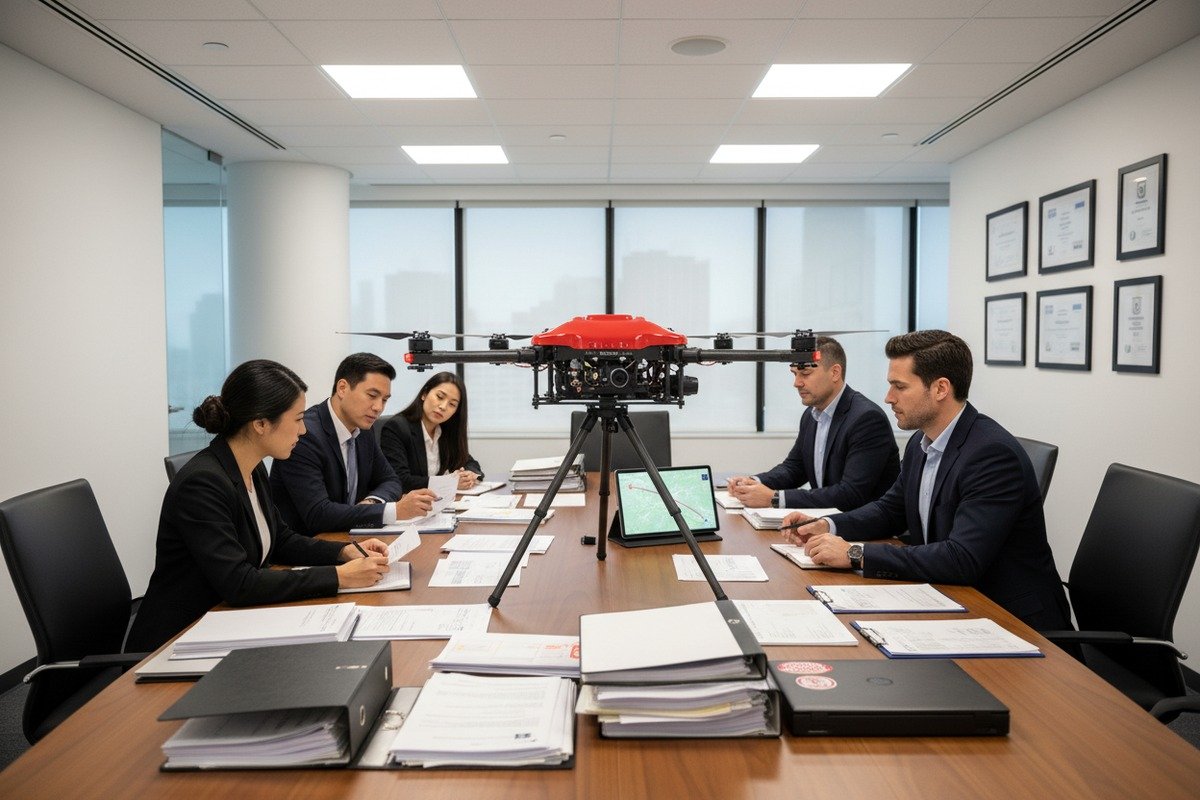
Verify a manufacturer's support and certifications by requesting documented proof of ISO 9001 quality management, CE or FCC compliance certificates, FAA Part 107 compatibility statements, and a written after-sales support agreement that includes remote diagnostics, firmware updates, spare parts supply, and defined response times.
Certificaciones que realmente importan
No todas las certificaciones tienen el mismo peso. Aquí hay una tabla que muestra cuáles debe priorizar y por qué.
| Certificación / Estándar | Qué cubre | Por qué lo necesita |
|---|---|---|
| ISO 9001 | Sistemas de gestión de calidad | Confirms consistent manufacturing quality |
| Marcado CE | European safety and environmental standards | Required for European markets; signals quality globally |
| FCC Parte 15 9 | Radio frequency emissions compliance | Required for any drone operating in the US |
| Parte 107 de la FAA 10 Compatibilidad | Commercial drone operation standards | Your operators need this; the drone must support compliant flight modes |
| IP54 or Higher Rating | Protección contra la entrada de polvo y agua | Proves the drone can operate in harsh fire environments |
| ITAR / EAR Compliance | US export control regulations | Important if the drone uses certain sensors or technology |
Ask for Documentation, Not Just Claims
Any manufacturer can say they have certifications. Ask for scanned certificates with valid dates. Check whether those certificates come from recognized third-party bodies. At our facility, we keep all documentation updated and readily available for any procurement manager who requests it. If a manufacturer hesitates or delays, that is a red flag.
Engineering Support: What to Demand in Writing
Before you sign a purchase order, get a written after-sales support agreement. This should cover:
- Diagnóstico remoto: ¿Puede el fabricante solucionar problemas a través de videollamada o acceso remoto por software?
- Actualizaciones de firmware y software: ¿Son gratuitas? ¿Con qué frecuencia se publican?
- Disponibilidad de repuestos: ¿Cuál es el plazo de entrega? ¿Se mantienen en stock las piezas críticas?
- Garantías de tiempo de respuesta: ¿Responderán en 24 horas? ¿48 horas?
- Asistencia in situ: Para pedidos grandes o integraciones personalizadas, ¿enviarán un ingeniero?
Incluimos todo esto en nuestros acuerdos de exportación estándar porque hemos visto lo que sucede cuando las empresas se quedan sin soporte. Un dron parado en un almacén debido a un fallo de software durante la temporada alta de incendios es inaceptable.
Comprobar referencias y trayectoria
Pida al fabricante referencias de otras empresas de protección de activos o departamentos de bomberos a los que haya suministrado. Póngase en contacto con esas referencias. Pregunte sobre los plazos de entrega, la durabilidad del producto y la receptividad del equipo de soporte después de la venta. Nuestros clientes en EE. UU. y Europa a menudo están contentos de compartir su experiencia porque saben lo importante que es esta decisión.
¿Puedo colaborar en diseños de software y hardware personalizados para mis requisitos específicos de protección de activos?
Cuando nuestro equipo de I+D se reúne con un nuevo cliente, la conversación suele comenzar con "Necesitamos algo diferente". Cada empresa de protección de activos tiene requisitos únicos: terreno diferente, tipos de activos diferentes, necesidades de integración diferentes. Los drones listos para usar pueden hacer mucho, pero las empresas que obtienen una verdadera ventaja competitiva son las que invierten en personalización. El problema es que muchos fabricantes no pueden o no quieren ofrecer este nivel de colaboración.
Sí, puede colaborar en diseños de software y hardware personalizados. Los principales fabricantes ofrecen servicios OEM que incluyen carcasas de marca, software de control de vuelo a medida, integración de sensores personalizados, sistemas de carga útil especializados y conectividad a nivel de API con sus plataformas de seguridad existentes, siempre que comunique claramente los requisitos durante la fase de diseño.
¿Qué se puede personalizar?
El alcance de la personalización es más amplio de lo que la mayoría de los compradores primerizos esperan. Aquí hay un desglose práctico.
| Área de personalización | Ejemplos | Plazo de entrega habitual |
|---|---|---|
| Hardware / Chasis | Montajes de carga útil personalizados, carcasas reforzadas, marca en color | 4–8 semanas |
| Sensores | Adición de LiDAR, cámaras multiespectrales, detectores de gas | 3–6 semanas |
| Software de Control de Vuelo | Programación de puntos de referencia personalizados, geovallas, rutas de patrulla automática | 4–10 semanas |
| Integración de datos / API | Conexión de transmisiones de drones a su centro de comando, sensores IoT o sistemas SCADA | 6–12 semanas |
| Sistemas de carga útil | Boquillas especializadas para retardante, tanques de agua modulares, mecanismos de liberación | 4–8 semanas |
| Marca / OEM | El logotipo de su empresa, embalaje personalizado, documentación de marca blanca | 2–4 semanas |
El Proceso de Colaboración
En nuestras instalaciones, el proceso generalmente sigue estos pasos. Primero, realizamos una llamada detallada de requisitos. Usted describe sus activos, sus escenarios de incendio, su infraestructura de seguridad existente y sus objetivos operativos. Segundo, nuestros ingenieros redactan una propuesta técnica con maquetas de diseño, cronogramas y estimaciones de costos. Tercero, construimos y probamos un prototipo. Cuarto, usted revisa y aprueba, o solicita cambios. Quinto, pasamos a la producción.
Este proceso funciona mejor cuando usted asigna un punto de contacto dedicado de su lado. Hemos visto que los proyectos se estancan cuando la comunicación pasa por demasiadas capas. Una línea directa entre su gerente de adquisiciones y nuestro líder de ingeniería acelera todo.
Software: El verdadero diferenciador
La personalización del hardware llama la atención, pero el software es donde ocurren las mayores ganancias. Nuestro equipo de desarrollo puede crear módulos de IA personalizados para sus necesidades específicas de detección de incendios. Por ejemplo, si sus propiedades protegidas incluyen granjas de paneles solares, podemos entrenar algoritmos de detección para distinguir entre reflejos de paneles y anomalías térmicas reales. Si necesita rutas de patrulla autónomas que se adapten a los datos de viento y clima en tiempo real, eso también es factible.
También admitimos la integración completa de API. Esto significa que sus paneles de seguridad existentes, sensores IoT de humo y calor, y plataformas de centro de comando pueden recibir datos de drones en vivo sin intervención manual. Para las empresas que ya utilizan plataformas como Genetec o Milestone para la gestión de video, esta integración cambia las reglas del juego.
Protegiendo su propiedad intelectual
Some firms worry about IP when collaborating with an overseas manufacturer. This is a valid concern. We address it by signing non-disclosure agreements before any design work begins and by offering exclusive manufacturing agreements for custom designs. Make sure your contract specifies who owns the design files, software code, and any patents that result from the collaboration.
Cantidades mínimas de pedido para trabajos personalizados
Custom projects do require a minimum commitment, but it is often lower than people expect. For hardware modifications, our minimum is typically 5–10 units. For software-only customizations, we can sometimes work on a per-project fee basis with no unit minimum. Always ask upfront so you can plan your budget accordingly.
¿Cuál es la mejor manera de gestionar el proceso de envío y aduanas para la importación de mi primer dron?
Our logistics team handles door-to-door deliveries to the US and Europe every month. Even so, we know that for first-time importers, the shipping and customs process feels like a black box. One wrong document, one missed tariff code, and your drones sit in a warehouse at the port for weeks. That delay can cost you an entire fire season—and the trust of your clients.
Maneje su primera importación de drones asociándose con un fabricante que ofrezca entrega puerta a puerta, confirmando el código arancelario HS correcto para aeronaves no tripuladas, preparando todos los documentos requeridos, incluidas facturas comerciales, listas de empaque, certificados de conformidad y declaraciones de la FCC, y contratando a un agente de aduanas con licencia en EE. UU. para gestionar el despacho y los pagos de impuestos.
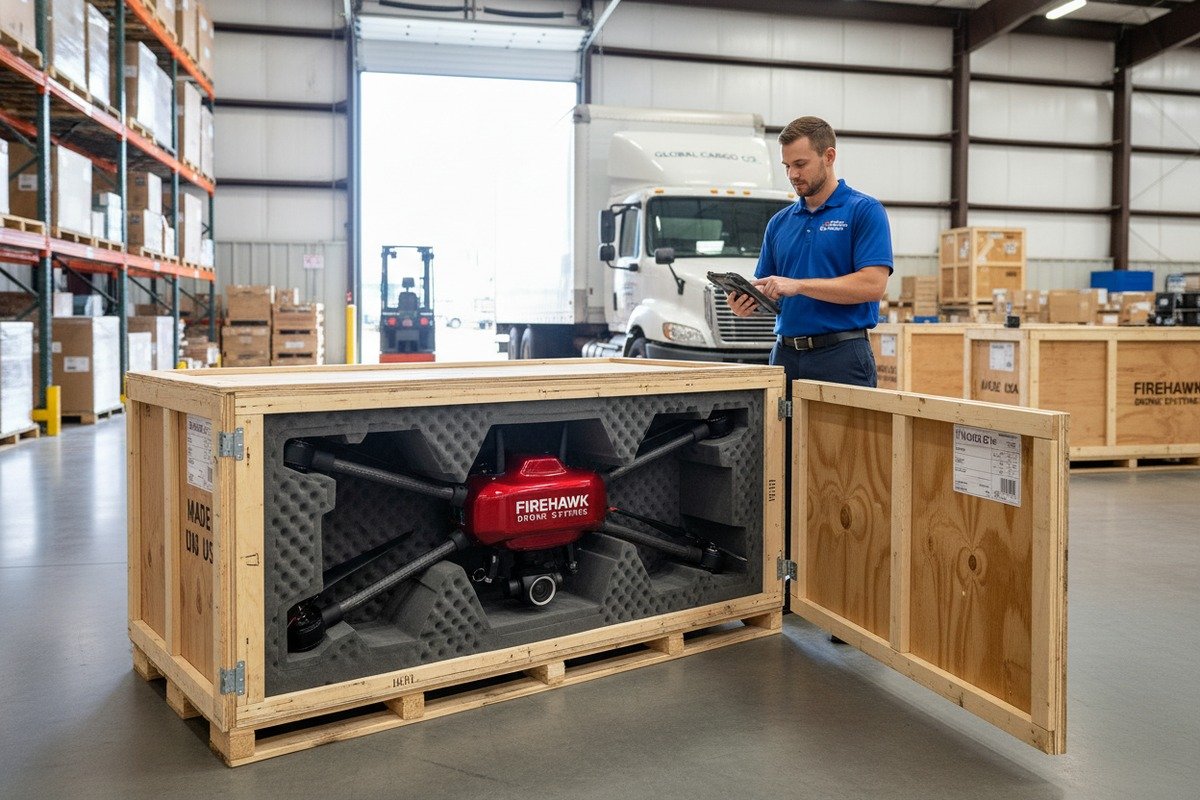
Understanding the Document Checklist
The paperwork is the most common point of failure for first-time importers. Here is what you need.
- Factura comercial: Lists the product, quantity, unit price, total value, and Incoterms (e.g., DDP, FOB, CIF).
- Lista de empaque: Details weight, dimensions, and contents of each package.
- Conocimiento de embarque o guía aérea: The shipping carrier's receipt and contract of carriage.
- Certificado de conformidad: Proves the product meets applicable standards (CE, FCC).
- Declaración de Conformidad de la FCC: Required for any electronic device entering the US.
- Hoja de datos de seguridad de materiales (MSDS): If your drone ships with lithium batteries (it will), this is mandatory.
- Certificado de Origen: Confirms where the product was manufactured.
Preparamos todos estos documentos para nuestros clientes como parte de nuestro servicio de exportación estándar. Si su fabricante no ofrece esto, deberá prepararlos usted mismo, o contratar a un transitario que pueda hacerlo.
Elegir el método de envío correcto
| Método de envío | Transit Time | Nivel de costos | Ideal para |
|---|---|---|---|
| Transporte aéreo | 5–10 días | Alto | Pedidos urgentes, unidades individuales, repuestos |
| Flete Marítimo (FCL) | 25–40 días | Bajo | Pedidos a granel grandes (10+ unidades) |
| Carga Marítima (LCL) | 30–45 días | Medio | Pedidos a granel más pequeños compartiendo espacio en contenedor |
| Transporte marítimo (a Europa) | 18–25 días | Medio | Entregas europeas equilibrando coste y velocidad |
| Mensajería exprés (DHL/FedEx) | 3–7 días | Muy alto | Muestras, accesorios pequeños, repuestos urgentes |
Para su primera compra, el transporte aéreo suele ser la opción más segura. Es más rápido y puede seguir el envío de cerca. Una vez que tenga una relación establecida con su fabricante y un proceso aduanero fiable, puede cambiar al transporte marítimo para ahorrar costes en pedidos más grandes.
Regulaciones de envío de baterías de litio
Este es un punto crítico que muchos compradores primerizos pasan por alto. Los drones de extinción de incendios utilizan baterías de polímero de litio de alta capacidad. Estas se clasifican como mercancías peligrosas según las regulaciones IATA e IMO. Su fabricante debe empaquetar y etiquetar estas baterías de acuerdo con las normas UN 3481. La MSDS debe acompañar el envío. El incumplimiento puede dar lugar al rechazo del envío, multas o retrasos.
Enviamos baterías de litio en embalajes certificados por la ONU con todas las etiquetas de peligro requeridas. También proporcionamos la MSDS y la Declaración de Mercancías Peligrosas de forma estándar. Pregunte a su fabricante si hace lo mismo.
Derechos de aduana y códigos arancelarios
En los EE. UU., los drones generalmente caen bajo el código HS 8806 (aeronaves no tripuladas). El subcódigo específico depende del peso del dron y de si está diseñado para carga o vigilancia. Las tasas de aranceles varían y pueden verse afectadas por cambios en la política comercial, por lo que siempre confirme la tasa actual con su agente de aduanas antes de importar. En los últimos años, pueden aplicarse aranceles adicionales a los productos chinos según la Sección 301, que pueden agregar del 7.5% al 25% además del arancel estándar.
Trabaje con un agente de aduanas con licencia en EE. UU. Ellos clasificarán su producto correctamente, presentarán la documentación de entrada y manejarán los pagos de aranceles. El costo de un agente es pequeño en comparación con el costo de un envío mal clasificado o una retención aduanera.
Entrega puerta a puerta: por qué es importante
Ofrecemos entrega puerta a puerta, conocida como Incoterms DDP (Delivered Duty Paid), porque elimina el mayor dolor de cabeza para los importadores primerizos. Bajo DDP, nos encargamos de todo: despacho de exportación en China, envío internacional, despacho de importación en EE. UU., pagos de aranceles y entrega final en su almacén o sitio. Usted recibe el dron en su puerta, listo para desembalar y desplegar.
Si su fabricante solo ofrece FOB (Free on Board) o CIF (Cost, Insurance, Freight), deberá organizar su propio despacho de aduanas y transporte terrestre. Para una primera compra, se recomienda encarecidamente DDP.
Conclusión
Comprar su primer dron de extinción de incendios es una decisión de alto riesgo, pero no tiene por qué ser abrumadora. Audite sus riesgos, iguale las especificaciones con sus escenarios, verifique las certificaciones y los acuerdos de soporte, explore diseños personalizados y planifique su logística de importación cuidadosamente. Las empresas que actúen ahora liderarán la industria a medida que crecen las amenazas de incendios forestales. Póngase en contacto con un fabricante que pueda guiarle en cada paso, desde la ingeniería hasta la entrega.
Notas al pie
1. Explica las evaluaciones de riesgo de incendios forestales en el hogar y las estrategias de mitigación. ↩︎
2. Proporciona una descripción general de las regulaciones de la FAA para operaciones de drones comerciales. ↩︎
3. Explica la resolución del sensor térmico y su impacto en el detalle de la imagen para drones. ↩︎
4. Define las clasificaciones IP y su importancia para la protección de drones contra elementos ambientales. ↩︎
5. Describe la ISO 9001 como un estándar internacional para sistemas de gestión de calidad. ↩︎
6. Define la capacidad de carga útil del dron y su importancia para diversas aplicaciones. ↩︎
7. Se reemplazó el error HTTP 404 con un recurso oficial del gobierno de la Administración de Comercio Internacional que explica los códigos del Sistema Armonizado (SA). ↩︎
8. Explica el uso de sensores multiespectrales en drones para mapeo y topografía. ↩︎
9. Explica las regulaciones de la FCC Parte 15 para dispositivos electrónicos para prevenir interferencias electromagnéticas. ↩︎
10. Se reemplazó el error HTTP 404 con la página oficial de la FAA para pilotos remotos certificados, que cubre las regulaciones de la Parte 107. ↩︎
 English
  Español de México
  Deutsch
  Français
  Русский
  العربية
Comments
No comments yet. Be the first to share your thoughts!
Leave a Comment