
1. Cada semana, nuestro equipo de exportación recibe llamadas de distribuidores que enfrentan retrasos en aduanas baterías de litio 1. 2. . La razón es casi siempre la misma: documentación UN38.3 incompleta o incorrecta 3. para baterías de litio. Cuando las baterías de drones de alta capacidad son retenidas en los puertos, envíos enteros permanecen inactivos durante semanas. Esto cuesta dinero y daña las relaciones comerciales. 2 4. . Cubrimos qué documentos solicitar, qué resultados de pruebas son más importantes y cómo detectar informes falsos. Permítanos ayudarle a evitar errores costosos y a construir una flota de drones más segura.
Al verificar la certificación de baterías UN38.3 con proveedores de drones agrícolas, debe confirmar que el informe de prueba coincide con su modelo de batería exacto, solicitar documentos completos de Resumen de Pruebas de laboratorios acreditados, verificar los ocho resultados de las pruebas y asegurarse de que la fecha de certificación refleje los lotes de producción actuales.
Esta guía lo guiará a través de cada paso de verificación Norma IEC 62133 3. 5. Nuestras instalaciones de producción manejan múltiples configuraciones de baterías para diferentes modelos de drones. Hemos visto a compradores recibir informes UN38.3 que parecen oficiales pero hacen referencia a especificaciones de batería completamente diferentes. Esta discrepancia causa rechazos de envío y problemas legales en aduanas.
¿Cómo puedo confirmar que la certificación UN38.3 cubre el modelo exacto de batería de alta capacidad que estoy importando?
6. Comprensión de la identificación del modelo de batería.
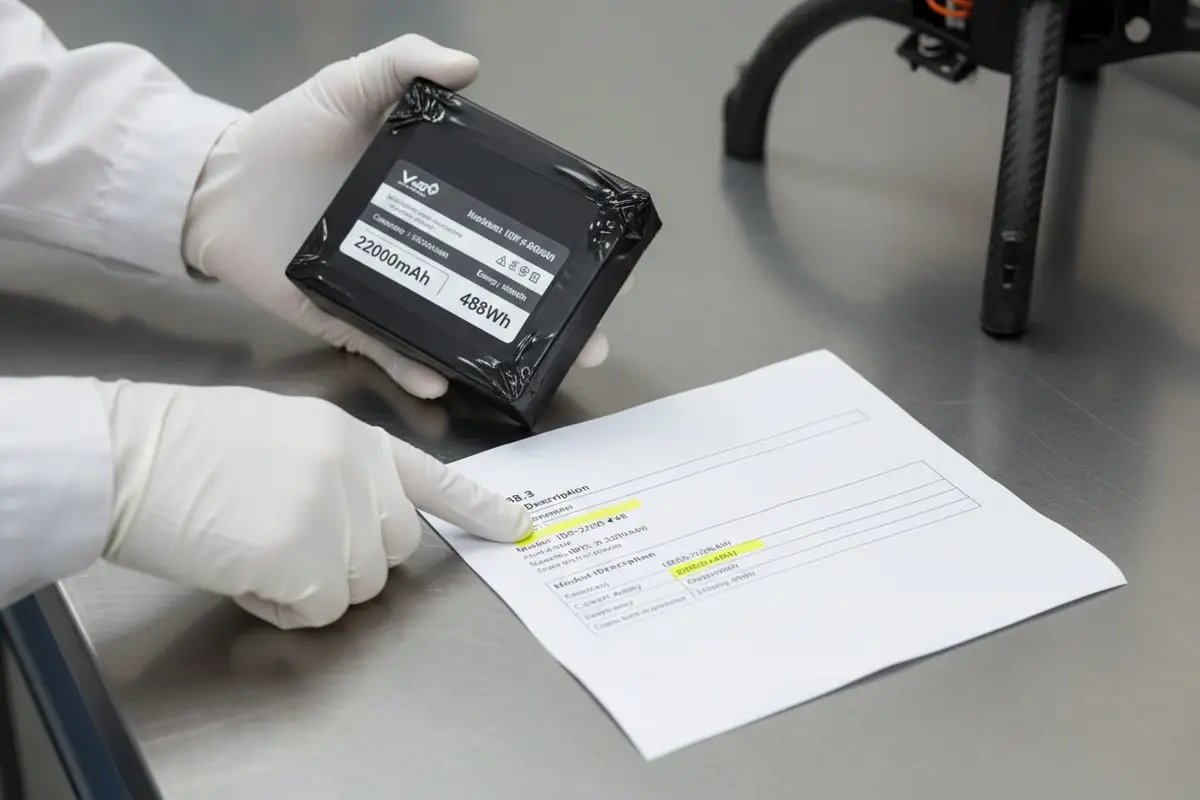
Para confirmar que la certificación UN38.3 cubre su batería exacta, verifique que el informe de prueba enumere el mismo número de modelo, capacidad nominal, química de la celda y nombre del fabricante que su orden de compra. Compare las clasificaciones de vatios-hora y las configuraciones de celdas para garantizar una alineación completa.
7. La verificación del modelo de batería requiere atención a detalles técnicos específicos. Un informe UN38.3 solo es válido para la configuración exacta de la batería probada. Cualquier cambio en el tipo de celda, capacidad o diseño requiere nuevas pruebas.
8. Cuando nuestros ingenieros preparan los envíos, cotejan cada detalle entre la orden de compra y los documentos de certificación. Aquí está lo que necesita verificar:.
9. Punto de verificación
| 10. Coincidencia exacta con la orden de compra | Qué buscar | Señales de alerta |
|---|---|---|
| Número de modelo | 11. Coincidencias parciales o códigos genéricos | 12. Capacidad (mAh/Ah) |
| 13. Coincide con las especificaciones del dron | 14. Números redondos que parecen estimados | 15. Clasificación en vatios-hora |
| Watt-hour Rating | Dentro del 5% del valor declarado | Datos de Wh faltantes o inconsistentes |
| Química de la Celda | Li-ion, LiPo, LiFePO4 | Términos vagos como "litio" |
| Configuración de la celda | Recuento en serie/paralelo | Detalles de configuración faltantes |
| Nombre del fabricante | Nombre legal completo de la entidad | Nombres abreviados o genéricos |
Verificación de la acreditación del laboratorio
No todos los laboratorios de pruebas tienen el mismo peso. Las autoridades aduaneras reconocen los informes de laboratorios acreditados 4 con mayor facilidad. Laboratorios como Intertek, TÜV, SGS y UL tienen reputaciones establecidas.
Haga estas preguntas a su proveedor:
- ¿Qué laboratorio realizó las pruebas UN38.3?
- ¿Está el laboratorio acreditado según la norma ISO 17025?
- ¿Puede proporcionar el número del certificado de acreditación del laboratorio?
Trabajamos exclusivamente con laboratorios acreditados para nuestras pruebas de baterías. Esto cuesta más por adelantado pero ahorra dinero en el despacho de aduanas.
Coincidencia de las especificaciones de la batería con los requisitos del dron
Los drones agrícolas suelen utilizar baterías de alta capacidad que van desde los 10.000 mAh hasta los 30.000 mAh. Estas a menudo superan el umbral de 100 Wh, lo que requiere una documentación más estricta.
Por ejemplo, un paquete de baterías 6S de 22.000 mAh a 22,2 V nominal contiene aproximadamente 488 Wh. Esto entra en la clasificación UN3480 para baterías independientes. Su informe UN38.3 debe reflejar esta configuración específica.
¿Qué documentos específicos del resumen de pruebas UN38.3 debe proporcionar mi proveedor para garantizar un despacho de aduanas sin problemas?
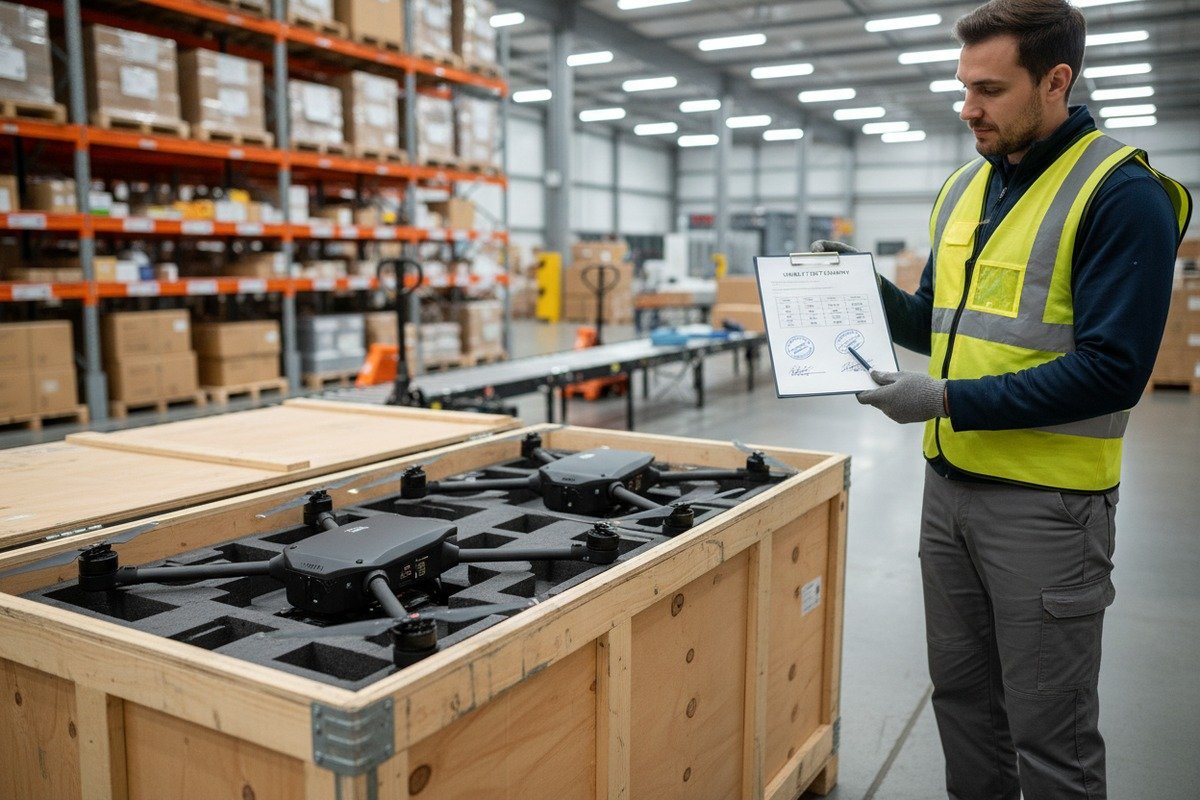
Cuando enviamos baterías de drones a América del Norte y Europa, los funcionarios de aduanas solicitan documentos específicos en formatos específicos. Perder incluso una página puede provocar retrasos en la inspección. Nuestro equipo de documentación ha aprendido exactamente qué satisface a las autoridades fronterizas.
Su proveedor debe proporcionar un Resumen Completo de Pruebas UN38.3 que contenga los detalles del laboratorio de pruebas, las especificaciones de la batería, los resultados de las ocho pruebas (T1-T8), la declaración del fabricante, las fechas de las pruebas y las firmas autorizadas. Adicionalmente, solicite la Hoja de Datos de Seguridad de Materiales y las declaraciones de envío adecuadas.

Las ocho pruebas requeridas explicadas
El estándar UN38.3 exige ocho pruebas secuenciales. Cada prueba simula las condiciones de transporte del mundo real. La documentación de su proveedor debe mostrar resultados aprobatorios para las ocho.
| Prueba | Lo que simula | Criterios de aprobación |
|---|---|---|
| T1: Simulación de altitud | Presión de la bodega de carga aérea a 11,6 kPa | Sin fugas, ventilación, ruptura; pérdida de masa <0,5% |
| T2: Prueba térmica | Ciclos de temperatura de -40 °C a +75 °C | Sin fugas, ventilación, fuego, explosión |
| T3: Vibración | Vibraciones de transporte 7-200Hz | Sin fugas, fuego; retención de capacidad ≥90% |
| T4: Choque | Impactos de aceleración de 150g | Sin fugas, fuego; retención de capacidad ≥90% |
| T5: Cortocircuito externo | Cortocircuito de terminal a 55°C | Sin ruptura, fuego; temperatura ≤170°C |
| T6: Impacto/Aplazamiento | Fuerza de aplastamiento mecánico | Sin ruptura, fuego; temperatura ≤170°C |
| T7: Sobrecarga | Carga a 3 veces la corriente nominal | Sin ruptura, fuego; temperatura ≤170°C |
| T8: Descarga forzada | Descarga a 2.5 veces la tasa máxima | Sin ruptura, fuego, explosión |
Lista de documentos para el despacho de aduanas
Basándonos en nuestra experiencia de exportación, aquí tiene el paquete completo de documentos que debe solicitar:
Documentos primarios:
- Informe de resumen de pruebas UN38.3 con los ocho resultados de las pruebas
- Copia del certificado de acreditación del laboratorio de pruebas
- Declaración de conformidad del fabricante
- Hoja de especificaciones de la batería
Documentos de apoyo:
- Hoja de datos de seguridad del material 5 (MSDS/SDS)
- Declaración de embalaje para mercancías peligrosas
- Declaración del expedidor para mercancías peligrosas
- Carta de porte aéreo con la clasificación UN adecuada (UN3480 o UN3481)
Detección de informes falsos o incompletos
Los informes falsificados UN38.3 inundan el mercado. Nuestro equipo de calidad ha identificado estas señales de advertencia:
- Escaneos borrosos con texto ilegible
- Falta de información de contacto del laboratorio
- No hay número de referencia de informe único
- Errores de ortografía en términos técnicos
- Información genérica del fabricante
- Fechas de prueba anteriores a los cambios de diseño
- Firmas o sellos faltantes
Siempre póngase en contacto directamente con el laboratorio de pruebas para verificar la autenticidad del informe. Los laboratorios legítimos mantienen bases de datos consultables de los certificados emitidos.
¿Cómo protege la verificación del cumplimiento de la norma UN38.3 mi flota de drones agrícolas contra riesgos de seguridad y mal funcionamiento de las baterías?
En nuestras instalaciones de prueba, hemos sido testigos de lo que sucede cuando las baterías fallan bajo estrés. Eventos de fuga térmica 6 pueden destruir flotas enteras de drones en cuestión de minutos. Las pruebas UN38.3 existen porque las condiciones de transporte pueden desencadenar estos fallos en baterías no conformes.
La verificación del cumplimiento de la norma UN38.3 protege su flota porque las ocho pruebas obligatorias validan el comportamiento de la batería en condiciones extremas similares a las operaciones de campo: cambios de temperatura, vibraciones, impactos y fallos eléctricos. Las baterías conformes demuestran integridad estructural y estabilidad térmica.
Las condiciones de transporte reflejan el estrés del campo
Los drones agrícolas operan en entornos hostiles. Experimentan:
- Cambios rápidos de temperatura durante las operaciones del amanecer al anochecer
- Vibración constante de los sistemas del rotor durante las misiones de fumigación
- Impactos físicos durante la carga y el transporte entre campos
- Estrés eléctrico por descarga de alta corriente durante vuelos con carga pesada
Las pruebas UN38.3 simulan condiciones similares. Las baterías que superan estas pruebas han demostrado una resiliencia que se extiende al uso real en el campo.
Beneficios de seguridad en el mundo real
Nuestro equipo de ingeniería rastrea los datos de fallas en miles de baterías desplegadas. Esto es lo que observamos:
| Preocupación de seguridad | Cómo UN38.3 lo aborda | Beneficio en campo |
|---|---|---|
| Fuga térmica en pleno vuelo | T2 valida la tolerancia al ciclo térmico | Menor riesgo de incendio durante operaciones en climas cálidos |
| Incendios inducidos por choques | T4 y T6 verifican la resistencia al impacto | Escenarios de choque más seguros |
| Incendios en estaciones de carga | T7 prueba la protección contra sobrecarga | Almacenamiento seguro en depósito |
| Incidentes de transporte | T1 valida la estabilidad de altitud | Entrega segura de carga aérea |
| Eventos de cortocircuito | T5 confirma la integridad del aislamiento | Reducción de incendios de mantenimiento |
Más allá del transporte: Vínculos de seguridad operativa
Si bien la norma UN38.3 cubre técnicamente la seguridad del transporte, las condiciones de prueba se superponen significativamente con las operaciones de drones agrícolas.
Considere las pruebas de vibración (T3). La prueba expone las baterías a frecuencias entre 7 Hz y 200 Hz, el mismo rango producido por los rotores de hexacópteros. Las baterías que sobreviven a estas pruebas manejan miles de horas de vuelo mejor que las alternativas no probadas.
Nuestra línea de producción utiliza los resultados de las pruebas UN38.3 como puntos de referencia de calidad. Rechazamos lotes de baterías que muestran resultados límite, incluso si técnicamente pasan. Esto protege su flota y nuestra reputación.
Certificaciones complementarias para protección completa
La norma UN38.3 por sí sola no garantiza la seguridad operativa. Recomendamos verificar estas certificaciones adicionales:
- Norma IEC 62133: Cubre la seguridad de uso final, incluida la protección contra sobrecarga, sobredescarga y cortocircuito durante la operación real
- UL 2054/2271: Normas de seguridad norteamericanas para sistemas de baterías
- Marcado CE: Conformidad europea para equipos eléctricos
Juntas, estas certificaciones crean una protección integral desde la fábrica hasta el campo.
¿Puede mi fabricante de drones proporcionar informes UN38.3 actualizados que cumplan con las últimas regulaciones internacionales de envío de baterías de litio?
Cada año, nuestro equipo de cumplimiento revisa las regulaciones actualizadas de IATA, IMDG y DOT. Las reglas para el transporte de baterías de litio se vuelven cada vez más estrictas. Los proveedores que probaron baterías hace cinco años pueden tener documentación desactualizada que no cumple con los requisitos actuales.
Sí, los fabricantes de renombre deben proporcionar informes UN38.3 actuales que reflejen los últimos requisitos reglamentarios. Solicite informes con fechas de entre 12 y 24 meses, verifique el cumplimiento con las ediciones IATA 2024-2025, confirme la reevaluación después de cualquier modificación de diseño y solicite documentación del monitoreo continuo de cumplimiento.

Actualizaciones Regulatorias Clave a Verificar
Las regulaciones de envío internacional evolucionan continuamente. Aquí hay cambios recientes que afectan los envíos de baterías de drones agrícolas:
| Organismo Regulador | Cambio Reciente | Impacto en la Documentación |
|---|---|---|
| IATA DGR 65ª Edición (2024) | Requisitos mejorados del resumen de pruebas | Se necesitan declaraciones del fabricante más detalladas |
| Regulaciones Modelo UN Rev. 23 | Definiciones actualizadas de celdas/baterías | El idioma de las especificaciones debe coincidir con los nuevos términos |
| US DOT 49 CFR | Límites de envío del estado de carga | Documentación SOC requerida para carga aérea |
| Reglamento de la UE sobre baterías 2023 | Responsabilidad ampliada del productor | Documentación adicional de sostenibilidad |
Preguntas que debe hacerle a su proveedor
Nuestro departamento de exportación recomienda hacer estas preguntas específicas:
- ¿Cuándo se realizó por última vez la prueba UN38.3 para este modelo de batería?
- ¿Han ocurrido cambios de diseño desde la última fecha de prueba?
- ¿Su informe de prueba cumple con la edición actual? Regulaciones de mercancías peligrosas de la IATA 7 edición?
- ¿Puede proporcionar documentación de re-prueba si el diseño de la batería cambió?
- ¿Tiene un programa de monitoreo de cumplimiento para actualizaciones regulatorias?
Los puntos de activación para la re-prueba
La certificación UN38.3 no expira solo por fecha. Sin embargo, ciertos cambios invalidan los informes existentes:
Cambios de diseño que requieren re-pruebas:
- Modificación de la química de la celda
- Aumento de capacidad más allá de los parámetros probados
- Cambios en la configuración de la celda
- Rediseño del circuito de protección
- Cambio de ubicación de fabricación
- Cambio de proveedor de celdas
Cambios que no requieren re-pruebas:
- Actualizaciones menores de firmware
- Cambios cosméticos en la carcasa
- Modificaciones de etiquetado
- Cambios en el estilo del conector (si es eléctricamente idéntico)
Preparando su cadena de suministro para el futuro
El panorama regulatorio de las baterías de litio continuará endureciéndose. Aconsejamos a nuestros socios de distribución que:
- Soliciten actualizaciones anuales de certificación a los proveedores
- Incluyan los costos de re-pruebas en los contratos a largo plazo
- Mantengan archivos de documentación para fines de auditoría
- Monitorear los anuncios de la IATA y el DOT para conocer los próximos cambios
Nuestra empresa invierte en cumplimiento proactivo. Volvemos a probar las baterías antes de que las regulaciones lo exijan. Esto protege sus operaciones de importación de brechas de cumplimiento repentinas.
Conclusión
Verificar la certificación de baterías UN38.3 protege su negocio y a sus clientes. Haga coincidir cada detalle del documento con las especificaciones reales de su batería. Solicite resúmenes completos de pruebas de laboratorios acreditados. Utilice baterías conformes para construir flotas de drones agrícolas más seguras y confiables. Póngase en contacto con proveedores que prioricen el cumplimiento continuo y la documentación transparente.
Notas al pie
1. Proporciona una visión general completa de la tecnología y la seguridad de las baterías de iones de litio. ↩︎
2. Fuente oficial de pruebas y criterios UN38.3 para el transporte de mercancías peligrosas. ↩︎
3. Página oficial de la norma IEC 62133 para celdas y baterías secundarias. ↩︎
4. Página oficial de ISO que explica la norma para laboratorios de pruebas y calibración. ↩︎
5. Guía oficial de OSHA sobre Hojas de Datos de Seguridad (SDS), anteriormente MSDS. ↩︎
6. Explica el fenómeno de la fuga térmica en las baterías de iones de litio y sus peligros. ↩︎
7. Fuente oficial de las Regulaciones de Mercancías Peligrosas de la Asociación de Transporte Aéreo Internacional. ↩︎

 English
  Español de México
  Deutsch
  Français
  Русский
  العربية
Comments
No comments yet. Be the first to share your thoughts!
Leave a Comment