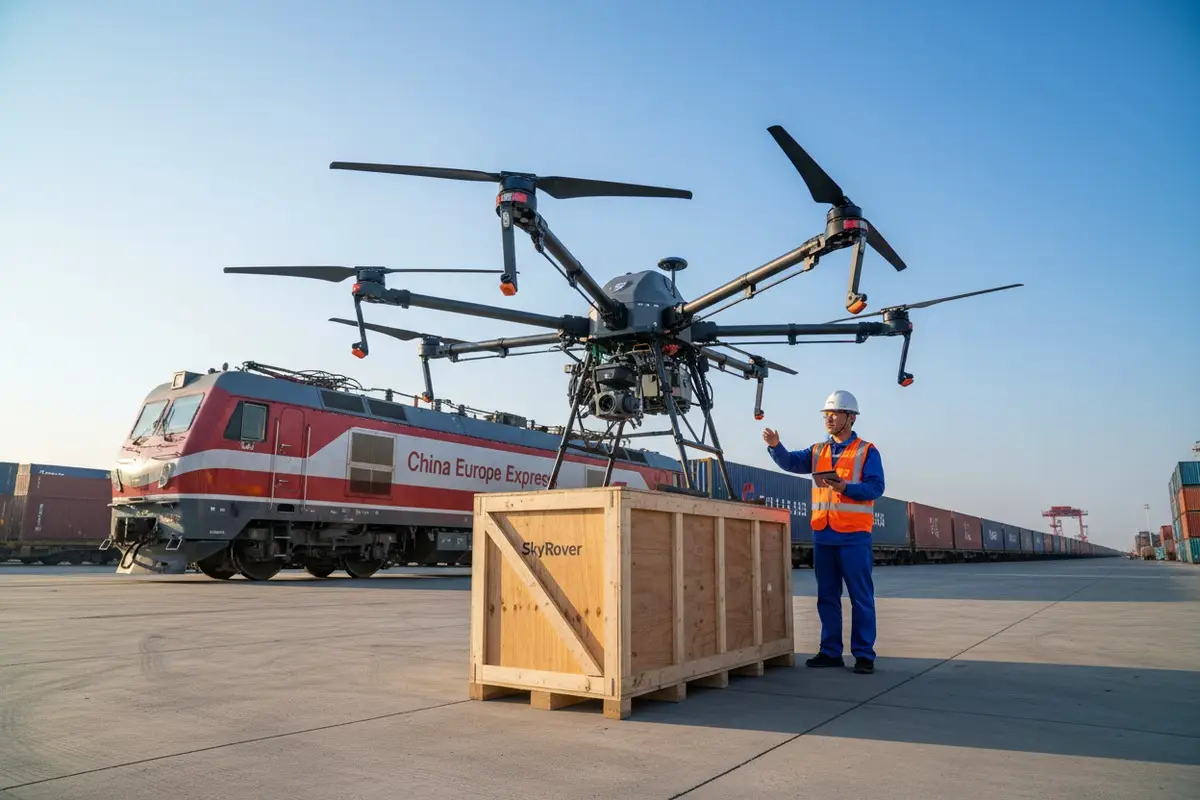

Jede Woche erhalten wir in unserer Anlage in Xi'an Anrufe von europäischen Händlern, die vor demselben Dilemma stehen. Sie benötigen Agrardrohnen, die an Binnenlager in Deutschland, Polen oder Ungarn geliefert werden, aber das Logistikrätsel erscheint überwältigend.
Wählen Sie Schienengüterverkehr für ausgewogene Geschwindigkeit und Kosten nach Mitteleuropa, Seefracht für Großbestellungen über 20 Einheiten, wenn die Zeit es erlaubt, und Luftfracht nur für dringende Einzellieferungen oder Prototypentests. Die Bahn bietet direkten Zugang zu Binnenknotenpunkten über China-Europa-Routen in 12-20 Tagen und ist damit die optimale Wahl für die meisten Drohnenlieferungen für die Landwirtschaft mit Lithiumbatterien.
Die Entscheidung beinhaltet mehr als nur Preisschilder. Sie müssen Batteriebestimmungen, Zollanforderungen und die endgültige Zustellung berücksichtigen. Lassen Sie mich Sie anhand unserer Erfahrung beim Versand Tausender Einheiten nach Europa durch jeden Faktor führen.
Wie entscheide ich mich zwischen der Geschwindigkeit des Luftfrachts und der Kosteneffizienz der Bahn für meine Bestellung von Agrardrohnen?
Unser Produktionsteam sieht oft Kunden, die zwischen der Zahlung von Premium-Preisen für Geschwindigkeit und dem Warten auf Wochen, um Geld zu sparen, hin- und hergerissen sind. Diese Spannung wird komplexer, wenn man die Lithiumbatteriebeschränkungen 1 berücksichtigt, die Luftfrachtoptionen einschränken.
Für Bestellungen unter 5 Drohnen, die innerhalb von 7 Tagen geliefert werden müssen, wählen Sie Luftfracht trotz 3-5x höherer Kosten. Für 5-50 Einheiten mit 2-3 Wochen Flexibilität spart die Bahnbeförderung 30-50%, während sie europäische Binnenknotenpunkte direkt erreicht. Seefracht eignet sich für Großbestellungen von 50+ Drohnen, bei denen Sie die Transitzeiten von 30-40 Tagen einplanen können.

Verstehen Sie Ihre tatsächlichen Zeitbedürfnisse
Wenn unsere Ingenieure mit der Kalibrierung einer Charge von Sprühdrohnen fertig sind, beginnt die Uhr zu ticken. Europäische Landwirtschaftssaisons warten auf niemanden. Die Frühjahrspflanzung in Polen erfordert Ausrüstung bis Ende März. Verpassen Sie dieses Zeitfenster, und Ihr Kunde verliert eine ganze Saison.
Luftfracht liefert in 3-7 Tagen, bringt aber strenge Einschränkungen mit sich. Lithiumbatterien über 100 Wh erfordern reine Frachtflugzeuge. Viele Fluggesellschaften lehnen Agrardrohnen aufgrund von Hochleistungsbatterien vollständig ab. Unsere Modelle mit 30 kg Nutzlast tragen Batterien mit über 500 Wh, was sie automatisch von den meisten Luftfrachtoptionen ausschließt.
Schienenfracht über das Gürtel-und-Seidenstraßen-Netzwerk 2 dauert 12-20 Tage von Xi'an zu Zielen wie Duisburg oder Warschau. Diese Zeitplanung eignet sich perfekt für geplante Lagerauffüllungen. Die Güterzugrouten China-Europa erreichten 2025 Rekordvolumen und zeigten einen zuverlässigen Service.
Kostenaufschlüsselung pro Versandart
| Versandart | Transitzeit | Kosten pro Tonne (USD) | Am besten für |
|---|---|---|---|
| See (FCL) | 25-40 Tage | 1,500-3,000 | Großaufträge 50+ Einheiten |
| Schiene | 12-20 Tage | 3,000-5,000 | Mittelgroße Bestellungen 5-50 Einheiten |
| Luftfracht Express | 3-7 Tage | 8,000-15,000 | Dringende Einzelstücke |
Diese Zahlen ändern sich je nach Kraftstoffpreisen und Kapazität. Wir sahen, wie die Luftfrachtraten 2024 aufgrund von Konsolidierungen bei den Fluggesellschaften um 20-30% stiegen. Die Schiene blieb stabil und wurde dadurch immer attraktiver.
Saisonale Zeitliche Überlegungen
Die Nachfrage nach Agrardrohnen erreicht vor der Aussaat- und Erntesaison ihren Höhepunkt. Europäische Händler, die im Januar für eine Lieferung im April bestellen, haben die Flexibilität, See- oder Schienenverkehr zu nutzen. Diejenigen, die im März bestellen, benötigen Luftfracht oder schnellere Schienenoptionen.
Unser Rat an Einkaufsmanager: Planen Sie Ihren Lagerbestand 8-12 Wochen im Voraus. Dieser Puffer ermöglicht es Ihnen, kostengünstige Schienentransporte zu nutzen und gleichzeitig Lagerbestände für saisonale Spitzen aufrechtzuerhalten. Notfall-Luftfrachtsendungen sollten die Ausnahme und nicht die Regel bleiben.
Welches Transportmittel bietet den besten Schutz für meine empfindliche Drohnenelektronik und Hochleistungsbatterien?
Wenn wir die Flugstabilität in unserer Produktionshalle testen, zählt jede Sensor-Kalibrierung. Ein einziger Stoß während des Transports kann Gimbal-Halterungen verstellen oder Sprühdüsen beschädigen. Der Schutz während des Transports bestimmt, ob Ihre Drohne flugbereit ankommt.
Der Schienengüterverkehr bietet den besten Schutz für landwirtschaftliche Drohnen, da er weniger Umschlagvorgänge als der Seefrachtverkehr beinhaltet und Druckschwankungen der Luftfracht vermeidet. Alle Verkehrsträger erfordern eine ADR-konforme Verpackung von Lithiumbatterien, aber die konstanten Bedingungen und die reduzierte Umladung auf der Schiene minimieren Stoßschäden an empfindlicher Elektronik und Klappmechanismen.

Verpackungsanforderungen für jeden Modus
Unsere Versandabteilung folgt strengen Protokollen, unabhängig von der Transportart. Agrardrohnen enthalten empfindliche Komponenten, die eine spezielle Handhabung erfordern.
Die Sprühsysteme umfassen Präzisionsdüsen, die auf spezifische Durchflussraten kalibriert sind. Hochpräzisions-GPS-Sensoren und Flugsteuerungen können keine Stöße über bestimmte Schwellenwerte hinaus tolerieren. Klappbare Carbonfaserarme benötigen Schutz an den Scharnierpunkten.
Für Luftfracht müssen wir die IATA-Gefahrgutvorschriften 3. einhalten. Batterien werden mit 30% Ladezustand versendet. Jede Zelle muss einzeln isoliert werden. Die Außenverpackung muss Falltests aus 1,2 Metern Höhe standhalten.
Bahn und See folgen den ADR-Standards (Europäischer Straßentransport) 4 für die Binnenabschnitte. Diese erfordern eine ähnliche Batterieisolierung, erlauben aber höhere Ladezustände bis zu 50%.
Handhabung von Übergabepunkten nach Verkehrsträger
| Verkehrsträger | Anzahl der Übergaben | Risikopunkte |
|---|---|---|
| Luft | 4-6 | Flughafenbeladung, Zollinspektion, LKW-Lieferung |
| See | 5-8 | Hafenkrane, Schiffsbeladung, Hafenausladung, Zoll, Binnen-LKW/Bahn |
| Schiene | 2-3 | Ursprungsbeladung, Grenzkontrolle, Zielentladung |
Jede Übergabe birgt potenzielle Beschädigungsrisiken. Seefracht von Shanghai zu einem polnischen Lager kann das Verladen per Kran im Hafen, die Verstauung auf dem Schiff, das Entladen per Kran in Rotterdam, die Zollabfertigung, das Verladen per LKW und die Endlieferung umfassen. Das schafft sechs Möglichkeiten für unsachgemäße Handhabung.
Schienentransporte von Xi'an nach Warschau durchqueren Kasachstan und Weißrussland mit minimalem Umladen. Der Container bleibt während des größten Teils der Reise versiegelt. Diese Kontinuität schützt empfindliche Elektronik.
Batteriesicherheit über alle Verkehrsträger hinweg
Lithium-Ionen-Batterien, die unsere Agrardrohnen antreiben, erfordern sorgfältige Aufmerksamkeit. Eine typische Drohne mit einer Nutzlast von 30 kg trägt 6-8 Batteriepacks mit insgesamt 2.000-3.000 Wh. Diese werden als Gefahrgut der Klasse 9 5.
Luftfracht hat die strengsten Beschränkungen. Viele Spediteure begrenzen einzelne Batterien auf 100 Wh für Passagierflugzeuge. Optionen nur für Frachtflugzeuge sind verfügbar, aber zu Premiumpreisen und mit begrenzter Verfügbarkeit.
Seefracht kann größere Batteriemengen transportieren, unterliegt aber Temperaturschwankungen in den Laderäumen der Container. Auf tropischen Routen können die Containertemperaturen 50 °C überschreiten. Wir verwenden für diese Sendungen isolierte Verpackungen.
Die Schiene hält durch klimatisierte Container konstantere Temperaturen aufrecht. Die Überlandroute vermeidet extreme maritime Bedingungen. Für die Batteriesicherheit bietet die Schiene Vorteile, die ihren moderaten Kostenaufschlag gegenüber der Seefracht rechtfertigen.
Kann ich einen zuverlässigen Tür-zu-Tür-Lieferservice von China zu meinem spezifischen Binnenlager in Europa erhalten?
Unsere Logistikpartner hören diese Frage ständig. Ein Einkaufsmanager in Ungarn möchte nicht separate Seefrachtunternehmen, Hafenabfertigung, Zollagenten und Binnentransportunternehmen koordinieren. Sie wollen eine Telefonnummer, die sie anrufen können, wenn Probleme auftreten.
Ja, eine umfassende Tür-zu-Tür-Lieferung von chinesischen Fabriken zu europäischen Binnenlagern ist über integrierte Spediteure möglich. Die Bahnbeförderung bietet die reibungsloseste Binnenlieferung über Direktverbindungen zu Drehkreuzen wie Duisburg, Warschau und Budapest. Die Seebeförderung erfordert eine multimodale Koordination von Rotterdam oder Hamburg, was 3-5 Tage und potenzielle Engpässe hinzufügt.

Die Herausforderung Binnenland Europa
Küstenhäfen dienen als Tore, nicht als Ziele. Ihr Lager in Krakau liegt 1.200 Kilometer von Hamburg entfernt. Diese letzte Etappe bestimmt, ob Ihre Sendung reibungslos ankommt oder in einem Logistik-Nirwana stecken bleibt.
Rotterdam wickelt 70% des China-EU-Containerverkehrs ab. Der Hafen arbeitet effizient, aber die Weiterverbindungen führen zu Engpässen. Die Lkw-Verfügbarkeit schwankt. Bahnverbindungen nach Osteuropa erfordern eine Buchung Wochen im Voraus.
Belt and Road-Bahnterminals bieten Alternativen. Duisburg in Deutschland dient als primärer westlicher Knotenpunkt. Von dort erreichen etablierte Schienen- und Lkw-Netzwerke innerhalb von 2-3 Tagen ganz Binnenland Europa.
Warschau, Budapest und Prag erhalten jetzt direkte China-Europa-Züge. Für Kunden in diesen Regionen eliminiert die Schiene den Küstenhafen vollständig. Ihre Drohnen reisen von Xi'an nach Warschau in einem einzigen Container und berühren den Boden nur zweimal.
Vergleich von Binnenlieferoptionen
| Ziel | Seewegtage | See + Binnenlandtage | Direkte Bahntage |
|---|---|---|---|
| Hamburg, Deutschland | 28-35 | 28-35 | 14-18 |
| Warschau, Polen | 28-35 | 32-40 | 12-16 |
| Budapest, Ungarn | 28-35 | 34-42 | 14-18 |
| München, Deutschland | 28-35 | 30-38 | 15-19 |
Diese Zahlen zeigen, warum die Bahn für osteuropäische Ziele immer beliebter wird. Ein Kunde in Budapest spart 20 Tage im Vergleich zur Seefracht über Hamburg.
Zusammenarbeit mit integrierten Dienstleistern
Wir arbeiten mit Spediteuren zusammen, die alles von der Abholung ab Werk bis zur Auslieferung im Lager übernehmen. Diese Integration ist wichtig für den Versand von Agrardrohnen, weil:
Die Dokumentation für Gefahrgut fließt nahtlos zwischen den Verkehrsträgern. Ein Spediteur, der die gesamte Reise verwaltet, stellt sicher, dass die Batteriepapiere die chinesischen Export-, Transitland- und EU-Importbestimmungen erfüllen.
Die Sendungsverfolgung erstreckt sich über die gesamte Route. Sie sehen den Standort Ihres Containers, egal ob er auf einem Zug in Kasachstan oder auf einem LKW in der Slowakei steht.
Die Verantwortlichkeit an einem einzigen Ansprechpartner eliminiert Schuldzuweisungen. Wenn es zu Verzögerungen kommt, ist ein Unternehmen für das Problem und die Lösung verantwortlich.
Unsere Empfehlungen für europäische Distributoren umfassen DB Schenker, DSV und spezialisierte Drohnenlogistik-Anbieter, die mit der Handhabung von Lithiumbatterien vertraut sind. Befragen Sie potenzielle Partner zu ihren spezifischen Erfahrungen mit Agrargeräten und Gefahrgutklassifizierungen.
Welche Dokumentation benötige ich, um sicherzustellen, dass meine Drohnensendung an europäischen Binnenhäfen reibungslos den Zoll passiert?
Unser Exportteam bereitet täglich Dokumentationspakete vor. Wir haben durch Hunderte von Sendungen genau gelernt, was europäische Zollbeamte genau prüfen. Fehlende Unterlagen verursachen Verzögerungen, die sich in Wochen, nicht in Tagen messen lassen.
EU-Agrardrohnenimporte erfordern Handelsrechnungen, Packlisten, CE-Kennzeichnungszertifikate, die die Konformität mit der Verordnung (EU) 2019/945 nachweisen, Batterieprüfberichte gemäß UN 38.3, Gefahrguterklärungen und technische Spezifikationen einschließlich Flugmanuals. Importeure müssen diese Dokumente vor dem Versand überprüfen und die Aufzeichnungen gemäß den EU-Rückverfolgbarkeitsanforderungen mindestens 10 Jahre lang aufbewahren.

Kern-Dokumentationscheckliste
Jede Sendung, die unser Werk verlässt, enthält standardisierte Papiere. Die Handelsrechnung gibt jedes Drohnenmodell, die Menge, den Stückwert und den Gesamtwert an. Zollbehörden verwenden dies zur Berechnung von Zöllen.
Packlisten beschreiben den physischen Inhalt einschließlich Abmessungen und Gewichten. Bei Agrardrohnen mit faltbaren Rahmen geben wir sowohl gefaltete als auch ausgefaltete Abmessungen an. Ein Modell mit 30 kg Nutzlast faltet sich auf 890 x 920 x 730 mm, erweitert sich aber auf einen Radstand von 1980 mm.
Der Frachtbrief oder Luftfrachtbrief dient als Transportvertrag. Dieses Dokument wird mit der Ware durch jede Handhabungsstufe übertragen.
EU-spezifische regulatorische Anforderungen
Verordnung (EU) 2019/945 6 regelt den Marktzugang für Drohnen. Jede von uns exportierte Drohne trägt CE-Kennzeichnung 7 die Konformität nachweisend. Die technische Akte umfasst:
- Konformitätserklärung, unterzeichnet von unserem Qualitätsdirektor
- Prüfberichte von akkreditierten Laboren
- Risikobewertungen für elektromagnetische Verträglichkeit
- Benutzerhandbücher in der Sprache des Ziellandes
- Aufzeichnungen zur Rückverfolgbarkeit von Seriennummern
EASA-Registrierungsanforderungen traten für kommerzielle Agrardrohnen in Kraft. Ihre Kunden benötigen Betreiberzertifikate, aber die Importdokumentation muss die geltende Drohnenklasse angeben.
Anforderungen an die Batteriedokumentation
Lithiumbatterien erfordern zusätzliche Papiere, die die meisten Zollverzögerungen verursachen. Unser Versandteam stellt sicher, dass jede Batterielieferung Folgendes enthält:
UN 38.3 Testzusammenfassung 8 die bestätigt, dass die Batterien die Tests auf Höhe, Wärme, Vibration, Stoß, Kurzschluss, Aufprall, Überladung und erzwungene Entladung bestanden haben. Dieser Bericht muss das spezifische versandte Batteriemodell identifizieren.
Sicherheitsdatenblätter 9 beschreiben die chemische Zusammensetzung und die Handhabungsverfahren. Notfallkontakte und Verfahren zur Bekämpfung von Verschüttungen finden sich hier.
Gefahrguterklärungen klassifizieren Batterien unter UN3481 (Lithium-Ionen-Batterien, verpackt mit Geräten) oder UN3171 (batteriebetriebene Fahrzeuge). Landwirtschaftliche Drohnen fallen typischerweise unter UN3481.
Dokumentation nach Versandart
| Dokument | Luftfracht erforderlich | Seefracht erforderlich | Schiene erforderlich |
|---|---|---|---|
| Handelsrechnung | Ja | Ja | Ja |
| Packliste | Ja | Ja | Ja |
| CE-Zertifikat | Ja | Ja | Ja |
| UN 38.3 Testbericht | Ja | Ja | Ja |
| IATA DG Erklärung | Ja | Nein | Nein |
| IMO DG Erklärung | Nein | Ja | Nein |
| ADR Erklärung | Für den Binnenverkehr | Für den Binnenverkehr | Ja |
Beachten Sie, wie jeder Modus leicht unterschiedliche Gefahrguterklärungen erfordert. Luftverkehr nutzt IATA-Standards. Seeverkehr nutzt IMO-Schifffahrtskodes. Schiene und Straße folgen den ADR-Vorschriften. Ein integrierter Spediteur handhabt diese Variationen automatisch.
Häufige Fehler, die zu Verzögerungen führen
Unvollständige Batteriedokumentation steht ganz oben auf unserer Liste. Testberichte müssen exakt mit dem versendeten Batteriemodell übereinstimmen. Generische Berichte, die ähnliche Batterien abdecken, werden abgelehnt.
Fehlende Sprachübersetzungen verzögern die Zollabfertigung in bestimmten Ländern. Deutsche Zollbehörden akzeptieren möglicherweise englische Handbücher, aber polnische oder ungarische Behörden verlangen oft lokale Übersetzungen.
Falsche HS-Codes lösen zusätzliche Prüfungen aus. Drohnen für die landwirtschaftliche Sprühung fallen unter 8806.93 (unbemannte Luftfahrzeuge für den Gütertransport) oder 8424.82 (Maschinen für die landwirtschaftliche Sprühung). Die Klassifizierung beeinflusst Zollsätze und regulatorische Anforderungen.
Wir bieten eine Vorab-Zollberatung für jede Sendung an. Unser Exportteam prüft die Dokumentation vor dem Versand und koordiniert sich mit den Zollagenten am Bestimmungsort. Dieser proaktive Ansatz verhindert kostspielige Verzögerungen.
Schlussfolgerung
Die Wahl des richtigen Versandweges für landwirtschaftliche Drohnen hängt von der Abwägung Ihrer Zeitpläne, Ihres Budgets und Ihres Bestimmungsortes ab. Der Schienenverkehr ist für die meisten europäischen Binnenaufträge am besten geeignet und kombiniert angemessene Kosten mit direktem Zugang und schonender Handhabung von Batterien. Planen Sie im Voraus, bereiten Sie die Dokumentation gründlich vor und arbeiten Sie mit erfahrenen Spediteuren zusammen, um eine reibungslose Lieferung zu gewährleisten.
Fußnoten
1. Offizielle Seite der IATA zu Batterietransportvorschriften und -beschränkungen. ︎
2. Offizielles Portal für die Belt and Road Initiative. ︎
3. Offizielle Seite der IATA für die Gefahrgutvorschriften. ︎
4. Offizielle UN-Quelle für die Europäische Vereinbarung über die internationale Beförderung gefährlicher Güter auf der Straße. ︎
5. Wikipedia-Erklärung zu UN-Gefahrgutklasse 9. ︎
6. Offizielle EU-Gesetzgebung für den Drohnen-Marktzugang und die Anforderungen. ︎
7. Offizielle EU-Erklärung zu den Anforderungen und der Bedeutung der CE-Kennzeichnung. ︎
8. Offizielle UN-Quelle für das Handbuch über Prüfungen und Kriterien, einschließlich UN 38.3. ︎
9. Offizielle OSHA-Seite mit Erläuterungen zu Sicherheitsdatenblättern (früher MSDS). ︎

 English
  Español de México
  Deutsch
  Français
  Русский
  العربية
Comments
No comments yet. Be the first to share your thoughts!
Leave a Comment