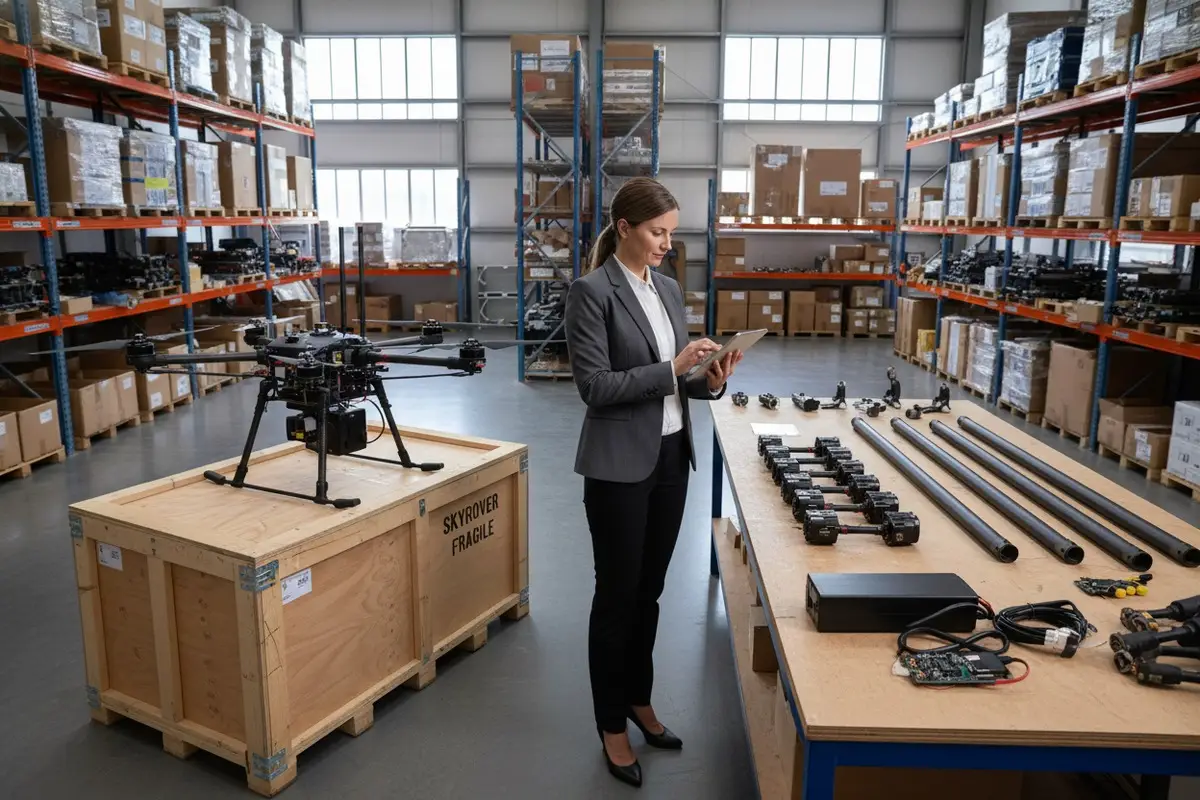

Als unsere Produktionslinien Anfang 2025 mit der kumulativen Zollschranke 170% konfrontiert wurden, gerieten viele unserer US-Partner in Panik. Sie hatten Bestellungen zu erfüllen und Felder zu besprühen. Der plötzliche Preisschock bedrohte ihr gesamtes Geschäftsmodell.
US-Zölle auf landwirtschaftliche Drohnen unterscheiden sich erheblich zwischen vollständigen Einheiten und Komponenten, basierend auf den Klassifizierungen des Harmonized Tariff Schedule. Vollständige Drohneneinheiten unterliegen in der Regel kumulativen Zöllen von bis zu 170%, während einzelne Komponenten je nach ihren spezifischen HS-Codes, dem Montagegrad und der Dokumentation des Ursprungslandes für unterschiedliche Sätze in Frage kommen können.
Das Verständnis dieser Unterschiede kann Ihrem Unternehmen Tausende von Dollar pro Sendung sparen. Lassen Sie mich Ihnen zeigen, was unser Team aus jahrelanger Erfahrung im Export an amerikanische Partner gelernt hat.
Wie ermittle ich die korrekten HS-Codes für komplette Agrardrohnen im Vergleich zu einzelnen Ersatzteilen?
Wenn wir unsere Hexacopter-Agrardrohnen an US-Distributoren versenden, kosten Klassifizierungsfehler bares Geld. Eine falsche Ziffer in einer HS-Code 1 kann Zehntausende an unerwarteten Zöllen hinzufügen. Dieses Problem hält Beschaffungsmanager nachts wach.
Vollständige Agrardrohnen fallen im Allgemeinen unter den HS-Code 8806.10 für unbemannte Luftfahrzeuge, während Ersatzteile je nach Funktion verschiedene Codes verwenden – Batterien unter 8507, Kameras unter 8525, Motoren unter 8501 und Flugsteuerungen unter 8537. Jeder Code hat unterschiedliche Zollsätze und Compliance-Anforderungen.

Verständnis der HS-Code-Struktur
Das Harmonisierte System verwendet einen international anerkannten sechsstelligen Basisschlüssel. Die USA fügen zur Spezifizierung vier weitere Ziffern hinzu. Unsere Erfahrung zeigt, dass Agrardrohnen Klassifizierungsprobleme haben, da sie mehrere Technologien kombinieren.
Eine vollständige Sprühdrohne enthält Motoren, Batterien, Kameras, GPS-Module, Spritztanks und Flugsteuerungen. Wenn sie zusammen versendet werden, behandelt der Zoll das Paket als eine Einheit. Wenn sie getrennt versendet werden, erhält jeder Teil seine eigene Klassifizierung.
Wichtige HS-Codes für Agrardrohnenprodukte
| Produkttyp | HS-Code | Beschreibung | Basiszollsatz |
|---|---|---|---|
| Vollständige UAV | 8806.10 | Unbemannte Luftfahrzeuge 2 | 0% Basis + Abschnitt 301 |
| Lithium-Batterien | 8507.60 | Lithium-Ionen-Batterien 3 | 3.4% |
| Kameras/Sensoren | 8525.89 | Digitalkameras | Kostenlos |
| Elektromotoren | 8501.10-32 | DC-Motoren | 0-6.7% |
| Fluglotsen | 8537.10 | Elektronische Steuerungen | 2.7% |
| Sprühpumpen | 8413.70 | Kreiselpumpen | Kostenlos |
| Kohlefaser-Rahmen | 8803.90 | Flugzeugteile | Kostenlos |
Warum Klassifizierung wichtig ist
Unser Ingenieurteam stand einmal vor einer Situation, in der ein Zollagent Flugsteuerungen als "Computerteile" anstatt als "elektronische Steuergeräte" einstufte. Dieser kleine Fehler löste unterschiedliche Zollsätze aus und verzögerte den Versand um drei Wochen.
Das Schlüsselprinzip ist "wesentlicher Charakter 4.". Wenn Sie ein Bündel von Teilen versenden, die zusammen eine Drohne bilden, kann der Zoll entscheiden, dass das Bündel den wesentlichen Charakter eines vollständigen Flugzeugs hat. Das bedeutet, dass Sie den höheren Satz zahlen.
Dokumentation für die richtige Klassifizierung
Wir raten unseren Partnern immer, vor großen Sendungen eine verbindliche Auskunft 5 vom US-Zoll einzuholen. Dieses Auskunftsschreiben gibt genau an, wie die CBP Ihre Produkte einstufen wird. Es schützt Sie vor Überraschungen am Hafen.
Sie benötigen detaillierte technische Spezifikationen für jede Komponente. Geben Sie die Funktion, die Materialzusammensetzung und die Integration des Teils in das Endprodukt an. Unsere Qualitätskontrollabteilung erstellt diese Dokumente für jede Exportbestellung.
Kann ich meine gesamten Importkosten senken, indem ich Drohnenkomponenten separat versende, anstatt komplett montierte Einheiten?
Unser Vertriebsteam erhält diese Frage wöchentlich. Amerikanische Distributoren möchten wissen, ob die Aufteilung von Lieferungen Geld sparen wird. Die Rechnung scheint einfach zu sein, bis man sich mit den Details beschäftigt. Die Realität ist komplizierter als einfache Arithmetik.
Der Versand von Komponenten separat kann die Importkosten potenziell senken, aber nur, wenn jeder Teil tatsächlich für niedrigere Zollklassifizierungen qualifiziert ist und Sie Zollentscheidungen vermeiden, die Teilmontagen als vollständige Einheiten behandeln. Die Einsparungen hängen von komponenten-spezifischen HS-Codes, Ursprungsländern und davon ab, ob Ihre Montageanordnung die Anforderungen an die "wesentliche Umgestaltung" auslöst.

Die einfache Mathematik des Komponentenversands
Betrachten wir ein reales Beispiel aus unserer Produktlinie. Unser SkyRover AG-Pro Hexacopter kostet $18.000 FOB. Bei 170% kumulativem Zoll würde die Abgabe $30.600 betragen. Das treibt die Landekosten auf $48.600 vor Versand und Handling.
Betrachten Sie nun die Komponentenaufschlüsselung:
| Komponente | Wert | Möglicher Zolltarif | Geschätzter Zoll |
|---|---|---|---|
| Rahmenmontage | $3,000 | 0% Basis + 170% Abschnitt 301 | $5,100 |
| Antriebssystem | $4,500 | 0-6.7% Basis + 170% Abschnitt 301 | $7,650+ |
| Akkupack | $2,500 | 3.4% Basis + 170% Abschnitt 301 | $4,335 |
| Flugregler | $2,000 | 2.7% Basis + 170% Abschnitt 301 | $3,454 |
| Kamera-/Sensor-Suite | $3,000 | Kostenlose Basis + 170% Abschnitt 301 | $5,100 |
| Sprühsystem | $2,000 | Kostenlose Basis + 170% Abschnitt 301 | $3,400 |
| Kabel/Steckverbinder | $1,000 | Variiert | $1,700 |
| Insgesamt | $18,000 | – | $30,739+ |
Das versteckte Problem: Wesentliche Umwandlung
Hier wird unsere Erfahrung wertvoll. Zollbeamte achten auf Schemata, die Sendungen künstlich aufteilen. Wenn Sie alle Komponenten innerhalb eines kurzen Zeitfensters an denselben Empfänger versenden, kann CBP diese für die Zollbewertung zusammenfassen.
Der "erhebliche Umgestaltung 7" Test bestimmt die Herkunft von zusammengebauten Waren. Wenn Ihr US-Partner einfach unsere Komponenten verschraubt, ist die endgültige Drohne für Zollzwecke immer noch "Made in China". Die Montage muss den Charakter des Produkts grundlegend verändern.
Wenn der Versand von Komponenten funktioniert
Wir haben in bestimmten Situationen legitime Kosteneinsparungen gesehen:
- Ersatzteile für bestehende Flotte: Echte Ersatzteile für bereits im Einsatz befindliche Drohnen unterliegen weniger strenger Prüfung
- Unterschiedliche Länderbeschaffung: Das Mischen von Komponenten aus nicht zollpflichtigen Ländern kann die Gesamtbelastung reduzieren
- US-Endmontage mit wesentlicher Umwandlung: Hinzufügen von wesentlichen in den USA hergestellten Komponenten und Software
Wenn der Versand von Komponenten fehlschlägt
Unser Lagerteam erinnert sich an einen Fall, in dem ein Kunde Drohnen-Kits mit vorprogrammierten Steuerungen versenden wollte. Der Zoll entschied, dass die Kits den wesentlichen Charakter vollständiger Drohnen hatten. Der Kunde zahlte volle Zölle zuzüglich Strafen für die falsche Klassifizierung.
Der sicherste Ansatz ist die Konsultation eines lizenzierten Zollagenten, bevor Sie Ihre Importstrategie ändern. Er kann Ihre spezifische Situation prüfen und Ihnen schriftliche Anleitungen geben.
Welche spezifischen Unterlagen muss ich meinem Zollagenten vorlegen, um für niedrigere Zollsätze auf meine Drohnenteile in Frage zu kommen?
Unser Exportdokumentationsteam bearbeitet jedes Jahr Hunderte von Zollpaketen. Wir haben gelernt, dass unvollständige Unterlagen Sendungen verzögern und Prüfungen auslösen. Die richtigen Dokumente sorgen für eine reibungslose Abwicklung. Die falschen verursachen teure Kopfschmerzen.
Um sich für niedrigere Zolltarife auf Drohnenteile zu qualifizieren, müssen Sie Handelsrechnungen mit detaillierten Teilebeschreibungen, Ursprungszeugnissen, technischen Spezifikationen, die die Komponentenfunktion belegen, Stücklisten, die jeden Artikel trennen, HS-Code-Begründungsschreiben und alle anwendbaren Zollbefreiungsbescheinigungen vorlegen. Vollständige Dokumentation weist die Berechtigung zur individuellen Klassifizierung jeder Komponente nach.

Checkliste der wesentlichen Dokumente
Basierend auf unseren jahrelangen Erfahrungen im US-Export benötigt Ihr Zollagent diese Kernunterlagen:
| Dokument | Zweck | Erforderliche Schlüsseldetails |
|---|---|---|
| Handelsrechnung | Erklärt Wert und Inhalt | Teilenummern, Mengen, Stückpreise, Gesamtwert, Währung |
| Packliste | Details zur physischen Sendung | Gewicht, Abmessungen, Kartonanzahl, Beschreibung pro Karton |
| Ursprungszeugnis 8 | Beweist Herstellungsort | Fabrikname, Land, unterschrieben und gestempelt |
| Stückliste | Listet jede Komponente auf | Einzelne Teilekosten, Materialien, Funktionen |
| Technische Daten | Unterstützt HS-Klassifizierung | Funktion, Zusammensetzung, Integrationsmethode |
| Importlizenz (falls erforderlich) | Zeigt die Einhaltung von Vorschriften an | Lizenznummer, Gültigkeitsdaten |
Der detaillierte Blick auf die Handelsrechnung
Ihre Handelsrechnung muss jede Komponente präzise beschreiben. Vage Beschreibungen wie "Drohnenteile" oder "Elektronik" lösen rote Flaggen aus. Unsere Rechnungen spezifizieren: "Bürstenloser Gleichstrommotor, 380KV, für die Antriebstechnik von Agrar-UAVs, Modell SKR-M380."
Fügen Sie auf der Rechnung die Harmonized System (HS)-Codes hinzu. Dies zeigt dem Zoll, dass Sie eine ordnungsgemäße Klassifizierung recherchiert haben. Es verringert die Wahrscheinlichkeit einer willkürlichen Neuklassifizierung am Hafen.
Ursprungszeugnis-Anforderungen
Das Ursprungszeugnis beweist, wo die Herstellung stattgefunden hat. Dies ist wichtig, da die Section 301-Zölle auf bestimmte Länder abzielen. Unsere Zeugnisse enthalten die Adresse der Fabrik, das Produktionsdatum und autorisierte Unterschriften.
Einige US-Importeure fragen nach der Verwendung von Freihandelszone 9 Montage zur Änderung des Ursprungs. Diese Strategie erfordert eine wesentliche Umwandlung in der FTZ. Einfache Montage qualifiziert nicht. Sie benötigen Rechtsberatung, bevor Sie diesen Weg einschlagen.
Technisches Dokumentationspaket
Unsere Ingenieurabteilung erstellt für jede Komponente technische Spezifikationsblätter. Diese Dokumente erklären, was das Teil tut, womit es verbunden ist und wie es unabhängig funktioniert.
Zum Beispiel enthalten unsere Flugsteuerungs-Spezifikationen:
- Prozessortyp und -geschwindigkeit
- Ein-/Ausgabekonfigurationen
- Eigenständige Funktionen (Stabilisierung, GPS-Verarbeitung)
- Verwendete Materialien
- Zulassungszertifizierungen (CE, FCC, falls zutreffend)
Diese Detailtiefe hilft Zollbeamten zu verstehen, warum ein Teil eine eigene Klassifizierung verdient und nicht mit dem vollständigen Flugzeug zusammengefasst werden sollte.
Aufbewahrung von Aufzeichnungen nach der Einfuhr
Der US-Zoll kann Importe fünf Jahre lang prüfen. Bewahren Sie alle Dokumente organisiert und zugänglich auf. Unsere Partner, die saubere Aufzeichnungen führen, lösen Prüfungen schnell. Diejenigen mit fehlenden Unterlagen sehen sich Strafen und Verzögerungen gegenüber.
Wie wirkt sich die Wahl eines OEM-Partners für kundenspezifische Drohnenkomponenten auf meine gesamten US-Importzölle aus?
Wenn wir OEM-Partnerschaften mit US-Distributoren besprechen, entstehen immer Zollfragen. Benutzerdefinierte Branding- und Designänderungen wirken sich auf mehr als nur das Marketing aus. Sie beeinflussen die Zollklassifizierung, die Regeln für den Ursprungsland und die Compliance-Anforderungen. Intelligente Partnerschaften können Kosten legal optimieren.
Die Wahl eines OEM-Partners für kundenspezifische Drohnenkomponenten kann Ihre Einfuhrzollbelastung durch Regeln zur wesentlichen Umgestaltung, Strategien zur Beschaffung von gemischten Ursprüngen und wertsteigernde Modifikationen, die Zolltarifklassifizierungen ändern, beeinflussen. Partner, die Komponenten aus zollfreien Ländern beziehen oder wesentliche in den USA ansässige Anpassungen vornehmen, können dazu beitragen, die gesamte Zollbelastung für Ihre Importe von Agrardrohnen zu reduzieren.

Wie OEM-Anpassung den Ursprung beeinflusst
Unsere OEM-Dienstleistungen umfassen die Entwicklung benutzerdefinierter Firmware, gebrandete Gehäuse, spezialisierte Sprühdüsenkonfigurationen und integrierte Sensorpakete. Jede Modifikationsstufe beeinflusst die Analyse der "wesentlichen Umgestaltung".
Geringfügige Änderungen wie der Druck von Logos ändern nicht das Ursprungsland. Wesentliche Änderungen wie benutzerdefinierte Flugalgorithmen, die in den USA entwickelt wurden, können die Softwarekomponente als US-Ursprung qualifizieren. Die physische Hardware bleibt chinesischen Ursprungs, es sei denn, sie wird woanders wesentlich umgestaltet.
Strategien für gemischte Beschaffungsquellen
Wir arbeiten mit Partnern zusammen, die Komponenten aus mehreren Ländern beziehen. Dieser Ansatz kann die Zollbelastung bei richtiger Strukturierung reduzieren.
| Komponente | Potenzielle Herkunftsländer | Zollstatus |
|---|---|---|
| Batterien | Südkorea, Japan | Im Allgemeinen nicht von Abschnitt 301 betroffen |
| Motoren | Taiwan, Vietnam | Können niedrigere kumulative Sätze haben |
| Kameras | Japan, Südkorea | Oft günstige Behandlung |
| Rahmen | Malaysia, Indien | Aufkommende Alternativen |
| Steuerungen | China | Von Abschnitt 301 voll betroffen |
| Sprühsysteme | US-Inland | Keine Einfuhrzölle |
Wertsteigerung durch Partnerschaft
Unser Ingenieurteam schlägt oft Designänderungen vor, die den Wert auf nicht zollpflichtige Komponenten verlagern. Zum Beispiel reduziert die Verwendung eines fortschrittlicheren, in den USA hergestellten Sprühsteuerungssystems den Wertanteil, der chinesischen Zöllen unterliegt.
Dieser Ansatz erfordert sorgfältige Planung. Das Ziel ist eine echte Produktverbesserung, keine künstliche Wertverlagerung. Zollprüfer können Schemata erkennen, denen es an geschäftlicher Substanz mangelt.
Software und Dienstleistungen: Der unversteuerte Wert
Eine aufkommende Strategie konzentriert sich auf die Softwarelizenzierung getrennt von der Hardware. Wenn Sie unsere Drohnenhardware kaufen und separat unsere Präzisionslandwirtschaftssoftware lizenzieren, ist der Softwarewert möglicherweise nicht zollpflichtig.
Unsere Cloud-basierten Mapping- und Analysedienste fallen vollständig aus dem Hardware-Tarifsystem heraus. Partner, die neben Hardwarekäufen Serviceverträge betonen, können ihre Kostenstruktur auf unversteuerte Elemente verlagern.
Auswahl des richtigen OEM-Partners
Suchen Sie nach Partnern, die sowohl Fertigung als auch Handelskonformität verstehen. Unser Team umfasst Exportexperten, die Sie bei Dokumentation und Klassifizierung beraten. Wir haben Partnern geholfen, kostspielige Fehler durch ordnungsgemäße Strukturierung zu vermeiden.
Wichtige Fragen an potenzielle OEM-Partner:
- Haben Sie Erfahrung mit den Anforderungen des US-Zolls?
- Können Sie detaillierte Stücklisten zur Unterstützung der Klassifizierung bereitstellen?
- Beziehen Sie Komponenten aus mehreren Ländern?
- Werden Sie Anträge auf verbindliche Auskünfte unterstützen?
- Können Sie eine wesentliche Umgestaltung dokumentieren, falls zutreffend?
Zukunftsfähige Gestaltung Ihrer Importstrategie
Handelspolitik ändert sich ständig. Das Zollumfeld im Jahr 2025 unterscheidet sich von 2024, und 2026 werden wahrscheinlich weitere Änderungen eintreten. Partner mit flexiblen Lieferketten können sich schneller anpassen als solche, die an Einzelquellen gebunden sind.
Wir haben in Fertigungsbeziehungen in ganz Südostasien investiert, um unseren US-Partnern Optionen zu bieten. Wenn ein Land neuen Zöllen ausgesetzt ist, können wir die Produktion oft auf Alternativen verlagern.
Schlussfolgerung
US-Zölle auf Agrardrohnen schaffen komplexe Entscheidungen für Importeure. Das Verständnis von HS-Codes, Dokumentationsanforderungen und OEM-Partnerschaftsstrategien kann helfen, Kosten legal zu senken. Arbeiten Sie mit erfahrenen Zollagenten und Lieferanten zusammen, die das System kennen.
Fußnoten
1. Ersetzt durch eine maßgebliche .gov-Quelle, die die Harmonized System (HS)-Codes erklärt. ︎
2. Bietet die offizielle Definition der Federal Aviation Administration für unbemannte Luftfahrzeuge. ︎
3. Details zu Gefahren und Vorschriften für Lithium-Ionen-Batterien von OSHA. ︎
4. Erklärt, wie der Zoll die Klassifizierung von Verbundprodukten anhand ihrer Kernidentität bestimmt. ︎
5. Offizielle Informationen zur Einholung von Vorabklassifizierungsentscheidungen von der CBP. ︎
6. Offizielle Quelle für US-Zollklassifizierungen und statistische Kategorien. ︎
7. Details zum von der CBP verwendeten Test zur Bestimmung des Ursprungslandes eines Produkts. ︎
8. Ersetzt durch eine umfassende Wikipedia-Seite, die das Konzept eines Ursprungszeugnisses erklärt, da keine einzelne maßgebliche .gov-Seite einen breiten Überblick bietet. ︎
9. Erklärt das Konzept und die Vorteile von Bereichen unter Zollaufsicht. ︎

 English
  Español de México
  Deutsch
  Français
  Русский
  العربية
Comments
No comments yet. Be the first to share your thoughts!
Leave a Comment