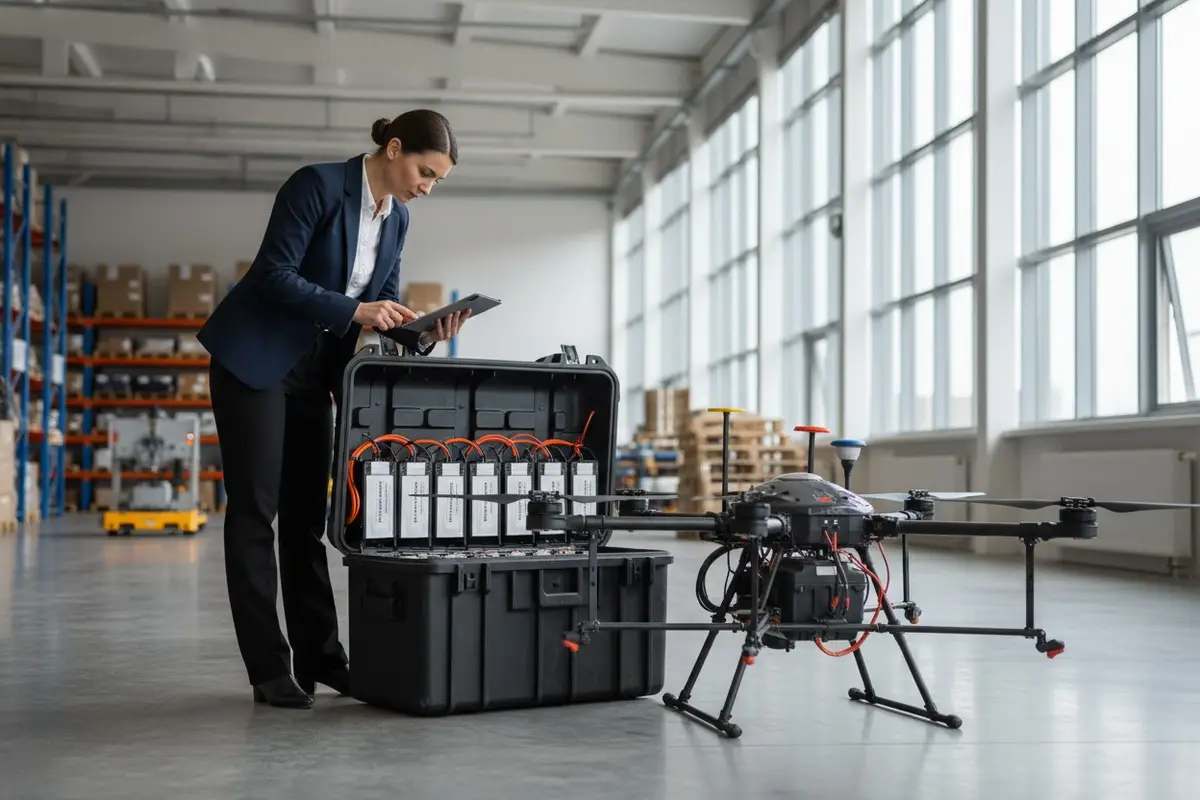

Jede Saison erhält unser Produktionsteam dringende Anrufe von Distributoren IP67-zertifizierte Dichtungen 1. Ihre Batterien gerieten während der Lagerung in Brand. Der Schaden kostet Tausende. Schlimmer noch, es zerstört das Vertrauen zu ihren Kunden.
Um die Brandschutzstandards für Lagerboxen für landwirtschaftliche Drohnenbatterien zu überprüfen, müssen Sie Drittanbieterzertifizierungen wie UL 2054 oder IEC 62133 verlangen, Berichte über thermische Missbrauchstests anfordern, bestätigen, dass die Materialien nicht brennbare Bewertungen erfüllen, und sicherstellen, dass Druckentlastungsmechanismen für die Aufnahme von Lithiumbatterien ordnungsgemäß bewertet sind.
Dieser Leitfaden führt Sie Schritt für Schritt durch. Sie erfahren genau, was Sie Lieferanten fragen müssen, welche Dokumente Sie anfordern und wie Sie Materialien selbst testen können. Beginnen wir mit Zertifizierungen.
Welche spezifischen Brandschutzzertifizierungen sollte ich von meinem Lieferanten für Drohnen-Akkuboxen verlangen?
Wenn wir Batterielagerboxen an unsere US-amerikanischen und europäischen Kunden versenden, stehen Zertifizierungsfragen an erster Stelle. Käufer wollen Beweise. Sie benötigen Dokumentationen, die ihre lokalen Regulierungsbehörden zufriedenstellen und ihr Geschäft schützen.
Erforderlich sind UL 2054 für die Sicherheit von Akkupacks, UL 9540A für Tests auf thermisches Durchgehen, IEC 62133 für sekundäre Lithiumzellen und die Einhaltung von NFPA 855 für Installationsstandards. Diese Zertifizierungen belegen, dass Ihre Speicherbox strenge externe Brandschutzprüfungen bestanden hat.
Verständnis der wichtigsten Zertifizierungsstandards
Nicht alle Zertifizierungen haben das gleiche Gewicht. Einige konzentrieren sich auf die Batterie selbst. Andere decken den Lagerbehälter ab. Sie benötigen beide Arten für vollständigen Schutz.
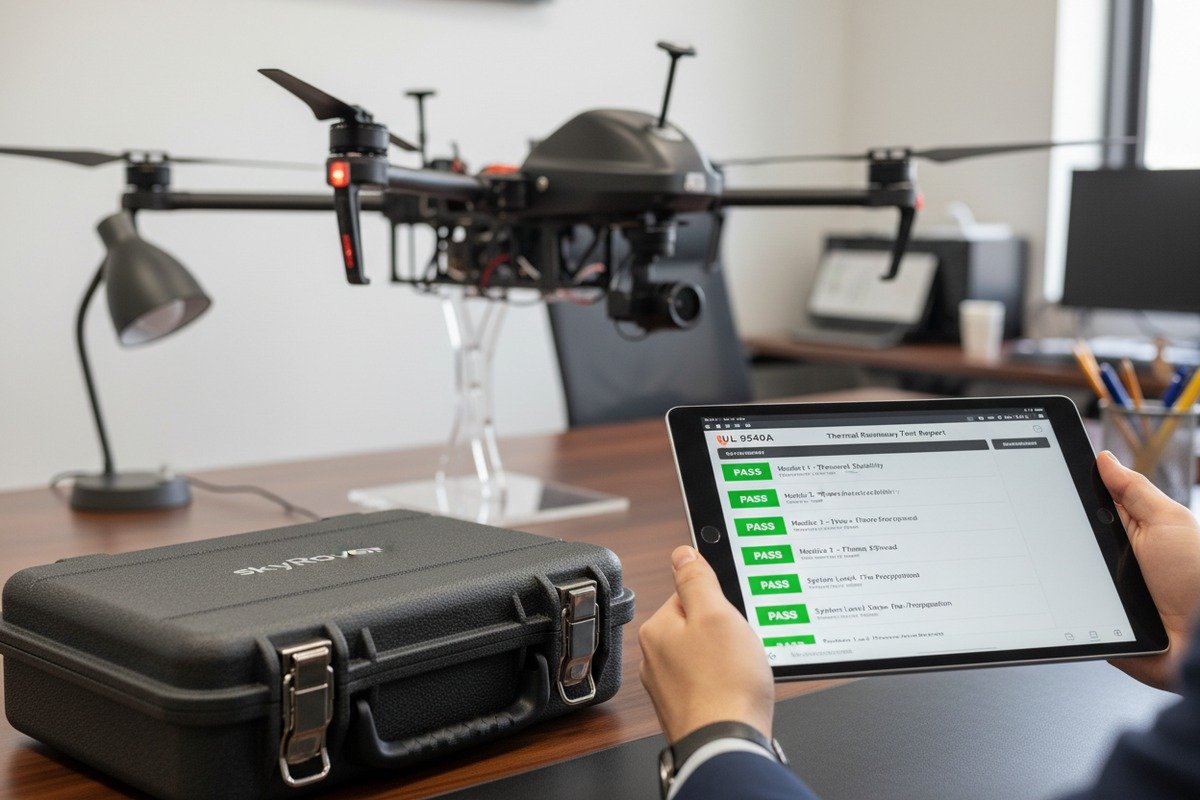
UL 2054 2 befasst sich mit der Sicherheit von Akkupacks. Es testet auf Überladung, Kurzschlüsse und Quetschschäden. UL 9540A bewertet speziell thermische Durchgeh-Brandfortpflanzung 3. Dieser Test ist für Lagerboxen am wichtigsten, da er zeigt, ob ein Brand in einer Zelle übergreift.
IEC 62133 4 ist das internationale Äquivalent. Europäische Käufer bevorzugen oft diesen Standard. Er deckt ähnliche Sicherheitsparameter ab, folgt aber europäischen Testprotokollen.
Zertifizierungsvergleichstabelle
| Zertifizierung | Ausstellende Stelle | Primärer Schwerpunkt | Geografische Präferenz |
|---|---|---|---|
| UL 2054 | UL Solutions | Sicherheit von Akkupacks | Nordamerika |
| UL 9540A | UL Solutions | Thermische Durchgeh-Ausbreitung | Nordamerika |
| IEC 62133 | Internationale elektrotechnische Kommission | Sicherheit von sekundären Lithiumzellen | Europa, Asien |
| NFPA 855 5 | National Fire Protection Association | Installations- und Lagerstandards | Nordamerika |
| UN 38.3 6 | Vereinte Nationen | Transport-Sicherheitsprüfungen | Global |
Welche Dokumente sind anzufordern?
Bitten Sie Ihren Lieferanten um die tatsächlichen Testberichte, nicht nur um Zertifikate. Ein Zertifikat bestätigt, dass Tests stattgefunden haben. Der Bericht zeigt, was während der Tests passiert ist. Unser Ingenieurteam prüft immer vollständige Berichte, bevor es einen Komponentenlieferanten genehmigt.
Fordern Sie die folgenden Dokumente an:
- Original-Zertifikate mit Ablaufdaten
- Vollständige Testberichte mit Bestehens-/Nichtbestehens-Ergebnissen
- Sicherheitsdatenblätter 7 für Gehäusekomponenten
- Qualitätskontrollprüfprotokolle
Warnsignale, auf die Sie achten sollten
Einige Lieferanten zeigen veraltete Zertifikate. Andere legen Zertifikate für andere Produktmodelle vor. Wir haben gesehen, dass Wettbewerber Zertifikate von völlig anderen Herstellern verwenden. Überprüfen Sie immer die Zertifikatsnummer direkt bei der ausstellenden Stelle.
Wie kann ich die Hitzebeständigkeit und Haltbarkeit der Batteriespeichermaterialien testen?
Unser Qualitätskontrolllabor führt täglich Materialprüfungen durch. Wir haben früh gelernt, dass die Angaben der Lieferanten oft von der Realität abweichen. Das Testen von Materialien selbst deckt die Wahrheit auf, bevor Probleme im Feld auftreten.
Testen Sie die Hitzebeständigkeit, indem Sie Materialproben über längere Zeiträume Temperaturen von über 150 °C aussetzen und auf Verformungen oder Verbrennungen prüfen. Überprüfen Sie die Haltbarkeit durch Falltests, Druckzyklen und Chemikalienexpositionstests mit gängigen landwirtschaftlichen Substanzen wie Pestiziden und Düngemitteln.

Einfache Hitzebeständigkeitstests
Für grundlegende Überprüfungen benötigen Sie keine teure Laborausrüstung. Ein kalibrierter Ofen und ein Temperaturfühler liefern wesentliche Daten. Erhitzen Sie die Proben auf 150 °C und halten Sie sie 30 Minuten lang. Hochwertige Materialien zeigen keine sichtbaren Veränderungen. Schlechte Materialien verziehen sich, verfärben sich oder geben Dämpfe ab.
Für rigorosere Tests erhöhen Sie die Temperatur auf 200 °C. Dies simuliert Bedingungen während Ereignissen mit thermischem Durchgehen. Die Speicherbox muss die Hitze bei diesen Temperaturen ohne strukturelles Versagen zurückhalten.
Materialprüfprotokoll
| Test Typ | Methode | Kriterien für das Bestehen | Benötigte Ausrüstung |
|---|---|---|---|
| Hitzebeständigkeit | 150 °C Exposition für 30 Minuten | Keine Verformung oder Verfärbung | Kalibrierter Ofen, Thermoelement |
| Flammwidrigkeit | Direkte Flammenapplikation für 10 Sekunden | Selbstverlöschend innerhalb von 5 Sekunden | Butanbrenner, Timer |
| Schlagfestigkeit | 1-Meter-Falltest auf Beton | Keine Risse oder Dichtungsschäden | Betonoberfläche, Maßband |
| Chemische Beständigkeit | 24-stündige Tauchung in Pestizidlösung | Keine Materialdegradation | Glasbehälter, Probenpestizid |
| Dichtungsintegrität | IP65 Wassersprühprüfung | Kein Wassereintritt | Wasserdruckquelle |
Haltbarkeit unter landwirtschaftlichen Bedingungen
Landwirtschaftliche Umgebungen sind anspruchsvoll. Staub, Feuchtigkeit, chemische Rückstände und Temperaturschwankungen belasten Lagerboxen ständig. Unsere Feldtests umfassen die Exposition gegenüber gängigen Pestiziden, Düngemitteln und Reinigungsmitteln.
Materialproben 24 Stunden in verdünnter Pestizidlösung einweichen. Hochwertige Materialien zeigen keine Schwellung, Rissbildung oder Oberflächenzerfall. Dieser Test zeigt, ob landwirtschaftliche Chemikalien Ihre Aufbewahrungsbox im Laufe der Zeit beeinträchtigen werden.
Überprüfung der Druckentlastung
Thermisches Durchgehen erzeugt schnell Gas. Aufbewahrungsboxen müssen dieses Gas sicher ohne explosive Versagen entlüften. Prüfen Sie, ob Druckentlastungsventile vorhanden und richtig dimensioniert sind.
Unsere Ingenieure testen Ventile, indem sie leere Boxen bis zu den Nennwerten unter Druck setzen. Das Ventil sollte sich reibungslos öffnen und richtig schließen, wenn sich der Druck normalisiert. Ventile, die klemmen oder nicht richtig schließen, stellen fortlaufende Sicherheitsrisiken dar.
Kann mein Lieferant die notwendige Brandschutzdokumentation für meine lokalen Importbestimmungen bereitstellen?
Wenn unser Exportteam Sendungen in die Vereinigten Staaten und nach Europa vorbereitet, nimmt die Dokumentation erhebliche Zeit in Anspruch. Zollbehörden lehnen unvollständige Unterlagen ab. Schlimmer noch, unsachgemäße Dokumentation kann zu beschlagnahmten Sendungen und behördlichen Strafen führen.
Qualifizierte Lieferanten müssen UN 38.3 Transporttestzusammenfassungen, Sicherheitsdatenblätter, Konformitätszertifikate für die Standards des Ziellandes und detaillierte technische Spezifikationen vorlegen, die die Einhaltung lokaler Brandschutzvorschriften wie NFPA 855 oder EN-Standards nachweisen.

Wesentliche Importdokumentation
Verschiedene Länder verlangen unterschiedliche Dokumente. Einige Dokumente werden jedoch universell erwartet. UN 38.3 Testzusammenfassungen sind für den internationalen Versand von Lithiumbatterien zwingend erforderlich. Ohne dieses Dokument wird Ihre Sendung den Zoll nicht passieren.
Sicherheitsdatenblätter beschreiben chemische Zusammensetzungen und Gefahrenklassifizierungen. Zollbeamte verwenden diese, um die richtigen Handhabungsanforderungen und Lagerbeschränkungen an Häfen zu bestimmen.
Dokumentationsanforderungen nach Region
| Region | Erforderliche Dokumente | Zusätzliche Anforderungen |
|---|---|---|
| Vereinigte Staaten | UN 38.3 Zusammenfassung, MSDS, UL-Zertifikate, DOT-Versanderklärung | NFPA 855-Konformitätsschreiben für die gewerbliche Lagerung |
| Europäische Union | UN 38.3 Zusammenfassung, MSDS, CE-Kennzeichnungsdokumentation, IEC-Zertifikate | REACH-Konformitätserklärung für chemische Inhaltsstoffe |
| Kanada | UN 38.3 Zusammenfassung, MSDS, ULC-Zertifikate | Transport Canada Gefahrgutdokumentation |
| Australien | UN 38.3 Zusammenfassung, MSDS, SAA-Zulassung | Konformitätserklärung zur elektrischen Sicherheit |
Fragen an Ihren Lieferanten
Stellen Sie vor der Auftragserteilung diese spezifischen Fragen:
- Können Sie den ursprünglichen UN 38.3 Testbericht bereitstellen, nicht nur die Zusammenfassung?
- Welches Labor hat Ihre Zertifizierungsprüfungen durchgeführt?
- Haben Sie schon einmal in mein Zielland exportiert?
- Können Sie Referenzkontakte von früheren Kunden in meiner Region angeben?
- Welche Unterstützung bieten Sie an, wenn der Zoll die Dokumentation ablehnt?
Unser Kundenservice-Team pflegt Dokumentationspakete, die auf jeden wichtigen Exportmarkt zugeschnitten sind. Wir aktualisieren diese Pakete, sobald sich Vorschriften ändern. Dieser proaktive Ansatz verhindert Verzögerungen für unsere Distributoren.
Zusammenarbeit mit Zollmaklern
Erfahrene Zollagenten kennen die lokalen Anforderungen genau. Konsultieren Sie vor dem Import einen Agenten, der mit Drohnen- und Batterieausrüstung vertraut ist. Er kann die Lieferantendokumentation überprüfen und Lücken vor dem Versand identifizieren.
Wir empfehlen, die Dokumentation zur Vorabprüfung an Ihren Agenten zu senden. Dieser kleine Schritt verhindert kostspielige Verzögerungen und Lagergebühren an den Häfen.
Welche Sicherheitsmerkmale sollte ich beachten, um ein thermisches Durchgehen während des Langstreckentransports zu verhindern?
Der Versand von Batterien für Agrardrohnen über Ozeane dauert Wochen. Temperaturschwankungen, Vibrationen und Handhabungseinflüsse belasten die Batterien während des Transports. Unsere Logistikpartner berichten, dass die meisten Batterievorfälle während des Versands auftreten, nicht während des normalen Gebrauchs.
Suchen Sie nach Aufbewahrungsboxen mit integrierter Temperaturüberwachung, stoßdämpfenden Innenfächern, individuellen Zellisolationsbarrieren, automatischen Entlüftungssystemen und IP67-zertifizierten Dichtungen. Diese Merkmale verhindern Auslöser für thermisches Durchgehen und begrenzen Ereignisse, falls diese während des Transports auftreten.

Kritische Sicherheitsmerkmale erklärt
Thermisches Durchgehen beginnt, wenn eine Zelle überhitzt. Wärme überträgt sich auf benachbarte Zellen. Die Reaktion kaskadiert, bis alle Zellen katastrophal ausfallen. Um diese Kette zu unterbrechen, sind physische Barrieren zwischen den Zellen und wärmeabsorbierende Materialien erforderlich.
Hochwertige Aufbewahrungsboxen enthalten intumeszierende Materialien. Diese dehnen sich bei Erwärmung aus und bilden isolierende Barrieren, die die Wärmeübertragung verlangsamen. Dies verschafft Zeit für Erkennungssysteme, um die Bediener zu alarmieren, und für Entlüftungssysteme, um den Druck sicher abzulassen.
Checkliste für Sicherheitsmerkmale
| Merkmal | Zweck | Überprüfungsmethode |
|---|---|---|
| Zellisolationsbarrieren | Verhindern thermische Ausbreitung zwischen Zellen | Visuelle Inspektion von Innenräumen |
| Intumeszierende Materialien | Bilden sich ausdehnende Wärmebarrieren während thermischer Ereignisse | Anforderung von Materialspezifikationen und Testdaten |
| Druckentlastungsventile | Leiten Gase während des thermischen Durchgehens sicher ab | Rückschlagventil-Nennwert und Testbetrieb |
| Temperaturindikatoren | Zeigen Sie an, ob die Box gefährliche Temperaturen erfahren hat | Bestätigen Sie den Indikatortyp und den Empfindlichkeitsbereich |
| Stoßdämpfung | Schützen Sie Zellen vor Beschädigungen durch Stöße während der Handhabung | Leere Box fallen lassen und auf Beschädigungen prüfen |
| IP67-Abdichtung | Verhindern Sie das Eindringen von Feuchtigkeit, die Kurzschlüsse verursacht | Sprühwasser- oder Tauchtest durchführen |
Temperaturüberwachungslösungen
Moderne Lagerboxen bieten integrierte Überwachung. Sensoren verfolgen die Innentemperatur kontinuierlich. Einige Systeme übertragen Daten drahtlos und ermöglichen eine Fernüberwachung während des Versands.
Verlangen Sie mindestens irreversible Temperaturindikatoren. Diese einfachen Geräte verfärben sich dauerhaft, wenn die Temperaturen sichere Schwellenwerte überschreiten. Überprüfen Sie die Indikatoren sofort nach der Lieferung. Farbveränderung zeigt an, dass die Sendung gefährliche Bedingungen erfahren hat.
Vorbereitung von Batterien für den sicheren Versand
Merkmale der Lagerbox sind wichtig. Aber die richtige Vorbereitung ist ebenso wichtig. Lagern Sie Batterien vor dem Versand bei 40-60% Ladung. Dies reduziert die verfügbare Energie, falls ein thermisches Durchgehen auftritt.
Stellen Sie sicher, dass alle Batterien vor dem Verpacken einer Sichtprüfung unterzogen werden. Aufgeblähte, beschädigte oder zuvor überhitzte Batterien stellen während des Transports erhöhte Risiken dar. Unser Qualitätskontrollteam lehnt jede Batterie ab, die physische Anomalien aufweist.
Wahl der Versandpartner mit Bedacht
Nicht alle Spediteure gehen ordnungsgemäß mit Lithiumbatterien um. Wählen Sie Spediteure mit Gefahrgutzertifizierungen und temperaturkontrollierten Optionen. Fordern Sie Dokumentationen ihrer Verfahren zur Handhabung von Batterien an.
Wir arbeiten mit Spediteuren zusammen, die an Transitpunkten klimatisierte Lagerhäuser unterhalten. Dies verhindert extreme Temperaturen während der anfälligsten Phasen des internationalen Versands.
Schlussfolgerung
Die Überprüfung von Brandschutznormen schützt Ihre Investition, Ihre Kunden und Ihren Geschäftsruf. Fordern Sie ordnungsgemäße Zertifizierungen an, testen Sie Materialien selbst, stellen Sie sicher, dass die Dokumentation den Importanforderungen entspricht, und wählen Sie Aufbewahrungsboxen mit umfassenden Sicherheitsmerkmalen. Ihre Sorgfalt verhindert Katastrophen.
Fußnoten
1. Wikipedia bietet eine klare Erklärung des IP-Codes, einschließlich IP67-Bewertungen. ︎
2. UL Solutions ist die maßgebliche Quelle für Informationen zum UL 2054-Standard. ︎
3. Wikipedia bietet einen umfassenden Überblick über thermisches Durchgehen bei Batterien. ︎
4. Die Internationale Elektrotechnische Kommission ist die herausgebende Stelle für IEC-Normen. ︎
5. NFPA ist die offizielle Quelle für Informationen zum NFPA 855-Standard. ︎
6. IATA bietet wesentliche Richtlinien für die Einhaltung von UN 38.3 für den Lufttransport von Lithiumbatterien. ︎
7. OSHA ist eine primäre staatliche Quelle für Informationen zu Sicherheitsdatenblättern (früher MSDS). ︎


 English
  Español de México
  Deutsch
  Français
  Русский
  العربية
Comments
No comments yet. Be the first to share your thoughts!
Leave a Comment