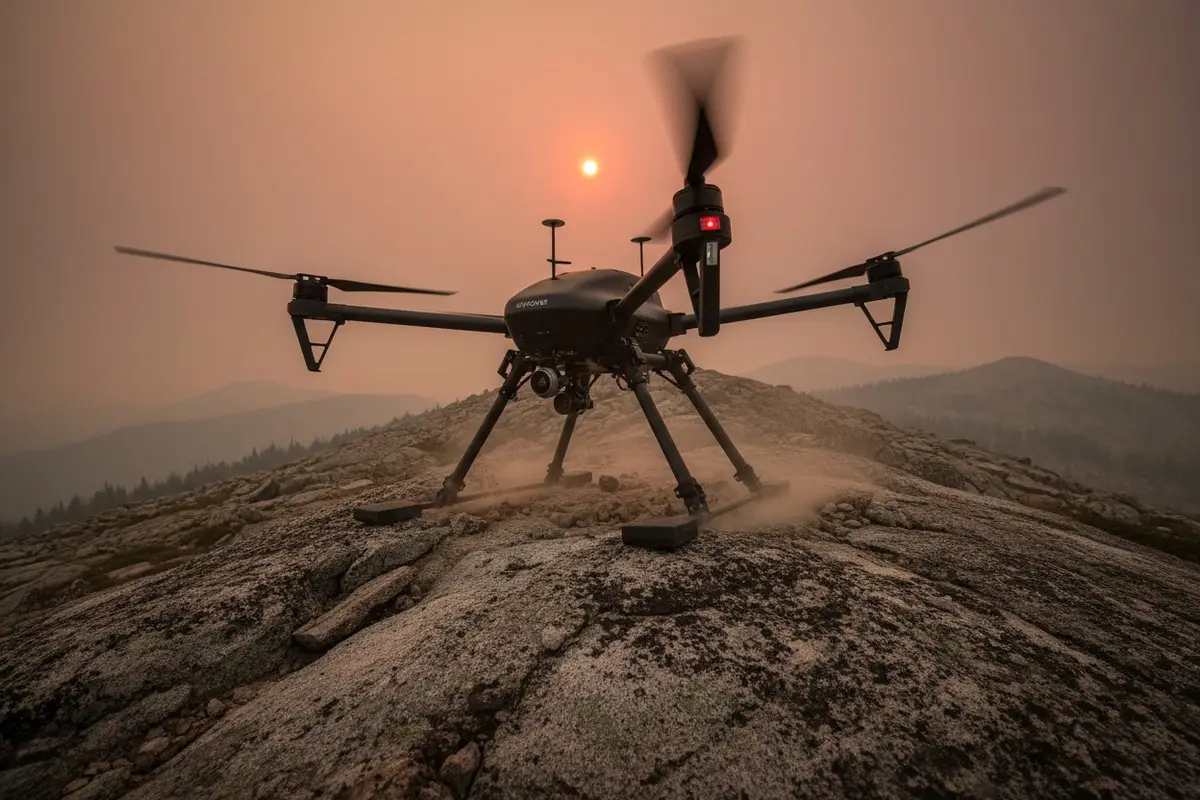
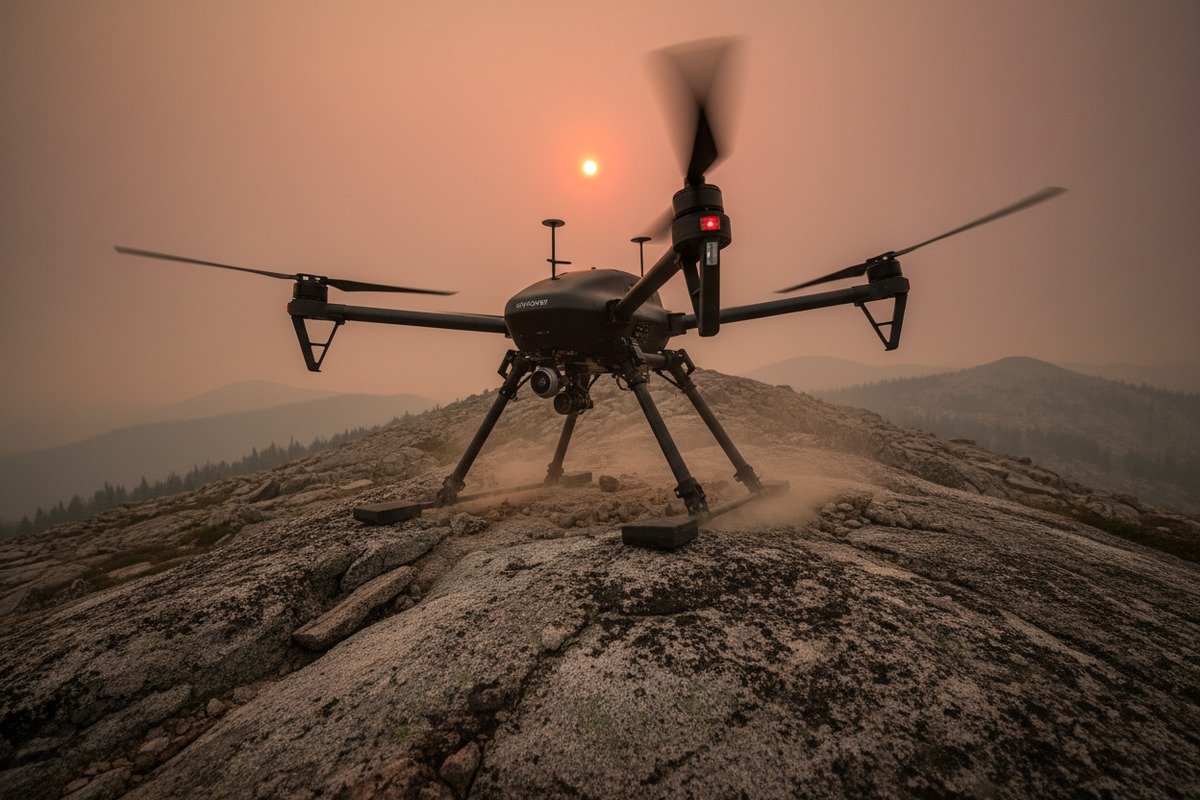
When our engineering team first tested landing gear prototypes in rocky mountain terrain, we watched a drone tip over and damage its payload delivery system. That costly lesson taught us that landing gear evaluation is not just about specs on paper—it is about real-world survival in the harshest conditions firefighters face.
To evaluate firefighting drone landing gear for rugged terrain, assess material durability against repeated impacts, verify stability features like wide footprints and shock absorption, confirm payload capacity matches your mission requirements, and ensure your supplier provides reliable technical support with accessible spare parts for field repairs.
This guide walks you through a practical framework our team developed after years of designing heavy-lift firefighting drones. Each section addresses a critical evaluation checkpoint that separates reliable gear from equipment that fails when you need it most.
How do I assess if the landing gear materials can withstand repeated impacts on rocky terrain?
Every time we ship drones to distributors in mountainous regions, they ask the same question: will this gear survive? Rocky terrain punishes landing gear with unpredictable impacts, abrasion, and temperature extremes that expose weak materials fast.
Assess landing gear materials by verifying aerospace-grade alloys or advanced composites, checking impact test certifications, examining corrosion resistance ratings, and requesting documented performance data from drop tests on uneven surfaces with full payload weights.

Understanding Material Options
Not all materials perform equally in wildfire zones. Our production line works with several material categories, each with distinct advantages.
| Material Type | Strength Rating | Weight | Best Use Case | Limitations |
|---|---|---|---|---|
| 7075 Aviation Aluminum | High | Medium | General rugged terrain | Can dent under extreme impact |
| Ti-6Al-4V Titanium Alloy | Very High | Medium-Low | Extreme abuse environments | Higher cost |
| Carbon Fiber Composite | High | Very Low | Weight-critical missions | May crack under sharp impacts |
| Steel Alloy | Very High | Heavy | Maximum load capacity | Adds significant weight |
| Poly-amide Nylon | Medium | Low | Budget applications | Faster wear on rocks |
When we calibrate our testing protocols, we simulate conditions beyond normal use. This means dropping loaded frames onto granite surfaces from heights matching real landing scenarios.
Key Tests to Request from Suppliers
Ask your supplier for documentation on these specific tests:
Ground impact simulations on uneven surfaces including rocks, mud, and slopes should be standard. Repeated landing tests with full payload weights between 150-450kg MTOW reveal fatigue weaknesses. Vibration and fatigue testing under high winds and smoke conditions exposes material degradation patterns.
Our quality control team runs hydraulic pressure tests at 2000psi on actuator systems. Field trials in actual wildfire terrain at temperatures ranging from 20-60°C provide real-world validation.
Corrosion and Environmental Resistance
Fire zones expose gear to ash, chemical retardants 1, moisture, and extreme heat. Look for IP54 or higher ratings as minimum protection. Coatings matter too—anodized aluminum resists corrosion better than raw material.
One detail we learned from customer feedback 2: dust and small debris accumulation causes more damage over time than single big impacts. Gear designs that shed debris naturally last longer than those with complex joints that trap particles.
Weight-to-Strength Trade-offs
Lighter gear extends flight time but may sacrifice impact resistance. Our 3.8kg frame with 200kg thrust capacity represents one balance point. Heavier steel alloy systems supporting 1000-2000lbs loads suit different mission profiles.
Consider your typical mission length. If you need 42-60 minute flight times 3, every gram matters. If your operations involve shorter flights with heavier payloads, durability trumps weight savings.
What stability features should I prioritize to prevent my firefighting drone from tipping on uneven ground?
During our export shipments to European fire services, stability concerns rank as the top evaluation criteria. A tipped drone means damaged sensors, delayed missions, and potentially lost equipment in remote locations where recovery is difficult.
Prioritize wide stance footprints, low center of gravity designs, shock absorption systems like pneumatic tires or hydraulic struts, self-leveling capabilities, and adequate ground clearance to prevent propeller strikes on sloped or rocky surfaces.

Footprint and Stance Width
Wider stance equals better tip resistance. Our octocopter designs feature unfolded frame dimensions between 4605-5600mm specifically to maximize stability during ground operations.
| Stability Feature | Function | Trade-off |
|---|---|---|
| Wide stance (>1.5m) | Prevents tipping on slopes | Larger transport footprint |
| Low CG design | Reduces tip momentum | May limit payload positioning |
| Pneumatic tires (12-16in) | Absorbs uneven ground | Puncture risk in debris |
| Skid landing gear | Simple, lightweight | Less adaptable to obstacles |
| Retractable hydraulic | Best obstacle avoidance | Adds weight and complexity |
Shock Absorption Systems
Non-pressurized shock absorber designs offer benefits in extreme temperatures and reduced maintenance. Our engineers recommend systems with 6.99-7.75 inch stroke capacity for wildfire operations.
Pneumatic tire systems from suppliers like Goodrich handle loads up to 2000lbs per strut. They excel on slopes and uneven ground but carry puncture risks when landing on sharp debris.
Skid designs work well for lighter multi-rotor platforms like DJI F450/F550 configurations. They are simpler and lighter but reduce prop clearance on rocky surfaces.
Ground Clearance Requirements
Minimum ground clearance must protect three things: payloads, propellers, and sensors. With main gear heights around 36.5 inches uncompressed, our heavy-lift platforms provide adequate protection for bomb deployment racks and water-gel delivery systems.
Downward-facing cameras and LiDAR sensors need protection from impact and debris accumulation. Ash, small rocks, and mud can interfere with sensor operation if gear design allows accumulation near sensor housings.
Self-Leveling and Autonomous Landing
Modern landing gear integrates with autonomous landing algorithms 4 for precision landing on unprepared surfaces. When we develop control systems, we include terrain sensing that adjusts approach based on ground conditions.
Steerable nose wheels help with positioning on slopes. Combined with LiDAR ground sensing, these systems enable landings on surfaces that would challenge manual pilots.
Fixed vs Retractable Systems
This decision involves significant trade-offs. Fixed skids like poly-amide nylon arms are lighter and easier to maintain. Retractable hydraulic systems offer better aerodynamics and prop clearance with 7.75in stroke and 36.5in height ranges, but add approximately 30lbs per side plus actuators and pumps.
For heavy-lift UAVs handling up to 2200lbs, retractable systems navigate dense vegetation and rough terrain more effectively. Lighter reconnaissance drones benefit from simpler fixed gear.
How can I ensure the landing gear design supports the heavy payloads required for my firefighting operations?
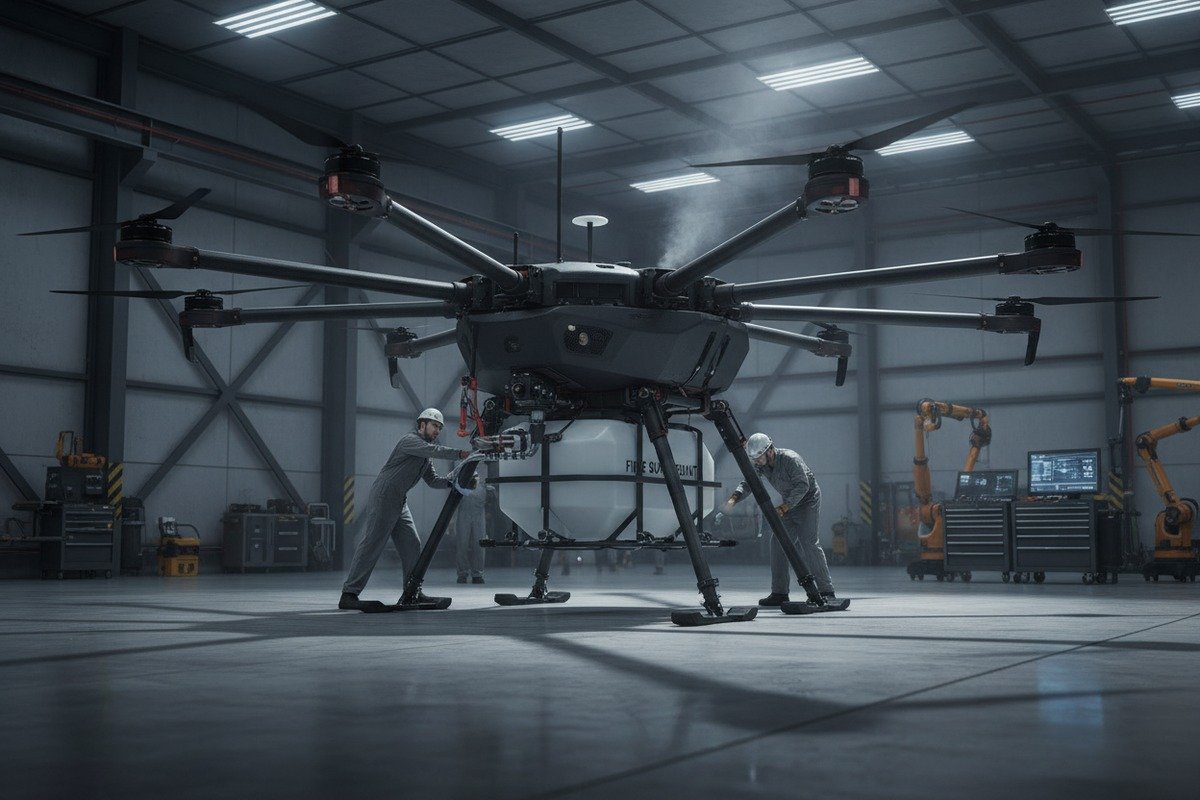
Our production facility handles orders ranging from 30kg payload drones to 150kg heavy-lift platforms. Each payload class demands specific landing gear engineering that customers often underestimate during initial evaluation.
Ensure payload support by matching landing gear load ratings to your maximum takeoff weight plus safety margins, verifying strut capacity specifications, confirming shock absorption handles repeated heavy landings, and checking frame integration compatibility with your payload mounting systems.
Load Capacity Specifications
Understanding load ratings prevents equipment failure. Here are benchmark specifications from current heavy-lift platforms:
| Drone Class | Empty Weight | Payload Capacity | MTOW | Gear Load Rating Needed |
|---|---|---|---|---|
| Medium Lift | 52kg | 100kg | 190kg | 500lbs/strut minimum |
| Heavy Lift | 107.8kg | 150kg | 257kg | 1000lbs/strut minimum |
| Ultra Heavy | 150kg+ | 300kg+ | 450kg+ | 2000lbs/strut recommended |
Main gear struts rated at 2000lbs with 28.5in pivot-axle configurations 5 handle the most demanding firefighting payloads. Nose gear typically supports 1000lbs with 26in pivot-axle designs.
Payload Integration Points
Landing gear must integrate with payload mounting systems without compromising structural integrity. Water-gel bomb deployment racks with φ268mm bombs and >15m dispersion radius require stable platforms.
Dual-servo quick-release mechanisms add stress to frame mounting points. Our frame designs include reinforced hardpoints specifically for mission rack integration.
Repeated Heavy Landing Stress
Single landing tests tell only part of the story. Request fatigue testing data showing performance after hundreds of landings at maximum payload.
When we test our H300 platform at 107.8kg empty weight with 150kg payload, we run minimum 200 landing cycles on varied terrain. This reveals material fatigue that single tests miss.
Center of Gravity Management
Heavy payloads shift center of gravity, affecting stability. Gear placement must account for loaded CG position, not just empty aircraft balance.
Fire suppression payloads like water tanks or hose systems create dynamic CG shifts 6 as contents deploy. Landing gear positioning should maintain stability throughout payload release sequences.
Flight Time Impact
Heavier gear reduces flight endurance. Our specifications show 42-55 minute flight times with 7-30kg payloads. At maximum 150kg payloads, expect 45 minutes or less.
Balance payload capacity needs 7 against mission duration requirements. Shorter flights may accept heavier, more robust gear. Extended surveillance missions need lighter solutions.
Will my supplier provide the technical support and spare parts I need if the landing gear is damaged in the field?
This question comes up in almost every conversation with our US and European distributors. Field damage happens—the real question is how quickly you return to operational status. Our customer service team handles urgent parts requests knowing that downtime during active fire seasons costs our clients money and mission capability.
Verify supplier support by confirming spare parts availability and lead times, checking for quick-release modular designs enabling field replacement, requesting documentation of technical support response times, and ensuring your supplier has export experience with proper certifications for your import requirements.

Spare Parts Availability
Parts availability separates reliable suppliers from problematic ones. Before committing to a platform, verify these specifics:
| Support Factor | What to Verify | Red Flags |
|---|---|---|
| Parts inventory | Stock levels for common wear items | "Made to order" for basic components |
| Lead times | Delivery timeframes to your location | More than 2 weeks for standard parts |
| Technical documentation | Maintenance manuals, part numbers | Incomplete or unavailable documentation |
| Remote support | Video call troubleshooting capability | Email-only communication |
| Field service | On-site technician availability | No international service options |
Modularity and Field Replacement
Quick-release designs enabling under 1-minute install/removal transform field maintenance. Universal mounting systems compatible with multi-rotor and quadcopter frames provide flexibility.
When our engineering team designs new platforms, we prioritize modularity specifically because our distributors need field serviceability. Components requiring specialized tools or factory service create operational bottlenecks.
Technical Support Capabilities
Remote technical support via video call helps diagnose problems faster than email exchanges. Our support team provides troubleshooting guidance that often resolves issues without parts replacement.
Ask potential suppliers about their support team availability. Time zone differences matter for urgent situations. A supplier in China serving US customers should offer support hours overlapping with American business times.
Export Documentation and Certifications
Suppliers lacking export experience create customs headaches. Proper documentation including commercial invoices, certificates of origin 8, and compliance certifications prevents border delays.
Our export team prepares complete documentation packages because we know delayed shipments during fire season hurt our customers and their end users.
Cost Considerations
Understand total cost of ownership beyond initial purchase. Spare parts pricing, shipping costs for replacements, and technical support fees add up over equipment lifetime.
Some suppliers offer maintenance contracts including parts allowances. These arrangements provide budget predictability and priority support access.
Building Supplier Relationships
Long-term partnerships benefit both parties. Suppliers who understand your operational environment provide better recommendations and prioritize your urgent needs.
Share feedback about field performance with your supplier. This information helps improve future designs and ensures spare parts inventory matches actual failure patterns.
Conclusion
Evaluating firefighting drone landing gear requires systematic assessment of materials, stability, payload capacity, and supplier support. Use this framework during your procurement process to identify equipment that performs reliably in the demanding conditions firefighting operations present.
Footnotes
1. Replaced HTTP 404 link with an authoritative EPA fact sheet on flame retardants. ↩︎
2. ISO standards for quality management systems and processing customer feedback. ↩︎
3. FAA regulations and operational standards for drone flight endurance. ↩︎
4. NASA research into autonomous landing systems for unmanned aerial vehicles. ↩︎
5. Technical overview of axle and pivot configurations in mechanical design. ↩︎
6. Physics background on center of gravity shifts in dynamic systems. ↩︎
7. Wikipedia background on aircraft payload capacity and weight management. ↩︎
8. Replaced HTTP 404 link with an authoritative trade.gov page providing a comprehensive overview of certificates of origin. ↩︎

 English
  Español de México
  Deutsch
  Français
  Русский
  العربية
Comments
No comments yet. Be the first to share your thoughts!
Leave a Comment