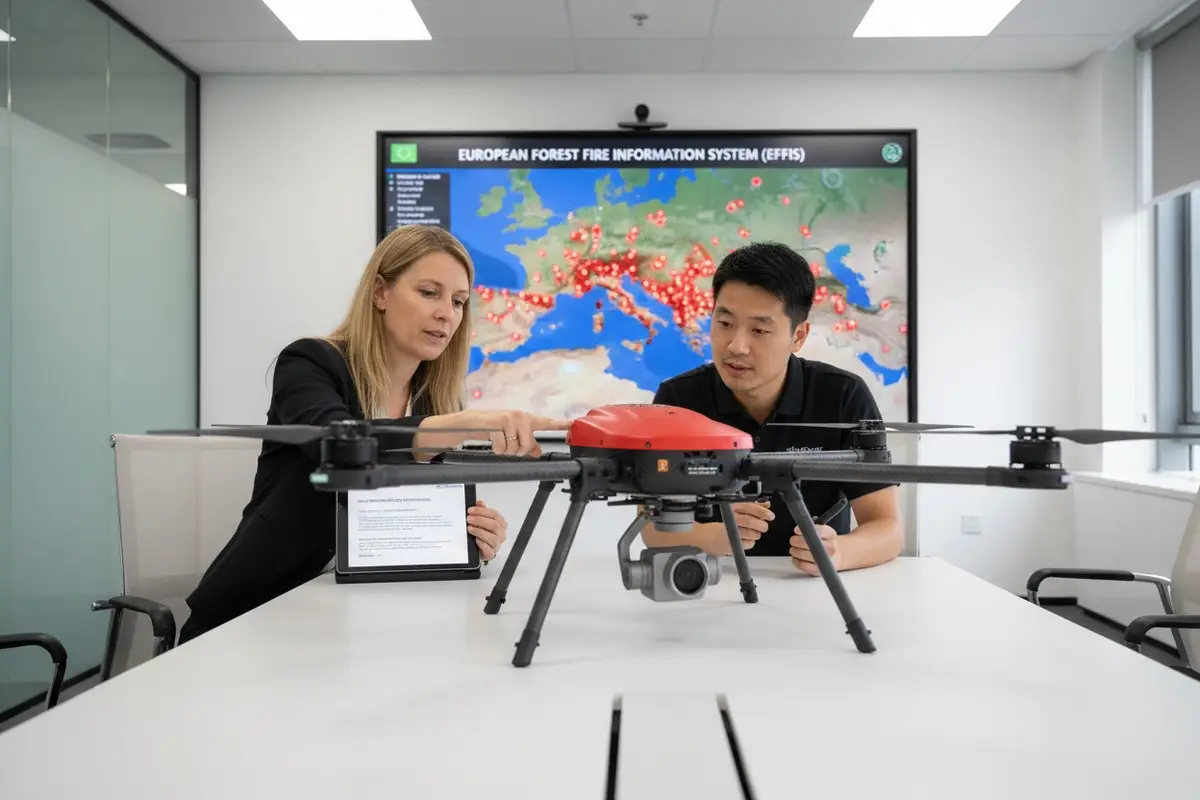

When our engineering team began adapting drone systems for European fire services, we quickly learned that understanding local tactics matters as much as hardware specs EU Civil Protection Mechanism protocols 1. Many procurement managers face the same frustration: suppliers promise compatibility but fail to grasp how EU firefighting operations actually work on the ground.
To evaluate a drone supplier’s knowledge of European firefighting tactics, verify their familiarity with EU Civil Protection Mechanism protocols, EASA flight regulations, regional command-and-control integration requirements, and their ability to demonstrate real experience with cross-border wildfire deployments and EFFIS early warning system compatibility.
The 2025 wildfire season burned over one million hectares across Europe—the worst since 2006 EASA flight regulations 2. This crisis pushed the EU to announce a new 300-strong rapid reaction force for 2026 deployment. For fire brigades investing in drone technology, choosing the right supplier has never been more critical EFFIS early warning system 3. Let me walk you through the key questions that separate knowledgeable suppliers from those who simply sell boxes.
How do I verify if a supplier understands the specific tactical deployment needs of European fire brigades?
Our export teams have spent years learning how European fire services operate differently from those in Asia or North America AT-802F Fire Boss aircraft 4. The challenge is real: a drone that works perfectly in one country may fail completely when deployed across borders during a major wildfire event.
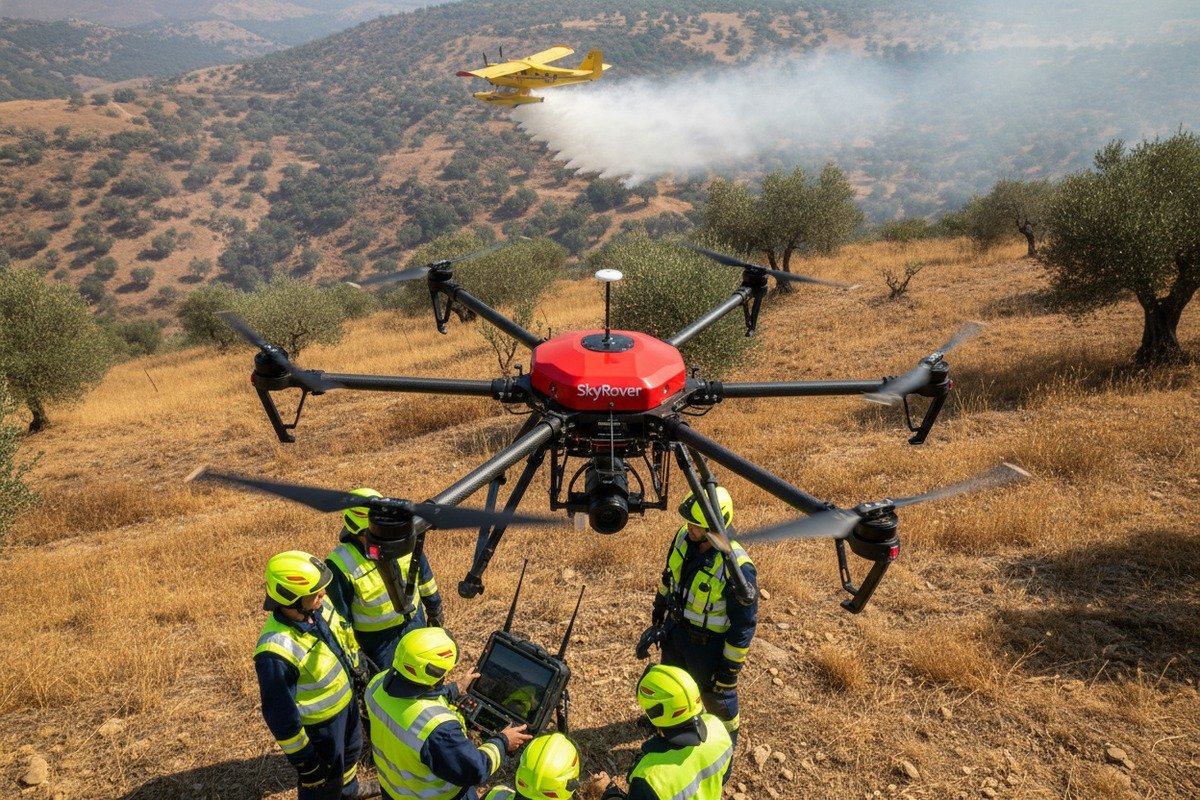
Verify supplier knowledge by asking about EU Civil Protection Mechanism operations, pre-positioning strategies in high-risk Mediterranean zones, aerial-ground coordination with assets like AT-802F Fire Boss aircraft, and their understanding of the Emergency Response Coordination Centre's role in cross-border deployments.
Understanding the EU Coordination Framework
European firefighting has shifted dramatically from national-only responses to EU-coordinated operations Emergency Response Coordination Centre's role 5. The EU Civil Protection Mechanism (UCPM) now standardizes procedures, logistics, and cross-border deployments. A qualified supplier must understand this framework thoroughly EASA operational category classification 6.
Ask your potential supplier these specific questions:
- Can you explain how the ERCC coordinates multinational firefighting resources RoHS compliance certificates 7?
- What role does pre-positioning play in southern European countries?
- How would your drones integrate with the 671 firefighters typically stationed in France, Greece, Portugal, Spain, and Italy during peak season GDPR-compliant data handling procedures 8?
Key Tactical Elements to Evaluate
| Tactical Element | What Supplier Should Know | Red Flag Responses |
|---|---|---|
| Pre-positioning | Understands seasonal deployment in Mediterranean high-risk zones | Unaware of pre-positioning concept |
| Aerial coordination | Knows AT-802F Fire Boss operations and continuous water drop tactics | Only familiar with small consumer drones |
| Multi-jurisdiction ops | Can explain host command integration protocols | Assumes single-country operations only |
| EFFIS integration | Familiar with European Forest Fire Information System | Never heard of early warning systems |
The Prevention vs. Suppression Balance
A knowledgeable supplier understands that European strategy balances prevention and suppression. Portugal now allocates over 50% of its budget to landscape management after devastating 2017 fires. Your drone supplier should recognize how their technology supports both approaches—not just reactive firefighting.
When we design our thermal imaging payloads, we consider controlled burn monitoring and early hotspot detection equally important. A supplier focused only on active fire suppression misses half the tactical picture.
Testing Real Knowledge
Request case studies from previous European deployments. Ask about specific challenges like:
- Operating in the eastern Mediterranean's unique terrain
- Coordinating with the new Cyprus firefighting hub
- Adapting to volatile weather patterns affecting north-south Europe differently
What technical questions should I ask to ensure their drone hardware meets European safety and flight regulations?
At our production facility, we maintain dedicated compliance teams specifically for European certifications. The regulatory landscape in Europe is complex, and many suppliers underestimate what full compliance actually requires.
Ask suppliers about their EASA operational category classification, geo-awareness system integration with ED-269 zone data, CE marking documentation, RoHS compliance certificates, and their process for obtaining emergency service operational authorizations including "Blue Light" protocol exemptions.

EASA Category Requirements
The European Union Aviation Safety Agency divides drone operations into three categories: Open, Specific, and Certified. Firefighting operations typically fall under Specific or Certified categories due to risk levels and operational environments.
| EASA Category | Typical Firefighting Application | Authorization Required |
|---|---|---|
| Open | Training flights, basic reconnaissance | Self-declaration, limited scenarios |
| Specific | Active fire zone surveillance, thermal mapping | Operational authorization (SORA) |
| Certified | Payload drops, flights over emergency personnel | Type certificate, operator certificate |
A credible supplier should immediately identify which category your intended operations fall under and explain the authorization pathway.
Geo-Awareness and Airspace Management
European airspace includes numerous restricted zones that change dynamically during emergencies. Your supplier's drone must integrate with official geographical zone databases using formats like ED-269 or JSON files specified by national aviation authorities.
Critical questions to ask:
- Does your system automatically update no-fly zones from official EU databases?
- Can operators override restrictions using authenticated "Blue Light" emergency protocols?
- How does the drone behave when approaching temporary flight restrictions around active fire zones?
Hardware Compliance Documentation
Request specific documentation including:
- EU Declaration of Conformity
- CE marking certificates
- RoHS compliance third-party test reports
- EMC (electromagnetic compatibility) testing results
When we ship our octocopter systems to European distributors, we include complete documentation packages because incomplete paperwork causes customs delays and legal complications. A supplier who hesitates to provide these documents likely lacks proper certification.
Environmental and Safety Standards
European environmental regulations like RoHS restrict hazardous substances in electronic equipment. Fire service drones must also meet stringent safety requirements for operation in extreme temperatures, smoke environments, and near water sources.
Our engineering team tests every firefighting drone variant in simulated extreme conditions—high heat, water spray, particulate exposure. Ask your supplier for test reports proving their hardware survives real firefighting environments.
Can the supplier explain how their drone software integrates with the command-and-control systems used in my region?
During our development process for European markets, we discovered that software integration challenges often exceed hardware difficulties. Every region uses different command platforms, and a drone that cannot share data seamlessly becomes a liability rather than an asset.
Evaluate software integration by requesting demonstrations of real-time video streaming to common European incident command platforms, compatibility with regional communication protocols, GDPR-compliant data handling procedures, encrypted transmission capabilities, and API documentation for custom system connections.

Communication Protocol Compatibility
European fire services use diverse communication systems. From TETRA networks in Germany to different digital radio standards elsewhere, your drone supplier must understand this fragmented landscape.
| Region/Country | Common Systems | Integration Challenge |
|---|---|---|
| Germany | TETRA, BOS digital radio | Encryption requirements, latency standards |
| France | ANTARES network | Protocol translation, bandwidth limits |
| Spain | Various regional systems | Multi-protocol support needed |
| Pan-European | UCPM coordination channels | Cross-border data sharing compliance |
Real-Time Data Transmission Requirements
Firefighting drones must transmit thermal imagery, optical video, and mapping data simultaneously to incident command centers. Ask your supplier:
- What video latency can commanders expect during live operations?
- Can your system stream to multiple command posts simultaneously?
- How does transmission perform in smoke-heavy or mountainous terrain?
Our ground control stations support multiple output formats specifically because European customers need flexibility. A supplier offering only proprietary software with no integration options will create operational silos.
GDPR and Data Security Considerations
Drones capture sensitive information including personnel locations, property details, and tactical movements. European data protection regulations apply strictly to this information.
Verify your supplier addresses:
- Data encryption during transmission and storage
- Data sovereignty—where is information stored?
- Access controls and audit logging
- Deletion protocols after operations conclude
When we configure systems for European fire services, data security features are enabled by default, not offered as expensive add-ons.
Cybersecurity Measures
Emergency service drones represent potential cyberattack targets. A compromised drone during active firefighting could endanger lives. Request documentation on:
- Firmware signing and secure boot processes
- Communication channel encryption standards
- Intrusion detection capabilities
- Response procedures for suspected compromise
How can I evaluate their ability to provide the specialized engineering support required for European firefighting environments?
Our support teams understand that selling a drone is just the beginning. When a system fails during a wildfire, having responsive engineering support can mean the difference between controlled suppression and catastrophic spread.
Evaluate engineering support by confirming 24/7 technical assistance availability in European time zones, on-site training capabilities, spare parts distribution within the EU, firmware update frequency, scenario-specific tactical programming expertise, and documented response times for critical support requests.

Training Program Evaluation
Effective drone deployment requires trained operators and command staff who understand system capabilities. Assess your supplier's training offerings:
| Training Component | Minimum Expectation | Preferred Standard |
|---|---|---|
| Pilot certification | Basic flight operations | Scenario-based tactical exercises |
| Command staff familiarization | System overview | Live integration with command platforms |
| Maintenance training | Basic troubleshooting | Component-level repair certification |
| Refresh training | Annual updates | Seasonal pre-deployment preparation |
Spare Parts and Maintenance Infrastructure
European operations cannot wait weeks for parts shipped from overseas. Ask your supplier:
- Where are spare parts warehoused within the EU?
- What is the typical delivery time for critical components?
- Do you offer exchange programs for faster repairs?
- Can regional technicians perform authorized repairs?
We maintain distribution partnerships within Europe specifically to address this concern. A supplier without European logistics infrastructure will leave you stranded during critical moments.
Scenario-Specific Programming
European firefighting presents unique challenges requiring customized drone programming. Urban high-rise incidents in dense cities differ completely from wildland-urban interface fires in Mediterranean scrublands.
Request demonstrations of:
- Flight pattern optimization for urban canyon environments
- Extended endurance programming for large wildfire mapping
- Historical building protection surveillance patterns
- Ember spotting and tracking algorithms
Future Technology Roadmap
The 2026 EU rapid reaction force represents just one step in evolving European firefighting capabilities. Evaluate whether your supplier invests in emerging technologies:
- Autonomous swarm coordination for large-scale reconnaissance
- AI-enhanced thermal analysis for hotspot prediction
- Automated integration with aircraft like the AT-802F Fire Boss
- Advanced sensor packages for gas detection and air quality monitoring
When our R&D team plans new features, we specifically consider Aerial Fire Fighting Conference discussions and UCPM operational requirements. A supplier disconnected from European firefighting evolution will deliver obsolete technology.
Support Response Documentation
Request documented evidence of support capabilities:
- Average response times for critical issues
- Escalation procedures for unresolved problems
- Customer references from European emergency services
- Case studies from actual European deployments
Conclusion
Evaluating a drone supplier's knowledge of European firefighting tactics requires examining their understanding of UCPM protocols, EASA regulations, regional software integration, and engineering support capabilities. As wildfires intensify across Europe, choosing a truly qualified supplier protects both your investment and the communities your fire service serves.
Footnotes
1. Official information on EU disaster response cooperation. ↩︎
2. Official EASA page detailing drone regulations in Europe. ↩︎
3. Replaced with the official Copernicus EFFIS portal, which provides comprehensive information on the early warning system. ↩︎
4. Manufacturer’s official page with details and specifications of the aircraft. ↩︎
5. Official European Commission page explaining the ERCC’s function. ↩︎
6. Official EASA page explaining drone operational categories. ↩︎
7. Official European Commission page on the RoHS Directive. ↩︎
8. Official European Commission page on data protection and GDPR. ↩︎


 English
  Español de México
  Deutsch
  Français
  Русский
  العربية
Comments
No comments yet. Be the first to share your thoughts!
Leave a Comment