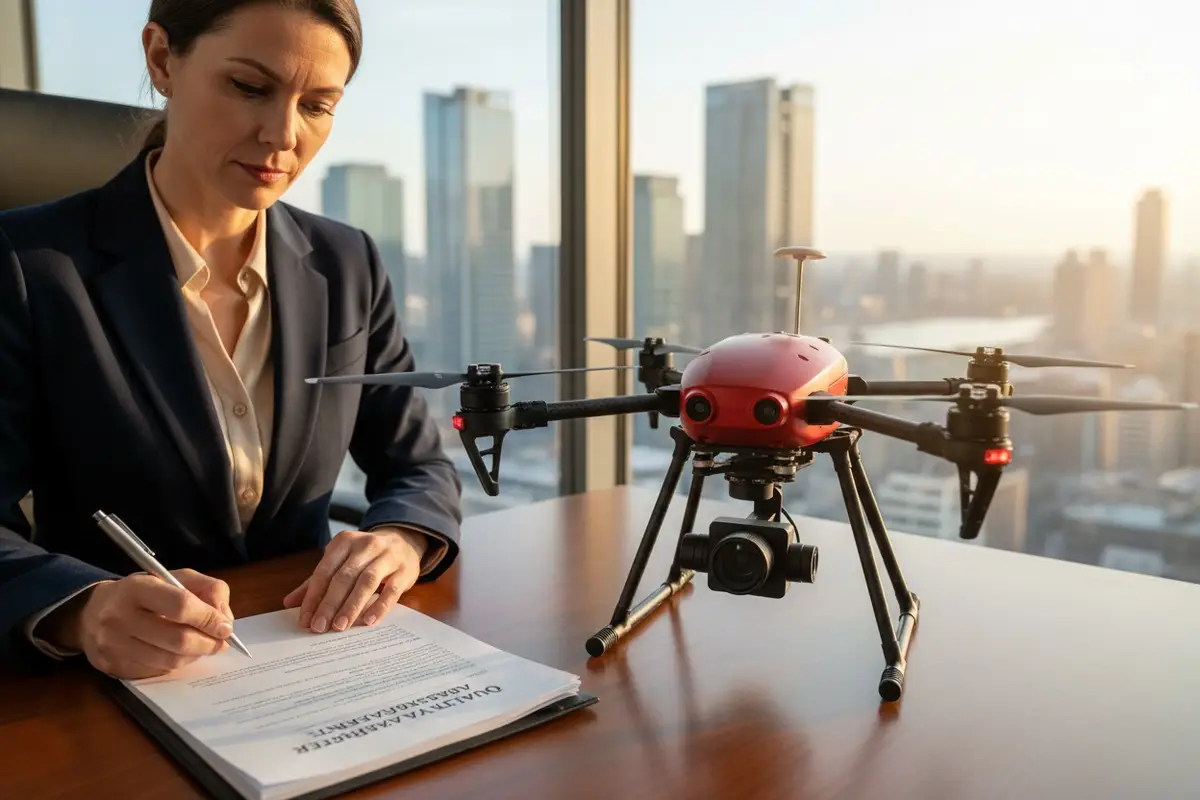
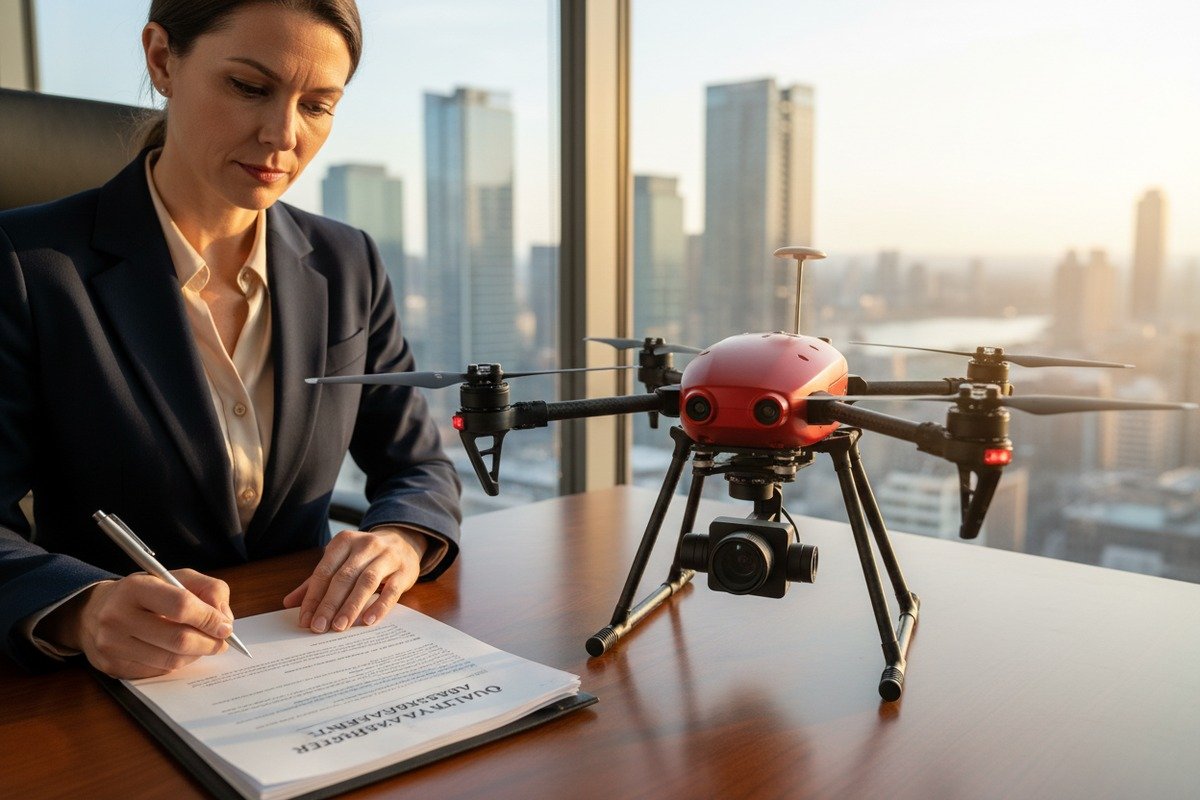
Every week, our quality control team sees purchase orders arrive with vague specs and missing compliance clauses. Buyers then face customs delays, failed inspections, and drones that cannot legally operate. This costs time, money, and reputation.
A firefighting drone Quality Assurance Agreement must include performance benchmarks, federal compliance clauses like ASDA requirements, IPC-A-610 Class 3 manufacturing standards, cybersecurity protocols, long-term spare parts guarantees, and OEM brand protection terms to ensure reliable, import-ready, mission-critical equipment.
This guide breaks down each critical element. We will show you exactly what to demand from your supplier. Read on to protect your investment and ensure your fleet performs when lives depend on it.
What specific performance benchmarks should I include in my firefighting drone quality assurance agreement?
When our engineers test flight controllers in extreme heat chambers, we see exactly which specs matter and which look good only on paper. Many buyers focus on range and speed but miss the metrics that determine survival in actual fire conditions.
Your QAA must specify flight stability tolerances, battery endurance under maximum payload, IP67 or higher dust and water resistance ratings, thermal camera resolution minimums, obstacle avoidance response times, and documented pre-shipment testing with video evidence for each unit.

Flight Stability and Control Precision
Flight stability is non-negotiable for firefighting operations. Your agreement should define acceptable hover drift limits. We recommend no more than 0.5 meters of horizontal drift in winds up to 12 m/s. The drone must maintain altitude within ±0.3 meters during payload release operations.
GPS accuracy matters too. Demand dual-frequency GNSS positioning 1 with accuracy of 1 centimeter plus 1 ppm horizontally. This ensures precise water or foam delivery to targeted hotspots.
Battery and Payload Endurance
Battery performance degrades in heat. Your QAA must state minimum flight times under realistic conditions. Here is what to specify:
| Performance Metric | Minimum Requirement | Testing Condition |
|---|---|---|
| Flight Time (no payload) | 45 minutes | 25°C, sea level, no wind |
| Flight Time (max payload) | 25 minutes | 35°C, full payload, 8 m/s wind |
| Battery Cycle Life | 300 cycles to 80% capacity | Standard charge/discharge protocol |
| Thermal Throttling Threshold | 55°C ambient | Continuous operation test |
Environmental Durability Standards
Firefighting drones face water, ash, smoke, and extreme temperatures. Your agreement should mandate IP67 rating minimum 2. This means complete dust protection and immersion in water up to 1 meter for 30 minutes.
Operating temperature range should span -20°C to +55°C. Storage temperature tolerance should extend to +70°C. These numbers matter because drones often sit in hot vehicles before deployment.
Sensor and Camera Specifications
Thermal imaging quality directly impacts mission success. thermal camera resolution 3 Specify these minimums in your QAA:
- Thermal resolution: 640 x 512 pixels minimum
- Temperature detection range: -40°C to +550°C
- Thermal sensitivity (NETD): ≤50mK
- Visual camera: 4K resolution with 3-axis gimbal stabilization
The agreement should require calibration certificates for each thermal sensor. Demand sample footage from the exact unit being shipped, not just a demonstration model.
Pre-Shipment Testing Documentation
Every drone leaving our facility undergoes 47-point inspection. Your QAA should require similar documentation. This includes motor response timing, ESC calibration data, compass calibration records, and full-flight video showing all specified maneuvers.
How can I ensure my contract guarantees long-term technical support and spare part availability for my fleet?
Our customer service records show that 60% of support requests come more than 18 months after purchase. Yet most buyers never ask about post-warranty support. This oversight turns functional fleets into expensive paperweights when one motor fails.
Your contract must include minimum 5-year spare parts availability guarantees, maximum 72-hour response time for critical support requests, specified parts pricing caps, firmware update commitments for at least 3 years, and clear escalation procedures for unresolved technical issues.

Parts Availability Commitments
Spare parts disappear when manufacturers discontinue models. Your QAA should lock in availability guarantees. We maintain parts inventory for all models for minimum 7 years after last production date. Demand similar commitments in writing.
Specify which parts are considered critical. These include motors, ESCs, propellers, batteries, flight controllers, and camera gimbals. The agreement should state maximum delivery times for each category.
| Part Category | Maximum Delivery Time | Stock Commitment Period |
|---|---|---|
| Propellers | 5 business days | 7 years post-production |
| Motors | 10 business days | 7 years post-production |
| Flight Controllers | 15 business days | 5 years post-production |
| Batteries | 7 business days | 5 years post-production |
| Camera/Gimbal Units | 20 business days | 5 years post-production |
Pricing Protection Clauses
Suppliers sometimes triple parts prices after purchase. Protect yourself with price caps. Your agreement should specify that spare parts pricing will not exceed 120% of the original quoted price, adjusted only for documented currency fluctuations.
Include a parts price list as an appendix to your contract. This creates a binding reference point for future purchases.
Technical Support Response Standards
Define what "support" actually means. Email response within 24 hours for routine questions. Phone or video support within 4 hours for urgent operational issues. On-site support within 72 hours for critical fleet-down situations, if purchased as an add-on service.
The agreement should specify support availability hours. Consider time zone differences. Our support team operates 16 hours daily to cover both American and European business hours.
Firmware and Software Update Guarantees
Drones require regular software updates for security patches and performance improvements. Your QAA should guarantee firmware updates for minimum 3 years. These updates must remain free during this period.
The agreement should also address backward compatibility. New software versions must remain compatible with your existing ground control stations and data management systems.
Training and Documentation Requirements
Request comprehensive operator and maintenance training. This should include initial training for your team and access to updated training materials when software changes. Documentation must include complete maintenance manuals, troubleshooting guides, and wiring diagrams.
What clauses do I need to protect my brand when ordering custom OEM firefighting drones from a manufacturer?
When we produce OEM drones for partners, brand protection questions arise constantly. One customer discovered their custom design being sold to competitors because their contract lacked proper intellectual property clauses. This mistake cost them their market position.
OEM brand protection requires exclusive territory rights, intellectual property ownership clauses for custom designs, non-compete provisions preventing sales to your competitors, quality consistency guarantees tied to your brand standards, and confidentiality agreements covering all proprietary specifications and business information.

Intellectual Property Ownership
Custom designs need clear ownership definitions. If you commission unique features, the agreement must specify who owns the resulting intellectual property. This includes hardware designs, software customizations, and firmware modifications.
We typically offer two models: customer-owned IP with higher development fees, or shared IP with lower costs but limited exclusivity. Choose based on your competitive strategy.
Territory and Exclusivity Rights
Define your protected market clearly. Geographic exclusivity should cover specific countries or regions. The agreement should prohibit the manufacturer from selling identical or substantially similar products to other parties in your territory.
Include customer exclusivity too. If you serve government fire departments, the manufacturer should not sell directly to those same agencies in your market.
Non-Compete and Non-Circumvention
Your supplier should not become your competitor. Non-compete clauses prevent the manufacturer from selling directly to end users in your market under any brand. Non-circumvention clauses stop them from approaching your known customers.
| Protection Type | Scope | Duration |
|---|---|---|
| Geographic Exclusivity | Named countries/regions | Contract term + 2 years |
| Customer Non-Circumvention | All disclosed customers | Contract term + 3 years |
| Design Non-Compete | Custom features developed | Perpetual for customer-owned IP |
| Direct Sales Prohibition | End users in territory | Contract term + 1 year |
Quality Consistency for Brand Reputation
Your brand reputation depends on consistent product quality. The QAA should establish quality baselines with specific metrics. Every batch must meet these standards before shipping.
Require the right to conduct factory audits. Schedule regular quality reviews. Include penalty clauses for quality failures that damage your brand reputation.
Confidentiality and Trade Secrets
Protect your business information. Confidentiality clauses should cover customer lists, pricing structures, sales volumes, and marketing strategies. Technical confidentiality should protect custom specifications and proprietary features.
Set clear terms for how long confidentiality obligations last after the contract ends. Five years is typical for commercial information; perpetual for true trade secrets.
How do I verify that my supplier's quality certifications meet the import requirements for my local market?
Our export documentation team processes compliance paperwork daily. We have seen shipments held at customs for weeks because buyers assumed certifications from one market would transfer to another. This assumption proves expensive.
Verify supplier certifications by requesting original certificates with validity dates, confirming accreditation body recognition in your country, checking ASDA compliance status for US federal contracts, validating IPC-A-610 Class 3 manufacturing standards, and obtaining written confirmation that products meet your specific import country's aviation and safety regulations.

Understanding Federal UAS Procurement Requirements
For US buyers, the American Security Drone Act 5 (ASDA) changes everything. Effective December 22, 2025, federal contracts cannot purchase drones from entities on the DoD's 1260H list. This includes many Chinese manufacturers.
Check if your intended use involves federal funds. Universities, contractors, and grant recipients must source from the Blue UAS Cleared List 6. Our products are designed with compliance pathways that support Blue UAS qualification processes for US partners.
Manufacturing Quality Standards
IPC-A-610 Class 3 7 represents the highest manufacturing quality level. This standard applies to high-reliability electronics where failure is unacceptable. Firefighting drones should meet this standard.
Request evidence of IPC certification. Ask for recent audit reports. The manufacturer should provide documentation showing:
- 100% visual inspection of all solder joints
- Conformal coating application for environmental protection
- Wider PCB trace spacing for reliability
- Void-free coatings verified by X-ray inspection
Import-Specific Documentation Checklist
Different markets require different paperwork. Here is what to verify:
| Document | US Market | EU Market | Purpose |
|---|---|---|---|
| CE Marking | Not required | Mandatory | EU safety compliance |
| FCC Certification | Mandatory | Not required | Radio frequency compliance |
| FAA Remote ID | Required for operation | Not applicable | Aircraft identification |
| EU Class Marking | Not applicable | Mandatory by 2024 | Drone category classification |
| ITAR/EAR Classification | May apply | May apply | Export control verification |
Cybersecurity and Data Compliance
Drones are both aircraft and IT systems. NIST SP 800-63 standards 8 apply to access controls. Your supplier should demonstrate compliance with data protection requirements.
For US federal work, the drone must not transmit data to unauthorized foreign servers. Request architecture documentation showing data flow paths. Verify that firmware does not contain unauthorized communication channels.
Validating Certification Authenticity
Fake certificates exist. Verify authenticity by contacting the issuing organization directly. Check certificate numbers against registries. Request original documents, not copies.
For ongoing compliance, include audit rights in your agreement. Schedule annual verification of continued certification validity. Certification can expire or be revoked; your contract should address this possibility.
Conclusion
A comprehensive QAA protects your investment in firefighting drones. Include performance benchmarks, long-term support guarantees, OEM brand protection, and verified compliance documentation. These elements ensure your fleet remains operational, legal, and effective when emergencies arise.
Footnotes
1. Explains the technology for precise global navigation satellite system positioning. ↩︎
2. Defines the international standard for dust and water resistance. ↩︎
3. Details the importance of thermal imaging quality for mission success. ↩︎
4. Defines legal rights to creations in custom design agreements. ↩︎
5. Provides details on the US federal act for drone procurement. ↩︎
6. Identifies approved drones for US federal and government use. ↩︎
7. Explains the highest manufacturing quality level for electronics. ↩︎
8. Provides guidelines for digital identity and access management. ↩︎


 English
  Español de México
  Deutsch
  Français
  Русский
  العربية
Comments
No comments yet. Be the first to share your thoughts!
Leave a Comment