

When our engineering team first developed dual-antenna RTK solutions 1 for precision agriculture, we quickly learned that many suppliers in the market make bold claims without the technical substance to back them up. This gap between marketing promises and actual performance can cost you thousands of dollars and countless hours of frustration.
To verify dual-antenna RTK heading support, request technical datasheets specifying the exact GNSS receiver model, ask for independent test reports showing heading accuracy per meter of baseline, confirm the system operates without external correction services, and verify multi-constellation support including GPS, GLONASS, Galileo, and BeiDou.
In this guide, we will walk you through the essential verification steps, explain why this technology matters for your agricultural operations, and help you ask the right questions before making a purchasing decision.
How can I verify that the supplier's hardware and software truly support dual-antenna RTK for high-precision heading?
Many buyers struggle to distinguish genuine dual-antenna RTK capability from clever marketing precision agriculture 2. Our production team has seen competitors claim "RTK support" while only delivering single-antenna systems with basic magnetometer heading.
To verify true dual-antenna RTK support, request documentation of the specific GNSS receiver model, confirm the presence of dual RTK engines operating simultaneously, ask for baseline distance specifications affecting heading accuracy, and test the system's ability to provide heading while stationary without magnetic compass input.

Start with Hardware Documentation
The first step is requesting the exact GNSS receiver model 3. Generic descriptions like "RTK-enabled" are red flags. Reputable suppliers will specify models such as Unicore UM982, Septentrio mosaic-H, or GeoAstra RTU609BT GPS, GLONASS, Galileo, and BeiDou 4. Each receiver has published specifications you can independently verify.
Ask the supplier to show you where the two antennas are physically mounted. The baseline distance between antennas directly affects heading precision. A longer baseline typically delivers better accuracy. Most agricultural drones have baselines between 30cm and 100cm.
Understanding the Dual RTK Engine Architecture
True dual-antenna heading requires two RTK engines working together. One antenna acts as a "moving base" while the other functions as a "rover." The system calculates heading by measuring the precise relative position between these two points.
| Component | Function | What to Verify |
|---|---|---|
| Primary Antenna | Acts as moving base | Physical mounting location |
| Secondary Antenna | Acts as rover | Baseline distance from primary |
| Dual RTK Engine | Processes signals from both antennas | Simultaneous operation capability |
| Heading Output | Provides direction without movement | Update rate (typically 10-50 Hz) |
Software Verification Steps
Request access to the ground control software or flight application. Look for these specific indicators:
- A dedicated heading source setting that shows "Dual-Antenna GNSS" or similar
- Real-time display of heading accuracy in degrees
- Status indicators for both antennas showing satellite lock
- The ability to disable magnetic compass and rely solely on GNSS heading
During our quality control process 5, we always run a stationary test. The drone sits motionless on the ground, and we verify the heading display remains stable. Single-antenna systems cannot provide heading when stationary. This simple test exposes systems that secretly fall back to magnetometer data.
Request Independent Test Data
Do not accept manufacturer specifications at face value. Ask for third-party validation or allow independent testing. Heading accuracy is typically expressed as degrees per meter of baseline. For example, 0.2°/m means a drone with a 0.5m baseline achieves 0.4° heading accuracy.
Why is dual-antenna RTK heading more reliable for my agricultural spraying drones than a traditional magnetic compass?
Our field service engineers have responded to countless support calls from frustrated operators whose drones behaved erratically near metal structures, power lines, or even wet soil with high iron content. The root cause is almost always magnetic interference affecting compass-based heading.
Dual-antenna RTK heading eliminates magnetic interference entirely because it derives direction from satellite signals, not Earth's magnetic field. This provides consistent accuracy near metal structures, power lines, and mineral-rich soil. It requires no calibration and delivers three times better precision than magnetometer-based systems.

The Magnetic Compass Problem
Traditional drone heading systems use magnetometers that measure Earth's magnetic field. This approach has fundamental weaknesses in agricultural environments:
- Metal grain bins and equipment sheds create local magnetic distortions
- Power lines generate electromagnetic interference 6
- Soil mineral content varies across fields
- The drone's own motors and batteries produce magnetic fields
When we test new drone designs at our facility, we always fly near metal structures. Magnetometer-based heading can deviate by 10-30 degrees in these conditions. The drone "thinks" it is flying straight but actually drifts off course.
How Dual-Antenna RTK Solves This
Dual-antenna RTK heading uses satellite geometry instead of magnetic fields. The system measures the precise position of two antennas and calculates the direction they point. This method is immune to:
- Metal structures and equipment
- Power line interference
- Soil mineral variation
- Motor and battery magnetic fields
- External electronics and radio transmitters
| Heading Method | Accuracy | Calibration Required | Interference Susceptibility |
|---|---|---|---|
| Magnetometer | 2-5° typical | Yes, frequent | High |
| Single-Antenna GNSS | 1-3° (motion only) | No | Low |
| Dual-Antenna RTK | 0.1-0.3° | No | Very Low |
Real-World Impact on Spraying Operations
Precision heading directly affects spray coverage. Consider a 30-meter swath width spraying operation. A 2-degree heading error at 200 meters from the turn point creates a 7-meter offset. This causes either gaps in coverage or wasteful overlap.
Our agricultural drone customers report 15-20% reduction in chemical usage after switching to dual-antenna RTK heading. The drone follows intended paths more precisely, eliminating the overlap that compensates for uncertainty in compass-based systems.
Autonomous U-Turn Reliability
Agricultural spraying requires repeated parallel passes across fields. At each field edge, the drone executes a U-turn and must align precisely with the next row. Magnetic interference is often strongest at field edges where metal fences or equipment are located.
Dual-antenna RTK maintains accurate heading throughout these maneuvers. The system works equally well when the drone is moving fast, moving slow, or completely stationary during hover turns.
What specific technical documentation or test reports should I request to ensure the RTK system's stability?
When our sales team receives technical inquiries from experienced buyers, we appreciate the detailed questions. These buyers understand that documentation quality reflects engineering quality. Suppliers who cannot provide thorough technical data often lack the expertise to support you after the sale.
Request GNSS receiver datasheets with specific model numbers, heading accuracy test reports showing baseline-specific performance, multi-constellation support documentation, firmware update history demonstrating ongoing development, and raw data logging specifications enabling independent verification through post-processing.

Essential Datasheet Elements
A complete technical datasheet should include these specifications:
| Specification Category | What to Look For | Acceptable Range |
|---|---|---|
| Horizontal Positioning | RTK accuracy | 0.6-2.0 cm |
| Heading Accuracy | Degrees per meter baseline | 0.1-0.3°/m |
| GNSS Constellations | Multi-system support | GPS, GLONASS, Galileo, BeiDou minimum |
| Frequency Bands | Multi-frequency reception | L1, L2, L5 |
| Update Rate | Position and heading refresh | 10-50 Hz |
| Cold Start Time | Time to first fix | Under 60 seconds |
Test Reports and Validation Data
Laboratory specifications tell only part of the story. Request field test reports showing actual performance in agricultural conditions. These reports should include:
- Test location and date
- Environmental conditions (open sky, partial obstruction, etc.)
- Number of satellites tracked during testing
- Recorded heading accuracy over time
- Comparison with reference measurement system
Suppliers with genuine dual-antenna RTK expertise will have this data readily available. Hesitation or inability to provide test reports suggests the supplier may be reselling products they do not fully understand.
Firmware and Software Documentation
RTK technology continues to evolve rapidly. Suppliers should demonstrate active development through:
- Firmware version history with release notes
- Bug fix documentation
- Feature improvement roadmap
- Calibration and configuration procedures
Our engineering team releases firmware updates quarterly. Each update includes detailed notes explaining changes. This transparency allows customers to make informed decisions about when to update their systems.
Raw Data Logging Requirements
For applications requiring maximum accuracy verification, ask about raw GNSS and IMU data logging. This capability enables post-processing kinematic 7 (PPK) analysis. You can independently verify heading accuracy by processing raw observations against known reference data.
The logging format matters. Standard formats like RINEX ensure compatibility with third-party processing software. Proprietary formats may lock you into the manufacturer's ecosystem.
NTRIP and Correction Service Compatibility
Verify the system supports NTRIP 8 (Networked Transport of RTCM via Internet Protocol) for receiving correction data from network RTK services. This is the industry standard for correction data delivery.
Also confirm the supplier offers options for operating without network connectivity. In remote agricultural areas, you may need to use a local base station. The drone should support this configuration without expensive hardware modifications.
Can the manufacturer provide the engineering support I need to integrate dual-antenna RTK into my custom OEM drone project?
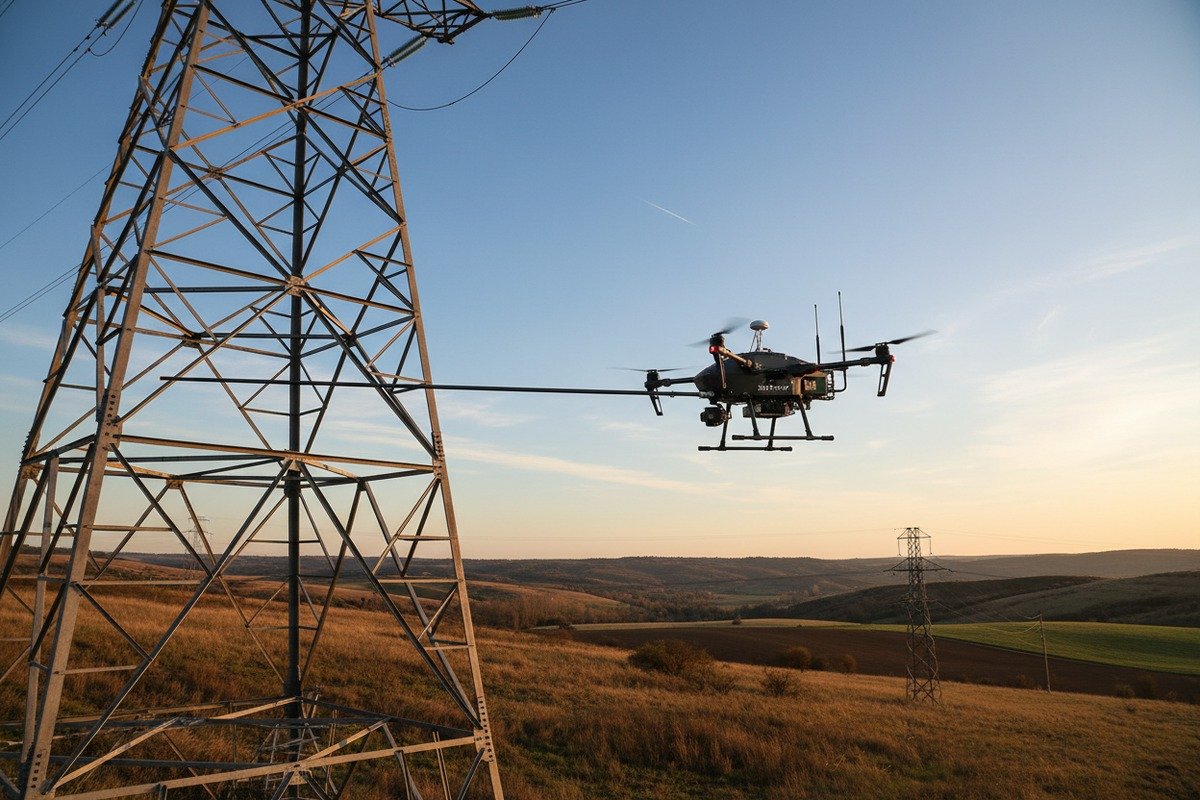
Our OEM partnerships succeed when both parties understand the technical depth required for dual-antenna RTK integration. This is not plug-and-play technology. Proper implementation requires expertise in antenna placement, autopilot configuration, and system calibration.
Manufacturers should provide antenna mounting geometry specifications, autopilot integration documentation for platforms like ArduPilot, configuration support for heading-only and full RTK modes, technical engineers available for consultation during integration, and ongoing firmware support to address issues discovered during your development process.
Antenna Placement Engineering
The physical relationship between antennas critically affects performance. Suppliers should provide:
- Recommended baseline distances for different accuracy requirements
- Mounting orientation guidelines (typically along the drone's longitudinal axis)
- Ground plane recommendations to reduce multipath interference
- Cable length specifications to minimize signal loss
When we collaborate with OEM partners, our engineers review their proposed antenna mounting before hardware fabrication begins. This prevents costly redesigns after discovering placement issues during flight testing.
Autopilot Integration Support
Dual-antenna RTK heading must integrate with the flight controller to replace magnetometer input. Different autopilot platforms have different integration requirements:
| Autopilot Platform | Integration Method | Configuration Complexity |
|---|---|---|
| ArduPilot | GPS_TYPE parameter, moving baseline | Moderate |
| PX4 | GPS driver configuration | Moderate |
| Proprietary Systems | Varies by manufacturer | Varies |
Request documentation specific to your chosen autopilot. Ask whether the supplier has successfully integrated with that platform before. Request contact information for previous integration customers who can share their experience.
Configuration Mode Support
Your application may require different operational modes:
Heading-Only Mode: Uses dual antennas to calculate heading without external correction services. The rear antenna acts as a moving base. This mode works in remote areas without cellular coverage.
Full RTK Mode: Combines dual-antenna heading with NTRIP or local base station corrections for centimeter-level positioning plus precise heading. This mode requires correction data infrastructure.
Suppliers should explain how to configure each mode and when each is appropriate for your use case.
Ongoing Technical Support Structure
Integration projects encounter unexpected challenges. Verify the supplier offers:
- Dedicated technical contact for your project
- Response time commitments for urgent issues
- Remote troubleshooting capability through log analysis
- On-site support availability for critical milestones
- Documentation updates when firmware changes affect integration
Our OEM support team maintains project files for each integration partner. When issues arise, we can quickly review the specific configuration and provide targeted assistance rather than generic troubleshooting.
Spare Parts and Long-Term Availability
For commercial products, component availability matters. Ask about:
- GNSS receiver production lifecycle
- Antenna availability and alternative sources
- Lead times for replacement components
- Minimum order quantities for ongoing production
Building a product around components with uncertain long-term availability creates business risk. Established suppliers with proven track records offer greater supply chain security.
Conclusion
Verifying dual-antenna RTK heading support requires technical diligence beyond reviewing marketing materials. By requesting specific documentation, understanding the underlying technology, and asking the right questions, you can identify suppliers with genuine capability and avoid costly mistakes.
Footnotes
1. Explains dual-antenna RTK technology for accurate heading and centimeter-level positioning. ↩︎
2. USDA provides a clear definition and benefits of precision agriculture. ↩︎
3. Replaced with an authoritative source from the European Space Agency’s Navipedia, providing a generic description of GNSS receivers. ↩︎
4. NASA provides an overview of global navigation satellite systems, including GPS, GLONASS, Galileo, and BeiDou. ↩︎
5. Wikipedia defines quality control as reviewing factors in production to fulfill quality requirements. ↩︎
6. NIST defines electromagnetic interference as a disturbance degrading electronic equipment performance. ↩︎
7. Explains PPK as a high-precision GNSS positioning technique combining rover and reference station data post-collection. ↩︎
8. BKG, involved in NTRIP development, explains the protocol for streaming GNSS data over the internet. ↩︎



 English
  Español de México
  Deutsch
  Français
  Русский
  العربية
Comments
No comments yet. Be the first to share your thoughts!
Leave a Comment