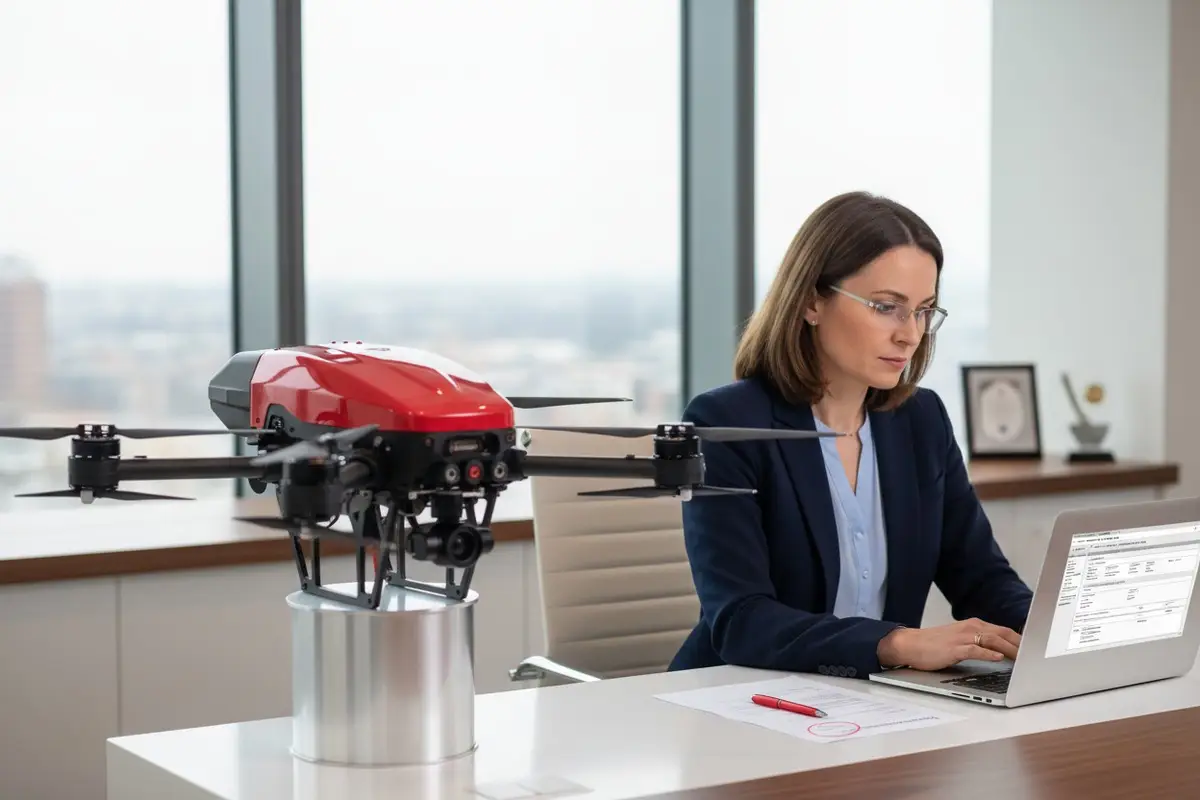

Every month, our shipping team receives calls from frustrated buyers. Their drones are stuck at customs. The reason? Wrong HS codes 1. This simple mistake costs thousands in penalties and weeks of delay.
To determine the correct HS code for firefighting drones, start with heading 8806 for unmanned aircraft, then apply GRI rules to assess whether the drone’s primary function is flight or fire suppression. Most firefighting drones classify under 8806.21 or 8806.29 based on weight, but integrated equipment may shift classification to Chapter 84.
Getting this right saves money and time. Let me walk you through exactly how we handle classification for every drone that leaves our facility.
How do I identify the specific HS code for my firefighting drone to ensure smooth customs clearance?
When we prepare export documents at our Xi'an facility, HS code selection is never rushed. One wrong digit can trigger a customs audit. This creates headaches for both us and our buyers.
Firefighting drones typically fall under HS heading 8806 (Unmanned aircraft). To identify your specific code, determine the drone's maximum take-off weight, then check if it's under or over 250kg. Most commercial firefighting drones use 8806.21 for remote-controlled models or 8806.29 for others, with country-specific extensions adding further detail.

Understanding the HS Code Structure
The Harmonized System 2 uses a logical hierarchy. The first two digits identify the chapter. Chapters 1-97 cover everything from live animals to art. Drones live in Chapter 88—aircraft, spacecraft, and parts.
The next two digits narrow down the heading. For drones, this is usually 06, giving us 8806. The fifth and sixth digits create subheadings. These six digits are universal across 98% of global trade.
But here's where it gets tricky. The United States adds four more digits for their HTS codes. The EU uses eight to ten digits in TARIC. China uses ten digits in their customs tariff.
Weight-Based Classification
Our engineering team always records maximum take-off weight 3 (MTOW). This number drives classification more than any other factor.
| Weight Category | Primary HS Code | Common Applications |
|---|---|---|
| Under 250g | 8806.10 | Micro inspection drones |
| 250g to 7kg | 8806.21 | Light firefighting scouts |
| 7kg to 25kg | 8806.22 | Medium payload carriers |
| Over 25kg | 8806.23 or 8806.24 | Heavy firefighting drones |
Most firefighting drones we manufacture weigh between 15kg and 45kg. They carry water, foam, or dry powder payloads. This pushes them into higher weight categories.
Step-by-Step Classification Process
First, confirm your drone is an unmanned aircraft 4. This sounds obvious, but customs officials need clear documentation. Our technical sheets always state "unmanned aerial vehicle" prominently.
Second, calculate MTOW with maximum payload. Include batteries, cameras, and firefighting equipment. Don't use empty weight.
Third, check national extensions. A U.S. buyer needs the full 10-digit HTS code. We provide this in every commercial invoice.
Fourth, verify with official tools. The WCO HS database 5, USITC HTS search, and EU TARIC all offer free lookups. Cross-reference before shipping.
Will the integrated fire-extinguishing equipment on my drone affect its HS code classification?
Our product engineers spend months designing integrated systems. Water tanks, foam dispensers, and thermal sensors all mount directly to the airframe. But this integration creates classification questions.
Yes, integrated fire-extinguishing equipment can affect HS code classification. Under GRI Rule 3, customs officials must determine the "essential character" of composite goods. If firefighting equipment dominates the drone's function, classification may shift from 8806 (aircraft) to Chapter 84 codes like 8413 (pumps) or 8424 (spraying machinery).

The Essential Character Test
General Rules for Interpretation (GRI) guide every classification decision. GRI 3 specifically addresses multi-function goods. It asks: what gives this product its essential character?
For our firefighting drones, we argue flight capability is essential. Without the drone platform, the extinguishing equipment can't reach fires. The aerial delivery system defines the product.
But some customs authorities disagree. They look at end use. If a drone exists solely to spray water on fires, maybe it's spraying machinery that happens to fly.
GRI Application Sequence
Customs applies GRI rules 6 in order. You can't skip to GRI 3 without exhausting GRI 1 first.
| GRI Rule | Application | Example for Firefighting Drones |
|---|---|---|
| GRI 1 | Read heading text and section notes | Chapter 88 Note 1 defines aircraft scope |
| GRI 2(a) | Incomplete or unassembled goods | Drone kits shipped disassembled |
| GRI 2(b) | Mixtures and combinations | Drone with multiple payload options |
| GRI 3(a) | Most specific description | 8806 vs 8424 – which fits better? |
| GRI 3(b) | Essential character | Is it primarily aircraft or sprayer? |
| GRI 3(c) | Last in numerical order | Fallback if 3(a) and 3(b) fail |
Documentation That Supports Aircraft Classification
When our quality control team prepares export packages, they include specific documents. These prove flight is the essential function.
We provide flight performance specifications first. Range, altitude, speed, and endurance all demonstrate aircraft capability. These numbers dominate our datasheets.
We include pilot training requirements. Operating our firefighting drones requires aviation knowledge. This isn't true for ground-based pumps.
We add airworthiness certifications where applicable. Many countries require drone registration. This regulatory treatment supports aircraft classification.
When Classification Might Shift
Some scenarios push classification away from 8806. Tethered drones that never truly fly might not qualify as aircraft. Ground-powered systems with aerial nozzles blur the line.
If your drone can't function without the firefighting equipment—if it's sold exclusively as a fire suppression tool—customs may reclassify it. This happened in a 2024 U.S. CBP ruling where a spray-only agricultural drone was classified under 8424.
Our approach is clear labeling. We market our products as drones with firefighting capability, not firefighting equipment that happens to fly. This distinction matters in classification disputes.
How can I prevent costly import delays caused by using the wrong HS code for industrial drones?
Our logistics coordinator tracks every shipment. Last quarter, two containers faced delays exceeding three weeks. Both involved HS code disputes. The cost exceeded $15,000 in storage fees alone.
Prevent import delays by requesting binding rulings before shipping, using official classification tools like CBP CROSS or EU TARIC, maintaining detailed technical documentation, and working with experienced customs brokers. Pre-clearance verification catches errors before goods arrive at the port, avoiding penalties that can reach 100% of product value.

Common Classification Errors
Our export team sees the same mistakes repeatedly. New importers often guess at codes based on product names. This approach fails.
"Drone" appears in multiple HS chapters. Toy drones classify under 9503. Telecommunication drones might fall under 8517 if transmission is primary. Robotic drones could arguably fit 8479.
Firefighting drones are not toys, regardless of weight. They're not primarily communication devices. They're aircraft. But customs officers need proof, not assumptions.
The Real Cost of Errors
U.S. Customs and Border Protection penalizes misclassification harshly. First offenses often result in duty reassessment plus interest. Repeat violations trigger penalties up to $10,000 per entry.
| Error Type | Typical Consequence | Average Resolution Time |
|---|---|---|
| Minor code variation | Duty adjustment | 1-2 weeks |
| Wrong heading | Penalty + reclassification | 3-6 weeks |
| Deliberate misclassification | Seizure + criminal referral | 6+ months |
| Missing documentation | Hold for examination | 2-4 weeks |
Storage fees accumulate daily. Demurrage charges add up. Your customers lose patience and contracts.
Prevention Strategies That Work
Request advance rulings before major shipments. The U.S. CBP offers binding tariff classification rulings. The EU provides Binding Tariff Information 7 (BTI). These take 30-90 days but provide certainty.
Our team maintains a classification database. Every product variation has a confirmed HS code with supporting documentation. When customers ask for codes, we provide verified answers.
Work with customs brokers who specialize in technology goods. General freight forwarders often lack drone expertise. Pay for specialists who understand Chapter 88.
Building a Documentation Package
Every shipment from our facility includes comprehensive documentation. Commercial invoices list the full HS code, not just six digits. Packing lists describe each component separately.
Technical datasheets explain the product's primary function. Flight specifications come first. Payload information follows. This ordering supports aircraft classification.
We include product photographs showing the drone in flight configuration. Assembly instructions reference aviation terminology. User manuals emphasize pilot requirements.
For batteries, we provide UN38.3 test summaries 8. Lithium battery classification requires separate attention. Proper battery documentation prevents the most common drone shipment delays.
Can my Chinese supplier provide the technical documentation I need to justify my HS code choice to customs?
When we work with U.S. and European buyers, documentation requests dominate early conversations. Procurement managers need confidence that paperwork will pass customs scrutiny.
Qualified Chinese suppliers can and should provide comprehensive technical documentation including detailed specifications, component breakdowns, function statements, battery certifications, and product photographs. Request this documentation before placing orders—reputable manufacturers maintain these records as standard practice and can customize documents for specific import requirements.

What Documentation to Request
Start with the basics. Every drone shipment needs commercial invoices with accurate product descriptions. These should include model numbers, quantities, weights, and declared values.
Technical datasheets matter most for classification. Ask for specifications that clearly state the product is an unmanned aircraft. Look for flight parameters: range, speed, altitude ceiling, and endurance ratings.
Component lists help separate classification needs. A firefighting drone might ship with ground control stations, spare batteries, and payload modules. Each may need distinct HS codes.
Standard Documentation Package
Our export department prepares standardized packages. Buyers receive consistent, professional documentation regardless of order size.
| Document Type | Purpose | Classification Relevance |
|---|---|---|
| Commercial Invoice | Customs declaration | States HS code, value, quantity |
| Packing List | Contents verification | Details weight, dimensions |
| Technical Datasheet | Product specifications | Proves aircraft function |
| Certificate of Origin | Trade agreement eligibility | Affects duty rates |
| UN38.3 Battery Report | Safety certification | Required for lithium batteries |
| End-User Certificate | Export compliance | Confirms civilian application |
Supplier Red Flags
Not all suppliers prepare adequate documentation. Warning signs include vague product descriptions, missing weight specifications, and reluctance to provide technical details.
If a supplier can't explain their own HS code choice, they probably haven't verified it. Ask how they determined classification. Request copies of any advance rulings they've obtained.
Suppliers who resist documentation requests may have quality issues to hide. Or they lack export experience. Either way, customs problems become your problem once goods ship.
Customization for Your Market
Our documentation adapts to destination requirements. U.S. buyers receive 10-digit HTS codes with tariff rate estimates. EU customers get 8-digit CN codes with TARIC references.
We provide English-language documentation standard. Technical specifications use metric and imperial measurements. Voltage ratings cover both 110V and 220V markets.
For dual-use concerns, we prepare End-User Certificates proactively. Firefighting drones with advanced thermal cameras may face export control scrutiny. Documentation addressing civilian application speeds clearance.
Building Long-Term Supplier Relationships
Experienced suppliers anticipate documentation needs. At our facility, we train sales staff on customs requirements. They understand why buyers ask detailed questions.
We maintain traceability records for every component. If customs questions a specific part's origin, we can provide verification. This transparency protects both parties.
Regular communication helps too. When HS codes update—as happened with the 2022 revisions to Chapter 88—we notify buyers proactively. Our customers don't face surprise reclassifications.
Conclusion
Correct HS code classification protects your investment and timeline. Start with 8806 for firefighting drones, verify with official tools, and maintain strong documentation. Partner with experienced suppliers who understand export requirements.
Footnotes
1. Replaced with an authoritative U.S. government source explaining HS codes. ↩︎
2. Replaced with the updated Harmonized System overview page on the World Customs Organization (WCO) website. ↩︎
3. Defines the critical aviation term ‘maximum take-off weight’ relevant for drone classification. ↩︎
4. Replaced with an authoritative U.S. government source (eCFR) providing the definition of unmanned aircraft. ↩︎
5. Replaced with the official WCO Trade Tools platform, which includes the Harmonized System database. ↩︎
6. Explains the General Rules for Interpretation governing HS code classification. ↩︎
7. Explains the EU’s Binding Tariff Information system for legal certainty in customs classification. ↩︎
8. Details the mandatory UN38.3 testing and documentation required for safe lithium battery transport. ↩︎


 English
  Español de México
  Deutsch
  Français
  Русский
  العربية
Comments
No comments yet. Be the first to share your thoughts!
Leave a Comment